


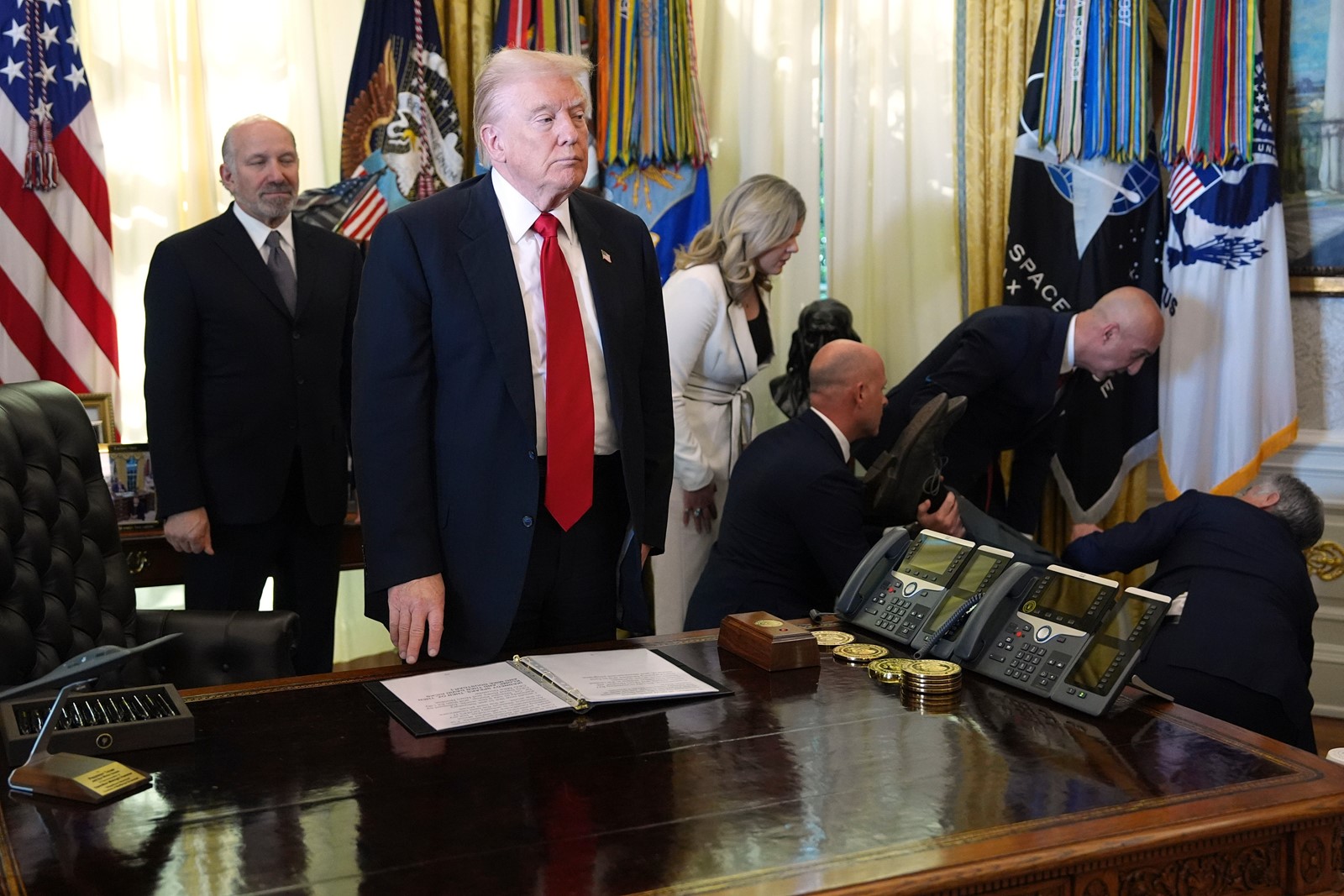


President Donald Trump on Thursday announced a deal that could significantly expand access for millions of Americans to hugely popular obesity drugs by reducing the price to as little as $149 a month.
The Trump administration’s agreements with drugmakers Novo Nordisk and Eli Lilly would save consumers and the government considerable money on Wegovy, Zepbound and two obesity pills that are expected to win regulatory approval in the coming months.
The lowest price, of $149 a month, will be available only for the lowest doses of the pill form of the drugs. When those drugs reach the market, Medicare and Medicaid will pay that price, as will Americans using their own money to buy the pills directly from manufacturers.
Trump, top U.S. health officials and drug company executives at the White House outlined broader coverage of the injectable drugs for people on Medicare and Medicaid, the federal insurance programs for older people; many who have disabilities; and those with lower incomes. The deal also lowers the prices the government programs will pay.
Those measures are likely to expand access but still will stop far short of covering all of the millions of people with obesity under the federal programs.
Officials said that within the next few months, Americans would be able to use their own money to buy Novo Nordisk’s Wegovy and Eli Lilly’s Zepbound — which are each taken as weekly injections — directly from manufacturers for an average of $350 a month, depending on the dose. The officials said they expected the average cost to fall to $245 over the next two years.
Starting around the middle of next year, Medicare and Medicaid’s costs for the injectable drugs will drop to $245 a month. That coverage will be for people who meet certain medical criteria, like having moderate or severe obesity. People can also have mild obesity accompanied by kidney disease, heart failure or uncontrolled high blood pressure. Or they can have a body mass index of 27 alongside prediabetes or established cardiovascular disease.
Copayments for eligible patients on Medicare will be no more than $50 a month. Patients on Medicaid already have little to no out-of-pocket costs.
“This is tremendous savings,” Trump said in the Oval Office event Thursday announcing the deal.
At the event, Trump referred to the medications as “the fat drug.” He mused as to whether his Cabinet members in the room were taking the drugs. (“Not yet,” quipped Commerce Secretary Howard Lutnick. Nor does Dr. Mehmet Oz, who runs Medicare and Medicaid.) Trump did not say whether he had ever tried them.
Administration officials offered an extraordinary projection that the moves would help Americans collectively lose 135 million pounds by the midterm elections next year, without explaining how they arrived at that guesstimate.
The Oval Office remarks were interrupted when a man standing beside the president collapsed, prompting White House press officials to pause the event and clear the room of press and photographers.
Oz, who is also a cardiothoracic surgeon, attended to the man. When the event resumed, Trump reported that the man had been light-headed and was fine.
The announcement occurred during the record-breaking government shutdown now in its sixth week at an impasse over the costs of health care in Congress. Democrats have been withholding their votes on a government spending bill unless Republicans agree to extend some generous subsidies that help Americans buy Obamacare insurance. So far, the Republican leadership has been unwilling to address that roadblock to resume government operations.
Drug cost negotiations
In each of his terms, Trump has used the presidential bully pulpit to denounce the high costs of prescription drugs. Most recently, he has pressured drugmakers to lower prices and commit to expanded manufacturing in the United States in exchange for exemptions from his threatened high tariffs. Three other drug companies have also announced limited drug-pricing deals at White House events. Eli Lilly and Novo Nordisk said Thursday that they secured a three-year reprieve from tariffs as part of the deal.
The deal on the weight-loss medicines is likely to have the largest consumer impact of those announcements, given the popularity and cost of the drugs as well as the large number of Americans who already pay for them out of pocket.
The drugs have been shown to be powerfully effective in helping people manage diabetes and lose weight when taken at higher doses. Major studies have established other health benefits, too, like reductions in heart attacks and strokes among people who are obese and have heart disease. But they do not work for everyone. Many patients experience side effects, including nausea, constipation and a loss of muscle mass.
And the medicines have been out of reach for many because they are so expensive. Many health insurance plans do not cover obesity drugs. More companies are providing coverage, according to surveys of employer-based insurance, but they also attribute part of the rising health care costs to increasing use of the drugs by workers.
“If we want to solve the chronic disease crisis, we have to tackle obesity,” Robert F. Kennedy Jr., the health secretary, said at the Thursday announcement. “We’re going to see a decline in costs, but, more important, in the afflictions themselves.”
The Trump administration plans to create TrumpRx.gov, which will direct patients to manufacturer websites like the ones offered by Novo Nordisk and Eli Lilly.
 PREVIOUS ARTICLE

