


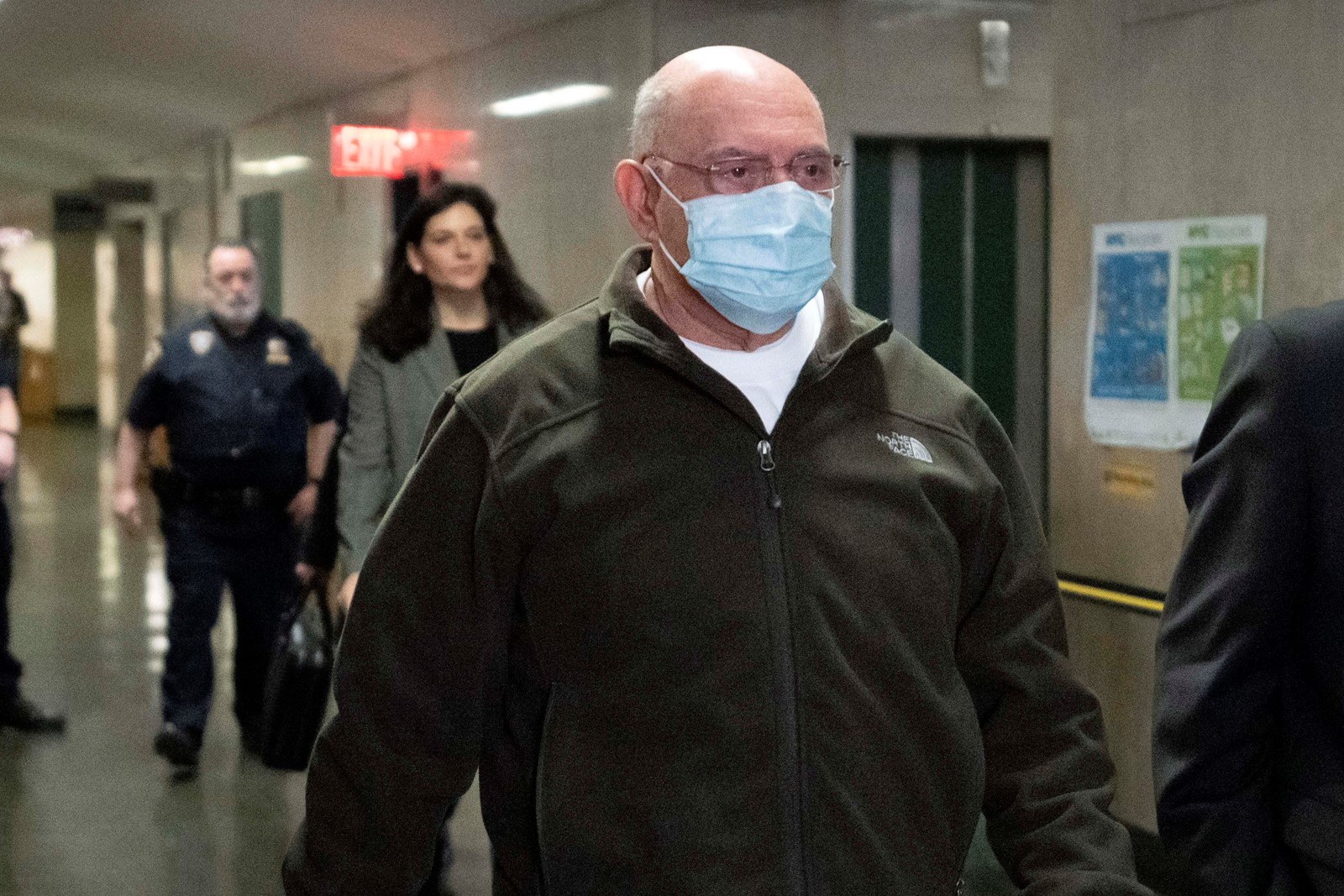


NEW YORK — Allen Weisselberg, the former chief financial officer at Donald Trump’s company, got out of jail Wednesday but might not have freed himself from the legal morass surrounding the former president.
The 75-year-old emerged from New York City’s Rikers Island jail complex facing the same pressures he was under three months ago, when he started serving time for tax evasion.
The Manhattan district attorney could potentially want Weisselberg as a witness in the office’s historic criminal case against Trump, which involves a scheme to suppress negative stories about the Republican during his 2016 presidential campaign.
Some people close to Weisselberg have advised him to do what it takes to spare himself more legal peril.
The Trump family, meanwhile, may have an interest in keeping Weisselberg loyal. The Trump Organization is making severance payments to Weisselberg and paying his legal bills.
The former executive’s recent decision to switch lawyers, away from the attorneys who represented him in the tax case, has prompted speculation he might be drawing closer to Trump’s family, his employer of nearly 50 years.
The company has, so far, supported Weisselberg, calling him a victim of a “never ending witch-hunt.” The lawyer who represented Weisselberg during the trial, Nicholas Gravante, said after his former client’s release from jail Wednesday that “anyone who truly knows Allen feels sorry that he had to go through this.”
“I hope he can now retire in peace, spend time with his wonderful family and leave the circus in the rear view mirror,” Gravante said.
With his intimate knowledge of the Trump Organization’s financial dealings, Weisselberg would be a valuable witness in Trump’s criminal case.
The former president is accused of directing underlings to falsify company business records to disguise payments made to his former lawyer, Michael Cohen, as reimbursement and reward for his work buying the silence of people with stories about Trump’s alleged marital infidelity.
In court filings, prosecutors said that Weisselberg advised Cohen how to pay off two women who said they had sexual encounters with Trump and that Weisselberg arranged for Cohen to be paid $420,000 for that work in 12 installments.
Trump has pleaded not guilty. Trump also says he didn’t have affairs with the women. Weisselberg was not charged in the case.
If prosecutors want Weisselberg’s testimony, they could try issuing him a subpoena, but they would run the risk of his asserting his Fifth Amendment protection against testifying against yourself.
Prosecutors could pressure him with the threat of criminal charges and a vow of immunity or leniency if he testifies truthfully.
That’s what happened last year, when the Manhattan district attorney prosecuted Weisselberg and the Trump Organization — but not Trump himself — over the company’s practice of giving execs untaxed perks.
Weisselberg pleaded guilty in August to failing to pay taxes on $1.7 million in off-the-books compensation, including a Manhattan apartment, Mercedes cars for him and his wife, and his grandchildren’s tuition.
Under his plea deal, Weisselberg was required to testify at the Trump Organization’s trial. He did so carefully, laying out the facts of his own involvement in evading taxes but taking care not to implicate Trump, saying his boss was unaware of the scheme.
Weisselberg was guaranteed a five-month sentence, which he began serving in January. He was eligible for release after three months.
Weisselberg is already a defendant in the fraud lawsuit brought by New York’s attorney general that says he was part of a company scheme to inflate the value of its assets in finance statements.
Now a retiree, Weisselberg is going to Florida, where he and his wife have a home a few towns from Trump’s Mar-a-Lago estate.
 PREVIOUS ARTICLE
