




WASHINGTON — FBI Director Kash Patel was not part of a Signal chat in which other Trump administration national security officials discussed detailed attack plans, but that didn’t spare him from being questioned by lawmakers this week about whether the nation’s premier law enforcement agency would investigate.
Patel made no such commitments during the course of two days of Senate and House hearings, declining to comment on the possibility and testifying that he had not personally reviewed the text messages that were inadvertently shared with the editor-in-chief for The Atlantic who was mistakenly included on an unclassified Signal chat.
That Patel would be grilled on what the FBI might do was hardly surprising.
Even as President Donald Trump insisted “it’s not really an FBI thing,” the reality is that the FBI and Justice Department for decades have been responsible for enforcing Espionage Act statutes governing the mishandling — whether intentional or negligent — of national defense information like the kind shared on Signal, a publicly available app that provides encrypted communications but is not approved for classified information.
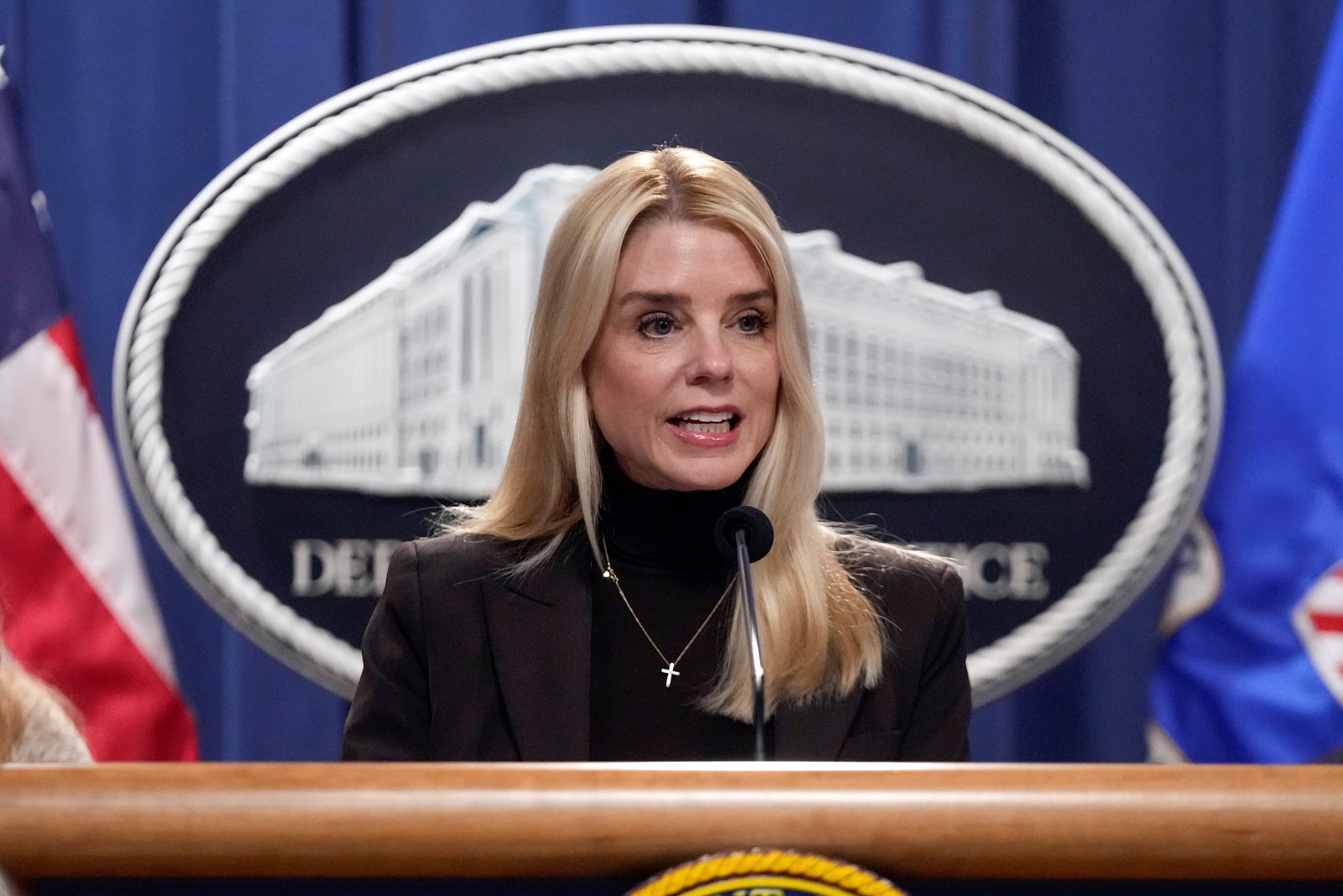
The Justice Department has broad discretion to open an investigation, though Attorney General Pam Bondi, who introduced Trump at a Justice Department event this month, signaled at an unrelated news conference on Thursday that she was disinclined to do so. She repeated Trump administration talking points that the highly sensitive information in the chat was not classified, though current and former U.S. officials have said the posting of the exact launch times of aircraft and times that bombs would be released before those pilots were even in the air would have been classified.
She also quickly pivoted to two Democrats, former Secretary of State Hillary Clinton and former President Joe Biden, who found themselves under investigation but never charged for allegedly mishandling classified information. Indeed, the department has conducted multiple high-profile investigations in recent years, albeit with differences in underlying facts and outcomes.
Multiple high-profile figures have found themselves under investigation in recent years over their handling of government secrets, but the differences in the underlying facts and the outcomes make it impossible to prognosticate what might happen in this instance or whether any accountability can be expected. There’s also precedent for public officials either to avoid criminal charges or be spared meaningful punishment.
“In terms of prior investigations, there were set-out standards that the department always looked at and tried to follow when making determinations about which types of disclosures they were going to pursue,” including the sensitivity of the information exposed the willfulness of the conduct, said former Justice Department prosecutor Michael Zweiback, who has handled classified information investigations.
A look at a notable prior investigation:
Hillary Clinton
The 2016 Democratic presidential nominee was investigated but not charged for her use of a private email server for the sake of convenience during her time as secretary of state in the Obama administration. There appear to be some parallels with the Signal chat episode. The politically fraught criminal investigation was initiated by a 2015 referral from the intelligence agencies’ internal watchdog, which alerted the FBI to the presence of potentially hundreds of emails containing classified information on that server. Law enforcement then set out to determine whether Clinton, or her aides, had transmitted classified information on a server not meant to host such material.
The overall conclusions were something of a mixed bag.
Then-FBI Director James Comey, in a highly unusual public statement, asserted that the bureau had found evidence that Clinton was “extremely careless” in her handling of classified information but recommended against charges because he said officials could not prove that she intended to break the law or knew that the information she and her aides were communicating about was classified.
The decision was derided by Republicans who thought the Obama administration Justice Department had let a fellow Democrat off the hook. Among those critical were some of the very same participants in the Signal chat as well as Bondi, who as Florida’s attorney general spoke at the 2016 Republican National Convention and mimicked the audience chant of “Lock her up!”
 PREVIOUS ARTICLE
