


Business briefing
VW pleads guilty, agrees to $4.3B fine


Volkswagen pleaded guilty Friday to conspiracy and obstruction of justice and agreed to pay a $4.3 billion penalty for a brazen scheme to program nearly 600,000 vehicles to cheat on U.S. emissions tests.
The criminal and civil penalty, if approved by a federal judge, would be the largest ever levied by the U.S. government against an automaker.
VW's total cost of the scandal now has been pegged at about $21 billion, including a pledge to repair or buy back vehicles.
U.S. regulators confronted VW about the software after West Virginia University researchers discovered differences in testing and real-world emissions of harmful nitrogen oxide.
Volkswagen at first denied the use of the so-called defeat device but admitted it in September 2015.
Even after that admission, company employees were busy deleting computer files and other evidence, VW's general counsel Manfred Doess acknowledged to U.S. District Judge Sean Cox.
The judge said he wanted more time to study the terms of the punishment negotiated by the U.S. Justice Department, including a $2.8 billion criminal fine.
He set a sentencing date of April 21.
No laws broken, Caterpillar says
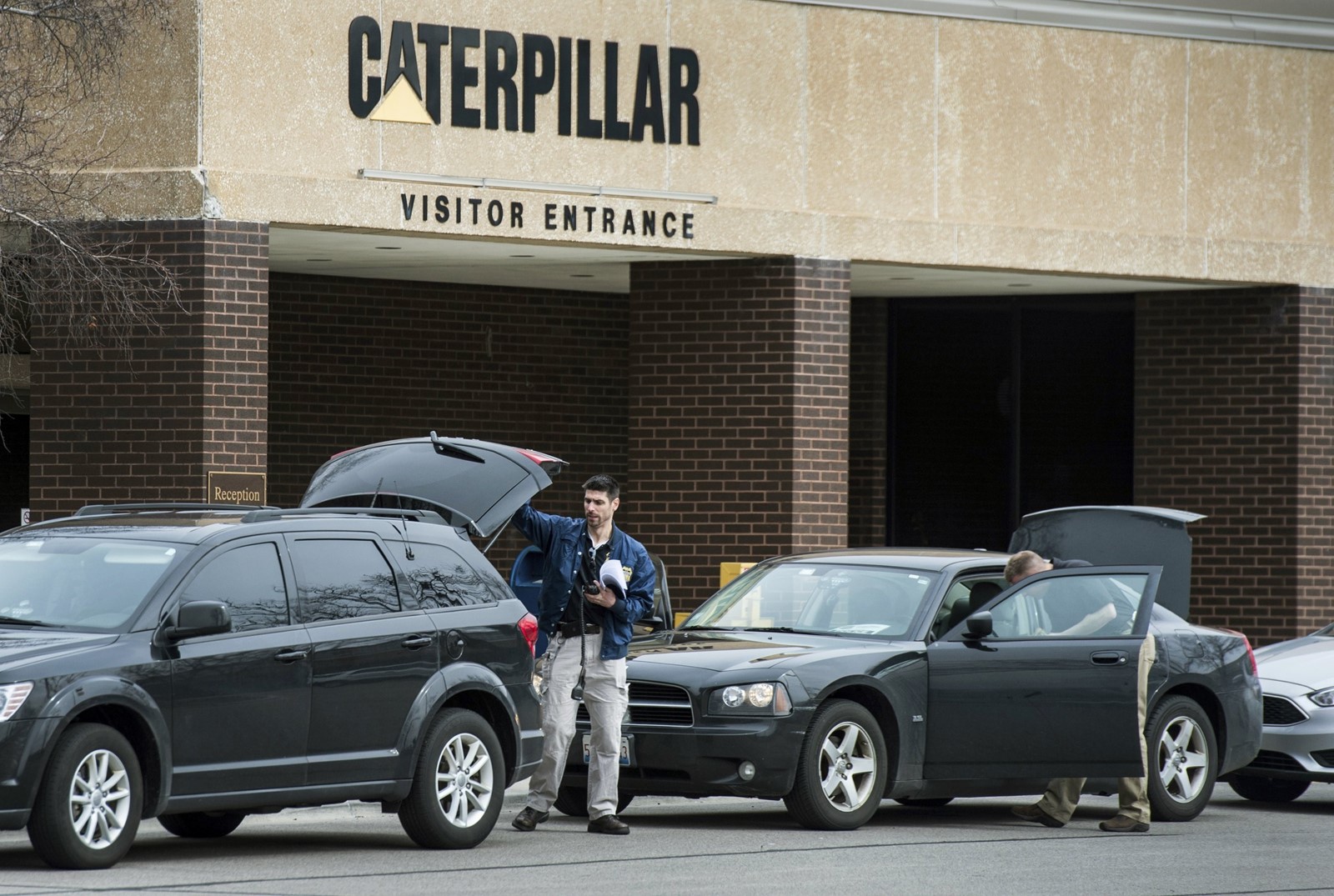
Caterpillar, a week after its Illinois headquarters and other facilities were raided by federal agencies including the Internal Revenue Service, denied that it had broken any federal tax laws.
“The IRS has challenged Caterpillar's taxes for years 2007-2012,” the company said Friday. “We disagree with the IRS' position, have cooperated for requests for information, and believe that we are compliant with tax laws and stand by our financial reporting.”
Caterpillar has been challenged for some time by federal agencies in regard to its accounting practices and last week the company said that the raids may have been related to a Swiss business, called CSARL.
China asks U.S. to not OK sanctions
China appealed to Washington on Friday to refrain from imposing sanctions on Chinese aluminum suppliers after U.S. producers filed a complaint against them in the Trump administration's first trade case.
An industry group, the Aluminum Association, accused Chinese producers of selling at unfairly low prices that hurt foreign competitors in the case filed Thursday. It asked the U.S. Commerce Department to impose anti-dumping duties of 38 percent to 134 percent on aluminum foil for consumer and industrial uses.
“China hopes that the U.S. side will not resort to trade remedies,” a Commerce Ministry official said in a statement.
THE BOTTOM LINE
 PREVIOUS ARTICLE
