


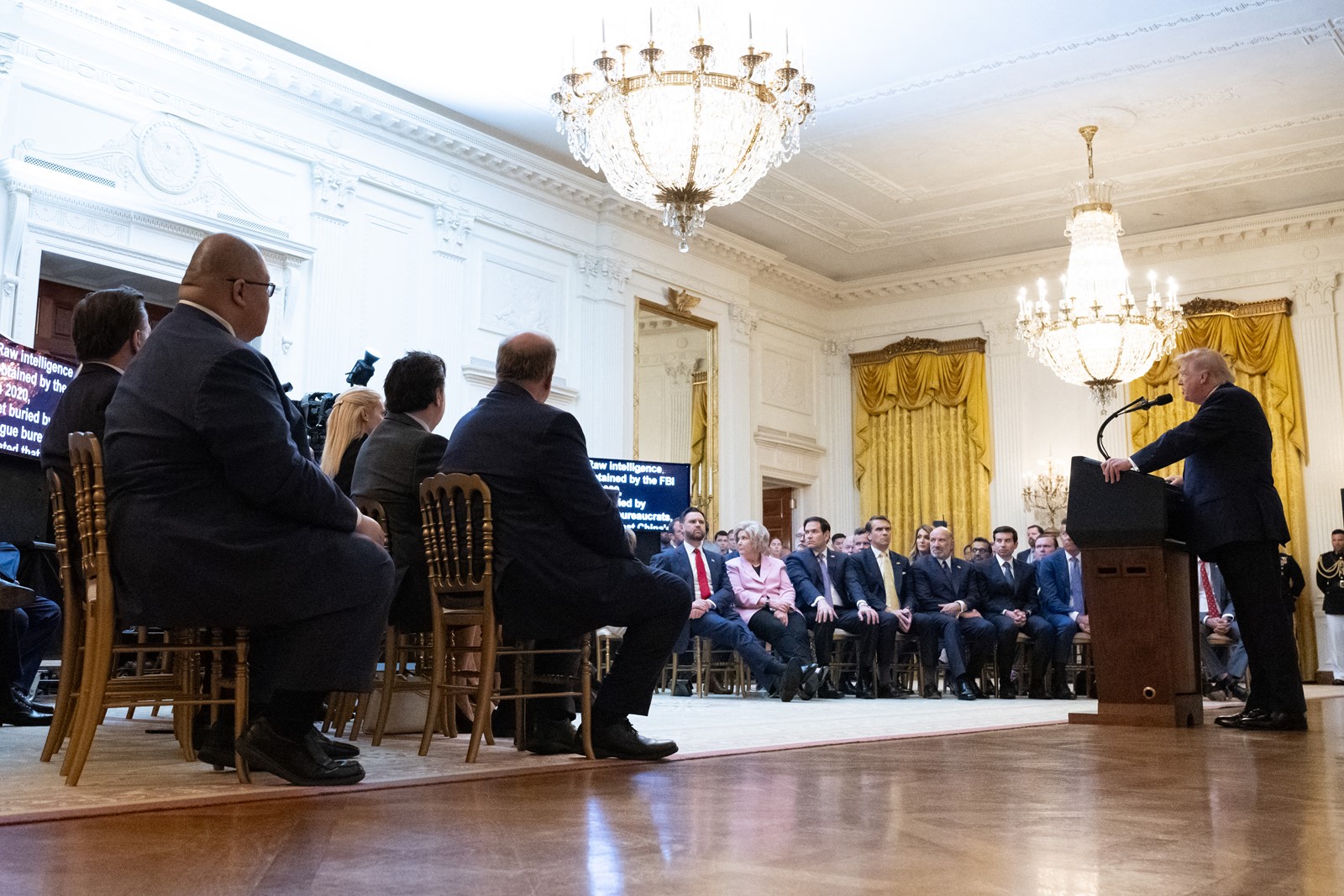


Is Trump a danger to democracy or a defender against antifa?
Re: “A rolling coup,” July 19 guest commentary.
The “A rolling coup” column was insightful and frankly frightening to anyone who believes in our democracy.
Ben Franklin’s words uttered outside Constitution Hall in 1787, “A Republic if we can keep it,” have never been more prophetic. Our country is facing the greatest threat in my lifetime, and I am 75 years old. The midterms and then the presidential election in 2028 are going to shape our country for generations.
Threats to disrupt the midterms are going to be far greater than the efforts of January 6th to stop the transition of power. I fear President Donald Trump will stop at nothing to keep control of the House and Senate. If one or both swing to the Democratic Party, he faces countless investigations and impeachment. Much as winning the 2024 election kept him out of jail, the 2026 midterms could bring him right back to being held accountable for all that he will have done in his first two years of his second term.
Hopefully we have safe and secure elections and put an end to this madness. Our democracy depends on it.
— David Shaw, Highlands Ranch
Citizens who love American democracy should take to heart the Sunday commentary of former Sen. Tim Wirth. The plan to transform the American government to an autocracy was outlined in the 900+ page Project 2025. The current administration has already accomplished many of the steps therein mentioned. The waters are being tested to prepare for ICE and the military to be at polling places. Ballots were seized in Fulton County, and seizure of voting machines may be next, following declaration of a (fake) emergency “requiring” interference in the voting process.
The most important way to counteract these threats is to mobilize friends, neighbors and family to vote. Early voting, drop boxes and mail-in ballots are ways to avoid or lessen the possibility of encountering federal agents at polling places. A conclusive rejection of the autocratic slide will be a good first step in restoring our democracy.
— David Schroeder, Golden
Well, here we go again. It seems that every time the Trump administration undertakes any activity the left finds distasteful, it’s characterized as putting the very foundation of our democracy under threat and/or the activity is unconstitutional. But this time, our democracy and the Constitution are under “severe” threat, at least according to former U.S. Senator Tim Wirth in his guest commentary.
The latest case in point is the national security directive, NPSM-7, signed by President Trump, which is to “investigate, prosecute and disrupt entities and individuals engaged in acts of political violence and intimidation designed to suppress lawful political activity or obstruct the rule of law.” I fail to see how that puts our democracy under any threat or how it could be construed as unconstitutional. To the contrary, it seems designed to protect everyday citizens from those who would suppress free speech and infringe on the rights of others.
But according to the ex-senator, the sole purpose of this directive is to target “any individual or organization who espouses ‘anti-American, anti-capitalist and anti-Christianity’ or other views contrary to those of the administration.” Anyone who reads the entire directive and states the above as its purpose is being disingenuous at best, and purposely deceitful at worst.
As evidence of his position, he cites eight protestors who have been convicted of criminal charges, a woman who was merely questioned by authorities about doxing an ICE agent (a federal crime), 15 antifa members who’ve been charged with felonies for stalking and impeding federal agents and eight University of Michigan students charged with federal crimes for vandalism and harassment during a “demonstration.” Does the ex-senator feel that being charged with and/or being convicted of breaking laws somehow violates one’s constitutional rights? Does he really feel that holding people accountable for their actions poses some kind of threat to our democracy? Those should be rhetorical questions.
— David Oyler, Canon City
Tim Wirth’s lengthy commentary begins with his absurd belief that “we now face the most serious threat to our democratic republic since . . . 1787”. No, the Civil War of the 1860s was a far more serious threat, as were past and current threats of nuclear war.
Wirth’s commentary absurdly explains that the threat to “our democratic republic” is a “rolling coup” of incremental moves from self-governance toward authoritarian governance by the Trump administration, such as the 2025 issuance by Trump of NPSM-7. It decrees that any individual or organization that espouses “anti-American, anti-capitalist and anti-Christianity” or other views contrary to those of the Trump administration can be treated as a terrorist. Wirth refers to NPSM-7 as “unconstitutional” but fails to mention that Trump’s NPSM-7 states that it “shall be implemented consistent with applicable law and subject to the availability of appropriations”. If unconstitutional, it can’t be enforced.
Wirth’s commentary falsely claims that the Trump administration “controls” the Supreme Court. That’s nonsense when the Court on recent occasions has ruled against the Trump administration, and is charged with following the Constitution, not the U.S. president.
— Joseph Feiten, Westminster
Why can’t RTD get it together?
Re: “RTD may eliminate free mall shuttle,” July 15 news story.
Why is RTD in such a fix? Certainly, they are not going to increase ridership by cutting service. How does our public transit authority compare with those of other cities? Is it being poorly run, or are the people of Denver just not attuned to the benefits of public transport? I cannot speak for the people who live in our suburbs, but I witness firsthand every day how much the vitality of Downtown depends on a functioning shuttle.
Conventioneers, out-of-town visitors and day trippers rely upon the shuttle to get them to hotels, restaurants, the Denver Center for the Performing Arts, and businesses, especially on hot summer days and frigid winter nights. We read that the city is luring more workers to live in the city. As a more-than-30-year resident of downtown, I can attest that the shuttle is crucial in promoting mobility between the downtown neighborhoods, enhancing the ability to work, play and spend near one’s home. As an older person, I love being able to get all over downtown without having to rely on a car. I can better support venues from Civic Center to Platte Street when I can combine “getting my steps in” with taking the shuttle. Am I speaking from self -interest? Yes, don’t we all? I don’t know what is wrong with RTD, but I implore them to figure it out.
— A. Lynn Buschhoff, Denver
Switch to permanent daylight saving time is not so simple
Re: “Americans just want to stop changing their clocks twice a year. Why can’t Congress even act on this?” July 19 commentary.
Krista Kafer is far too casual when she addresses the issues that permanent daylight saving time would produce. As she mentioned, the U.S. has tried this before, and it did not work well.
Evolution has equipped humans to be “sun cycle” creatures. In the absence of artificial illumination, we go to sleep soon after the sun sets and rise with the sun. Standard time divides the hours of daylight into roughly equal parts either side of noon — it is sometimes called “God’s time.”
How many of you are fully functional when you rise hours before the sun? The consumption of caffeine would indicate that many are not. This is not an option for school children.
Hawaii and Arizona are standard time states. The fact that no state has chosen DST would seem to suggest that, if an unchanging time is desired, standard time would be the better choice.
— Guy Wroble, Denver
Legislation is progressing on abolishing the need to move our clocks twice a year. The question will be, do we stay on standard time or daylight saving time year-round? There are valid arguments for both, and it will be interesting to see which way prevails.
We were on permanent DST in 1974/1975. It was repealed due to the public’s dissatisfaction with extended darkness on winter mornings. There is bound to be unhappiness whichever way we go.
The issue isn’t so much the inconvenience of having to move the clocks or trying to be somewhere on time. It’s the mental and physical effects of the dramatic shift in light (morning in the spring, evening in the fall) that negatively affect us. It throws off our internal clocks and interferes with sleep patterns.
So how about a compromise? Let’s continue the change but shorten the duration. If we begin daylight savings time the 2nd week in April, instead of the 2nd week in March, we will have naturally gained enough morning light so that we won’t be rolling back into dark mornings. If we go off DST the 1st week in October, instead of the 1st week in November, we’ll have enough remaining evening light that moving the clocks back won’t plunge us into early total darkness. Overall, the adjustments will be easier, and we’ll still get the pleasure and benefits of extended light on summer evenings.
— Patricia Scott, Denver
 PREVIOUS ARTICLE
