




As the Russian military launched its offensive on the eastern Ukrainian city of Avdiivka last fall, Ukrainian troops noticed a change in their tactics as column after column of Russian forces were ravaged by artillery fire.
Russian forces divided their infantry formations into smaller units to avoid being shelled, while the amount of Russian airstrikes increased to hammer the city’s defenses.
It was one of several adjustments the Russians made to help reverse their fortunes after a disastrous first year. But these changes were obscured by one glaring fact: The Russian military was still far more willing to absorb big losses in troops and equipment, even to make small gains.
Russian forces have a different threshold of pain, one senior Western official said this month, as well as an unorthodox view of what is considered an acceptable level of military losses.
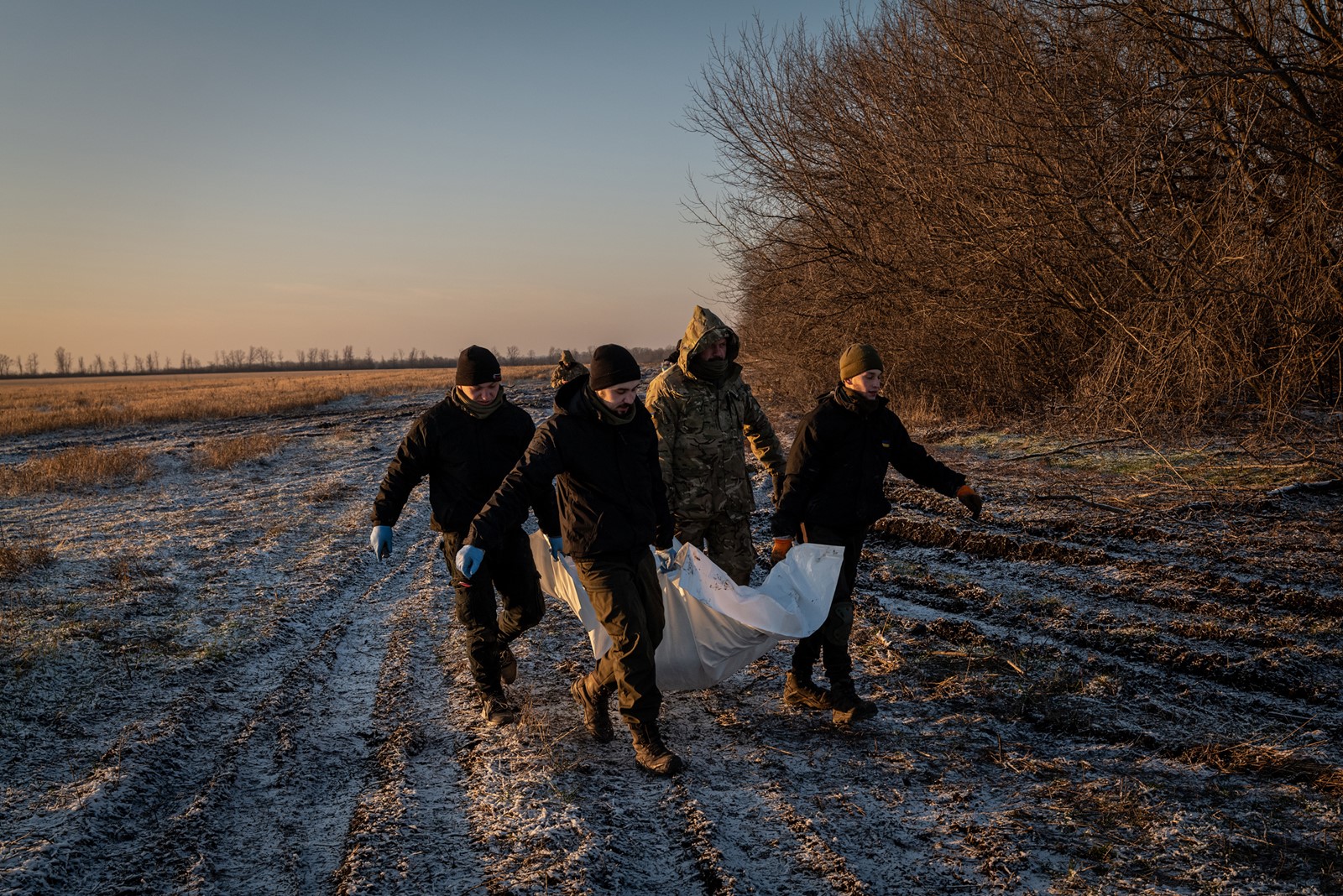
Hundreds of thousands of Ukrainian and Russian soldiers have been wounded or killed in the two years since the start of Russia’s full-scale invasion, including tens of thousands last year in the battle for the eastern city of Bakhmut. Another town to the south, Marinka, fell to Russia in January, after heavy fighting and more losses.
Avdiivka was among the most costly.
The various Russian casualty estimates circulating among military analysts, pro-Russian bloggers and Ukrainian officials suggest that Moscow lost more troops taking Avdiivka than it did in 10 years of fighting in Afghanistan in the 1980s.
But casualty numbers are difficult to verify. The official figure of Soviet dead in Afghanistan, around 15,000, is considered to be significantly understated.
One military blogger wrote that the Russians had lost 16,000 troops at Avdiivka, a total that remains impossible to confirm.
“Despite Russia’s heavy losses in Avdiivka, they still have a manpower advantage along the front and can continue assaults in multiple directions,” said Rob Lee, a senior fellow with the Foreign Policy Research Institute, which is based in Philadelphia.
Russia’s slow grind forward comes as European nations move to bolster support for Ukraine and strengthen their own protections against potential Russian aggression.
On Monday, NATO cleared the final hurdle for approving Sweden’s membership, less than a year after Finland joined, an expansion of the military alliance that defies the hopes of President Vladimir Putin of Russia of fracturing the unity of his adversaries.
President Volodymyr Zelenskyy of Ukraine said Sunday that 31,000 Ukrainian soldiers had died fighting Russia. But most Western analysts and officials say the toll is far higher.
Since the start of the 2022 invasion, Russia has been willing to pay a high cost to advance in the area of eastern Ukraine known as the Donbas, where Avdiivka is. Parts of this traditionally Russian-speaking region have been occupied by Russia’s proxies since 2014, and in trying to justify the invasion, the Kremlin has spuriously claimed to be defending its Russian speakers, saying they want to be part of Russia.
Some military analysts say taking full control of the Donbas is the bare minimum the Russian government needs to present the invasion of Ukraine as a victory at home.
Avdiivka has been strategic as well as symbolic for Russian war propaganda because of its proximity to Donetsk, the Donbas’ largest city, which has been under the Russian-backed occupation since 2014. Securing Avdiivka would move Ukrainian artillery away from the city, reducing civilian casualties and pressure on rear supply lines.
The Kremlin’s propensity to fire more shells, mass more people and lean on a much larger and capable air force in this war allowed it to gradually turn the tide against Ukraine’s defenses in Avdiivka. The huge cost in wounded and dead, some analysts say, was just the byproduct of a strategy that largely achieved its goal, despite the loss of men and material, especially as Western military aid and Ukrainian ammunition dwindled.
A Russian military analyst close to the defense industry, Ruslan Pukhov, wrote last week that the assault on Avdiivka was part of a wider Russian strategy of pressuring Ukrainian forces along the 600-mile front line in the east with thrusts and probes to exhaust the enemy “by a thousand cuts.”
“Such a strategy, however, is quite costly for the Russian Armed Forces in terms of losses, which could lead to depletion of its forces,” Pukhov wrote in a Russian current affairs magazine. “This, in turn, could give the Ukrainian side the initiative once again.”
Most analysts, however, are issuing sobering assessments of Ukraine’s prospects for 2024 if it does not receive U.S. aid. Both sides are struggling to find enough men to continue fighting at the same level of intensity. Russia’s much larger population, about 144 million, which is three times that of Ukraine, gives it a significant edge in manpower.
The scale of Russia’s losses has partly negated the impact of this arithmetic.
The Kremlin’s decision to call up 300,000 men in September 2022 — for the first time since World War II — has shocked and unnerved the nation, according to polls. Hundreds of thousands of men had already fled the country when the war began, threatening to shatter the image of normalcy cultivated by Putin.
Since then, the government has tried to postpone another round of mobilization for as long as possible. Instead, it has boosted financial and legal incentives to attract convicts, debtors, migrants and other vulnerable social groups to the front as volunteers. It has also begun to strictly enforce the country’s previously lax mandatory military service for young men.
Despite Russian losses in Avdiivka, U.S. officials predict that Russia will continue to put pressure on Ukrainian forces across multiple parts of the front line, hoping Ukraine’s units are degraded. The battlefield defeat, along with declining morale — exacerbated by the U.S. failure to continue supplying ammunition — might give the Kremlin’s formations an opportunity to exploit the situation on the ground.
The Russian military does not, however, have the kind of reserve forces that could immediately exploit the weakened defenses created by the retreat from Avdiivka, those officials said. U.S. intelligence agencies have assessed that the Russian military command had hoped to create a force capable of quick front-line breakthroughs, but that the plan was dashed by the need to reinforce their defenses during last year’s Ukrainian counteroffensive.
 PREVIOUS ARTICLE

