


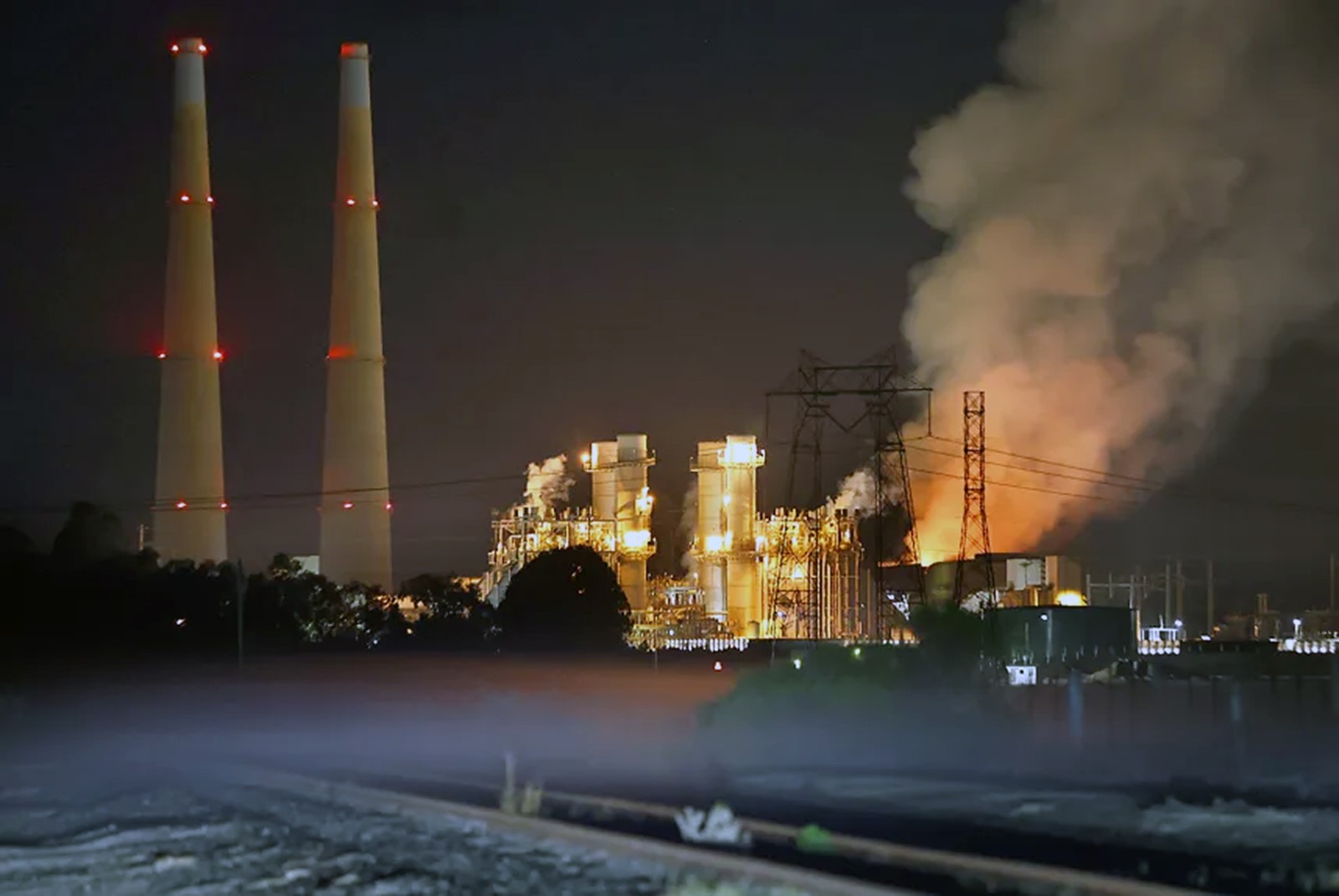


SALINAS >> The County of Monterey environmental health chief said that findings from soil and water testing done last Friday, as part of the ongoing assessment of damage caused by the Vistra Moss Landing battery fire of Jan. 16, are still being interpreted and are expected to be reported to the public “by the end of this week.”
At Wednesday afternoon’s County of Monterey briefing, Ricardo Encarnacion, bureau chief and County of Monterey director of environmental health, said that the county and its partners, the California Environmental Protection Agency and the Engineering Technical Support Center, among others, conducted soil and water testing last week.
“Our partners at the Office of Environmental Health Hazard Assessment are helping us interpret the screening findings,” said Encarnacion. “At this time, we’re still waiting for the interpretations that will help us, as a county, direct next steps.”
The fire at the Vistra Moss Landing Battery Energy Storage facility, one of the world’s largest, burned an unknown number of lithium-ion batteries housed in one of its buildings, releasing a toxic plume of smoke containing hazardous materials including hydrogen-fluoride, a colorless gas that can cause severe damage to the body, among other elements.
Earlier this week, research scientists at San José State University’s Moss Landing Marine Laboratories said they detected unusually high concentrations of heavy-metal nanoparticles.
A research team led by Ivano Aiello, marine geology professor and department chair of Moss Landing Marine Laboratories, have been analyzing the marsh soil, including the composition of major and trace elements in the days following the Jan.16 Vistra Plant fire.
“As part of a decade-long monitoring program of the Elkhorn Slough estuary, Dr. Ivano Aiello’s research team analyzed the marsh soil properties, including the composition of major and trace elements, in the days immediately following the Vistra battery fire,” according to a press release. “The field surveys, conducted within a radius of approximately two miles from the power plant, measured a dramatic increase in marsh soil surface concentration (hundreds to thousand-fold) of the three heavy metals Nickel, Manganese and Cobalt.”
Those nanoparticles are used in cathode materials for lithium-ion batteries, “clearly connecting the occurrence of the heavy metals to airborne cathode material from the Vistra battery fire.”
The findings of the research scientists at San José State University’s Moss Landing Marine Laboratories are going through a peer review process.
“I would say at this time we’re very glad and appreciative that there’s concurrent testing by concerned members of the public because that would also inform us of where to look and where we need to take steps, if anything,” said Encarnacion. “So we’re still waiting for interpretations. Obviously our focus is the area where the fire incident occurred, the areas close by, and the direction of the plume.”
Encarnacion said that the Monterey County environmental health agency is performing its process and has requested additional resources to get official findings so that as part of its process of cleanup and enforcement, that the responsible party takes the appropriate actions.
“We hope to have an interpretation so we can report out by the end of this week,” he said.
The Environmental Health Bureau is responsible for ensuring proper cleanup by the responsible party, said Encarnacion, who added that Vistra has been very cooperative in the matter.
“It’s very important for us to tell the people, and that the public knows, that we’ll ensure that damaged batteries are properly removed and disposed of safely,” he said.
 PREVIOUS ARTICLE
