




On the last Thursday of Sylvia Plath’s life, in February 1963, she brought her children to the London home of a friend, the writer Jillian Becker, and retired to an upstairs room, saying that she felt “terrible.” Plath and her husband, the poet Ted Hughes, had recently separated. Later that same day, Plath asked Becker to return to her flat and retrieve some personal items, including a blue dress, a set of hair rollers and two books.
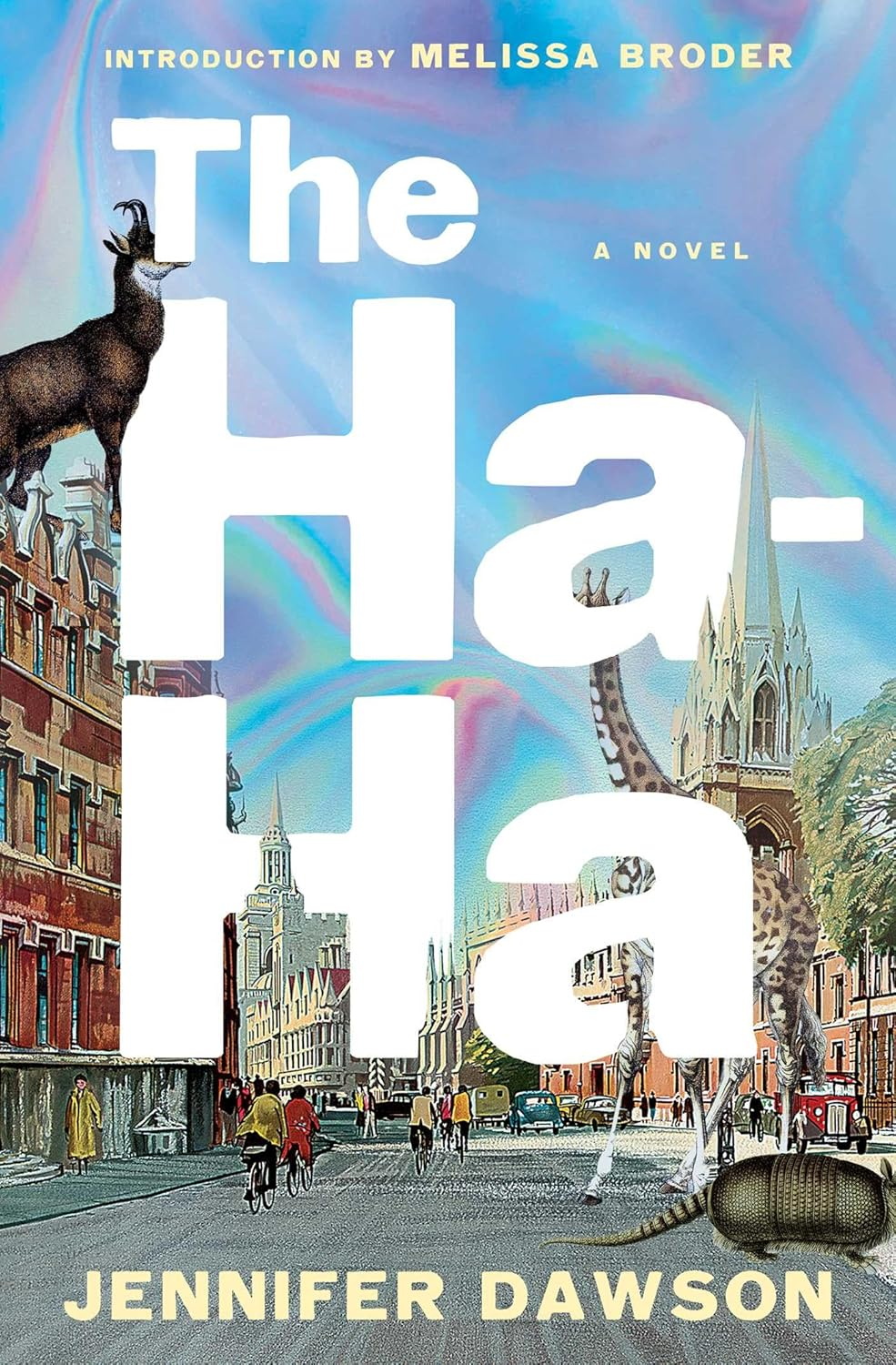
One of the books was THE HA-HA (Scribner, 177 pp., paperback, $17), a first novel by Jennifer Dawson. Little has been made of the fact that Plath was reading it the weekend before she died, despite significant similarities between Dawson’s book and “The Bell Jar,” the novel Plath had published a month earlier. “The Ha-Ha”’s mention by some of Plath’s biographers seems mostly intended to satisfy the public’s appetite for the gritty details surrounding her death: Who wouldn’t want to know what the glamorous and gifted poet may have been reading as she decided to take her own life?
Originally published in Britain in 1961, “The Ha-Ha” has just been reissued with an introduction by the novelist Melissa Broder. Like Plath, Dawson drew generously from her own experiences: first as a student at Oxford and then as a patient at a local mental hospital for several months, as well as from her later employment as a social worker at a hospital in Worcester.
The primary pleasure of “The Ha-Ha” is the delightfully idiosyncratic voice of its narrator, Josephine, who tends to say the wrong thing at the wrong time and has a laugh, as one character describes it, “like a disused lavatory.” Josephine is painfully self-conscious and naïve, and finds other people bewildering, sometimes even frightening. A woman’s mouth is described as a “cavern … dark and stretching away.” Heads in a crowded room seem to be “moving and twisting.” Josephine also experiences vivid hallucinations of animals, which she refers to as “my friends”: peacocks, snakes, hippopotamuses and even-toed ungulates.
None of this goes over well with her classmates at Oxford, an insufferable lot who do things like gather for tea parties, get engaged prematurely and call one another “darling.” Still, Josephine longs to be accepted by them. She describes herself as “a little flummoxed, a little behindhand,” and is convinced that she is unfit for what she sees as normal life: “I was not the kind of person that was invited to parties … any more than men kissed me or I ran into old friends in the street.” When her mother dies unexpectedly (an electric blanket is involved), Josephine suffers a breakdown and is sent to recover at a mental hospital, where she is diagnosed with schizophrenia.
In an afterword, Dawson, who died in 2000, points out that she wrote “The Ha-Ha” just after the United Kingdom passed the Mental Health Act of 1959, which was intended to introduce a more capacious understanding of mental illness and to improve institutional living conditions for patients. It took time for doctors to adapt their care accordingly, and for cultural attitudes about mental illness to become more humane. “Very few people that I knew then thought that mental disturbance had any social meaning or political, as opposed to cultural, interest,” Dawson observes. “It was something to be kept hidden; to keep quiet about.”
The people who surround Josephine treat her with condescension and exaggerated caution. The exception is Alasdair, a patient in the men’s ward with whom she meets surreptitiously at the hospital’s ha-ha, an English term for a recessed wall fronted by a ditch, designed to avoid obscuring the view of the surrounding landscape; a ha-ha mitigates the sense, from inside, that one is walled away.
Alasdair is the first to alert Josephine to the hospital’s outdated practices, and offers her another way of viewing her diagnosis: “It’s only a word. It’s only one way of saying that you are more real than most people.”
This insight emboldens Josephine, and in the book’s thrilling second half, she flees the hospital, feeling “the need to keep alive, the need to hold on to what little reality there was.” Here, Dawson makes another prescient criticism, shrewdly observing the pervasive misogyny against which the burgeoning women’s liberation movement fought. Now on her own for the first time, Josephine encounters smooth-talking men who see her merely as an accessory in their pursuit of sex and a good time — not unlike the doctors at the hospital, who treat her as a specimen, a faceless subject in their pursuit of science.
In reviews of “The Ha-Ha” at the time of its publication, The London Observer called Dawson “remarkably talented” and her novel “highly original”; The London Sunday Times deemed it “brilliant.” In 1961, it was awarded the prestigious James Tait Black Memorial Prize. Perhaps this success was what compelled Dawson to continue writing about mental illness. She published nine books in her lifetime; most feature young, slightly off-kilter characters who suffer, extremely in some cases, for their illnesses, or for their unique way of living and being in the world. The title story of her only collection, “Hospital Wedding” (1978), is told from the perspective of Dr. Hayward, who faces his patients with disdain and pity. He is “shocked by the humble way they lowered their teeth or their suspenders for electric shock treatment … as though they were worthy of nothing else.”
It strikes me as rather unfair that Dawson’s works are far less known and read than Plath’s singular “The Bell Jar.” But then, Plath’s tragic death ensured that her work would be read,
 PREVIOUS ARTICLE
