


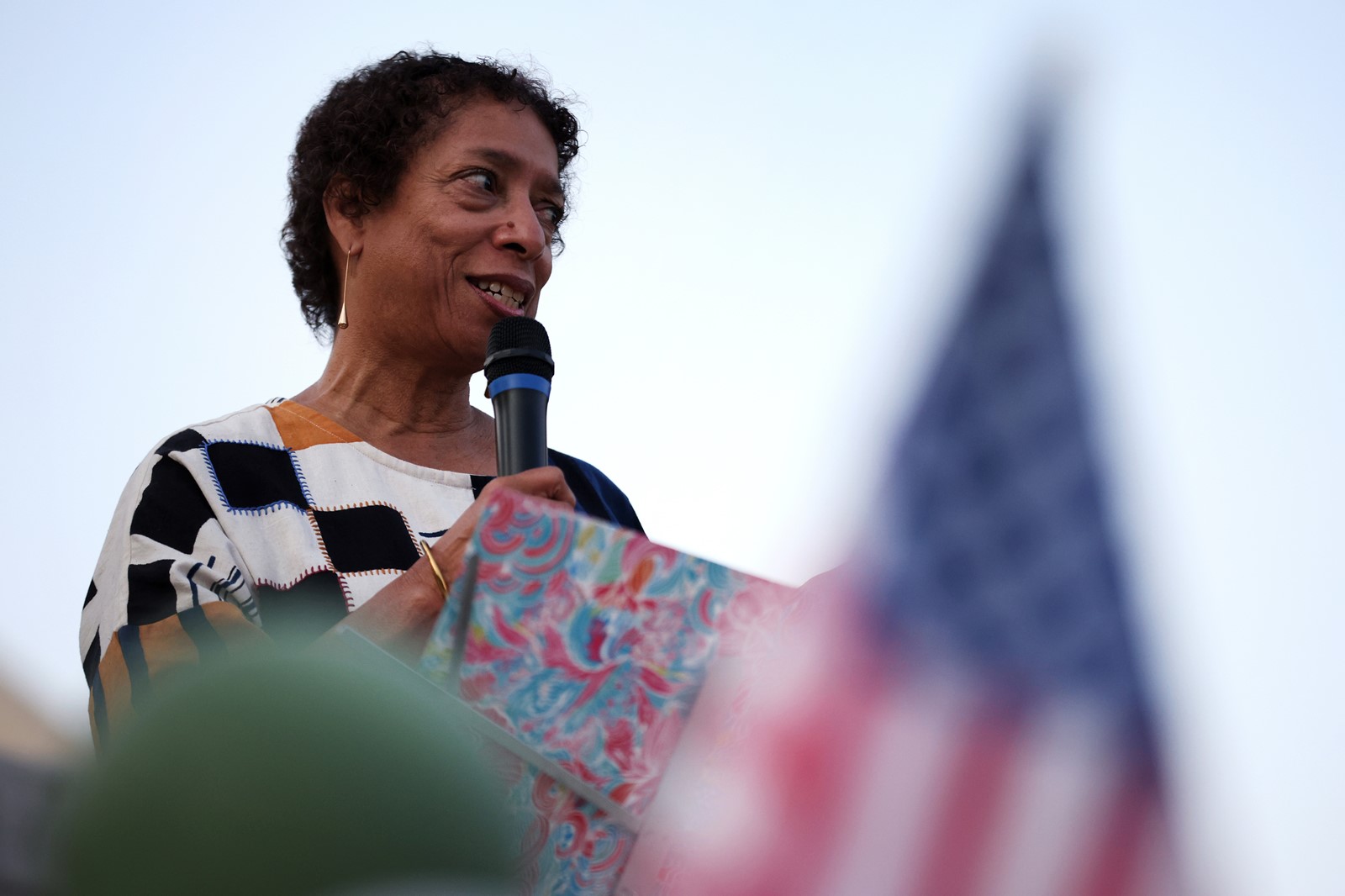


She included me. When introduced to reporter me at the Good Trouble Lives On rally in Whittier on Thursday, the fourth poet laureate for the city of Los Angeles prefaced a comment with, “You know, we writers,” and I was charmed.
I could have happily sat with her talking, grateful she put on no airs, despite her literary pedigree. But the acclaim is there: Thompson has published four collections of poetry and sits on the boards of the Los Angeles Review of Books and Cave Canem, a literary group that serves African American poets. She is also a member of the board of trustees at Scripps College in Claremont, where she is part of the Class of ’72.
Then there are the prizes and awards and fellowships, including one from the city of Los Angeles, Vermont Studio Center and the Summer Literary Series in Kenya. Most recently, she won the George Drury Smith Award for Outstanding Achievement in Poetry. Thompson may also be forgiven for being a lawyer by training, having earned her juris doctor in 1980.
She was at the rally because social change is the goal, and the arts is one way to get there. Then-Mayor Eric Garcetti called Thompson an “outspoken force who uses words to tell stories, bring communities together, and open up new avenues of art and thinking.”
Born and raised in L.A., Thompson has parents who are immigrants from the Caribbean.
Living in the days of the second Trump administration, she teased her brothers about how their mother wasn’t a citizen when they were born, leaving them vulnerable to President Donald Trump’s order to end birthright citizenship.
“My brother said, ‘Well, if they want my old behind, fine,’ ” Thompson smiled. “And I said they could come after us after all.”
She recited three poems at the rally: one by Ukrainian poet Ilya Kaminsky, “And Still I Rise,” by Maya Angelou and her own “A Rage on Bernice, 1763,” about a failed rebellion of enslaved people in what is now Guyana in South America.
“They ultimately didn’t prevail, but they held off the slave owners for a year and a half, so I wanted to just read that by way of saying, we think this is new, but this is not new,” Thompson said. “It happens. It’s always happened.”
Acknowledging so many people are exhausted by daily news of immigration raids, challenges to the Constitution and cuts to social programs, Thompson said “you keep going because you have to, because if you don’t, then they win.”
The genesis of “A Rage on Berbice, 1763” came from one line in a book about the event, “and there were some women there.”
Thompson determined to give those women a voice, and a poem was born:
— “I was a daughter who spelled you my name phonetically I was
— woman with child whose children’s children have lived to tell you this” it ends.
The rally, organized by Whittier Indivisible and the Truth and Democracy Coalition, also featured Camille Hernandez, poet laureate of Anaheim, who said she writes “about the ways we protect and take care of the things we cherish and the ways that we love them.” Another voice was Oscar Merlo, program director of the National Initiative to Strengthen Hispanic Pastors Leaders and Congregations, as well as Teresa Romero, the first Latina and immigrant woman to lead a national union in the U.S. She is president of the United Farm Workers, serving after César Chávez and Arturo Rodriguez.
The roster of speakers also included Councilmember Mary Ann Pacheco, and attendees included past mayors of Whittier, Bob Henderson and Allan Zolnekoff, and administrators from local school districts.
The message, Thompson said, is “We have to keep fighting. The fight goes on.”
So even though protesting and speaking up aren’t how she thought she would be spending her senior years, Thompson said she is writing her way through the fight. “Principled resistance to injustice,” or peaceful dissent, as rally organizers called it, is a story of those who said no.
Thompson is happy to raise her voice for it.
“I don’t have children of my own, but I have hundreds of nieces and nephews,” she said with a droll roll of her eyes, “and I look at them and I think, I don’t want them to ever say, ‘Did Auntie Lynne do anything? Did she say anything?’ ”
 PREVIOUS ARTICLE

