


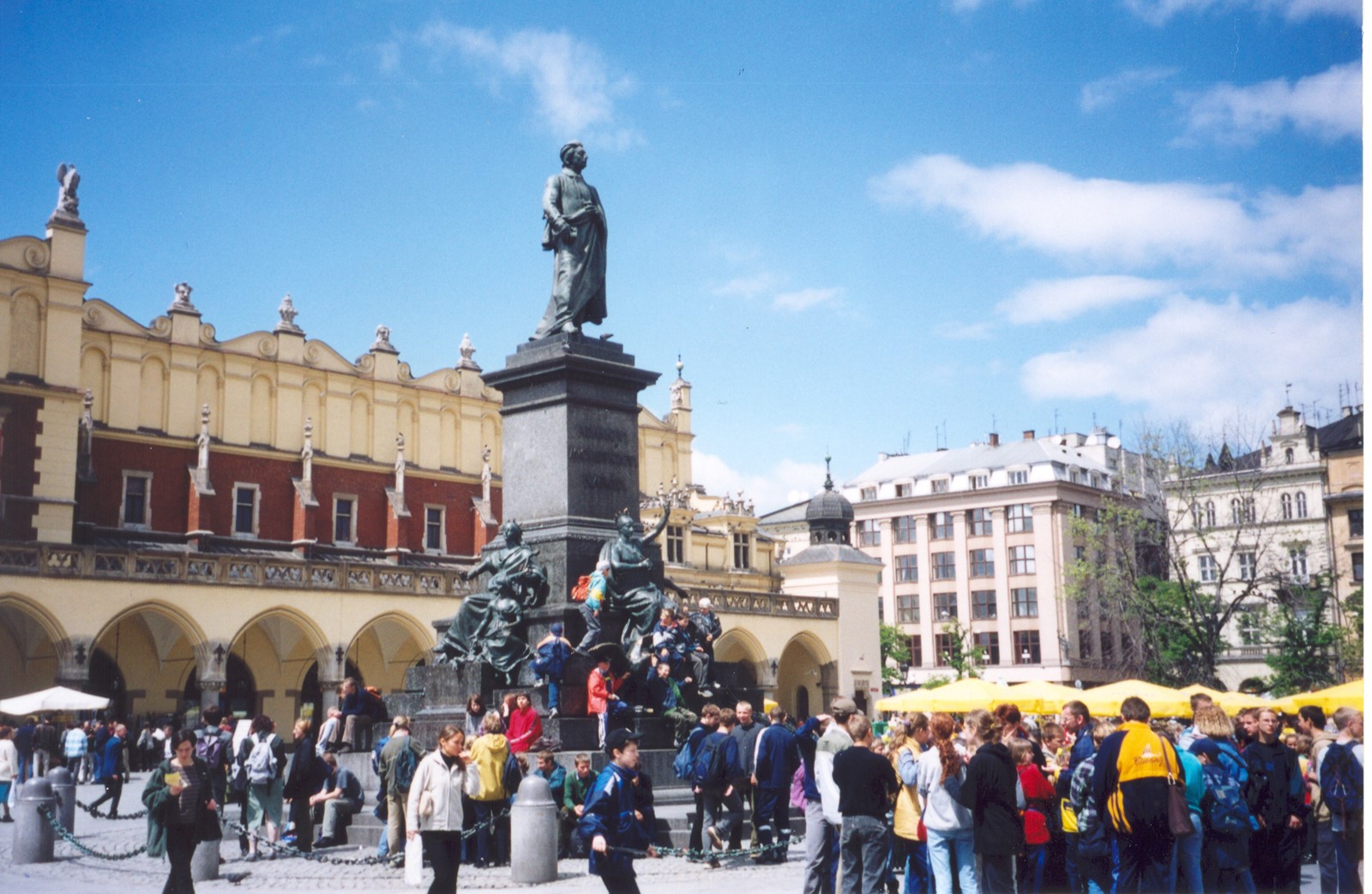


WIELICZKA, Poland — Rain clouds had been following us all around Poland, and so we doubled the usual tour of castles, cathedrals and museums. Fair enough, Warsaw and Krakow have more than enough of them to go around.
But whether it’s temples in Asia or castles in Europe, once you’ve had one too many, things start to blur until they all look alike.
The skies were no more promising today, but weather would not be a factor.
We would take a short ride east of Krakow, and literally disappear from the face of the earth.
“You can taste the walls but — please, please, don’t lick the statues,” the guide announced sternly as we began our descent into a fascinating underground adventure.
No, she wasn’t joking, nor were we part of a bizarre tour group. Too many tongues had actually formed grooves on some of the first few sculptures that would come into view.
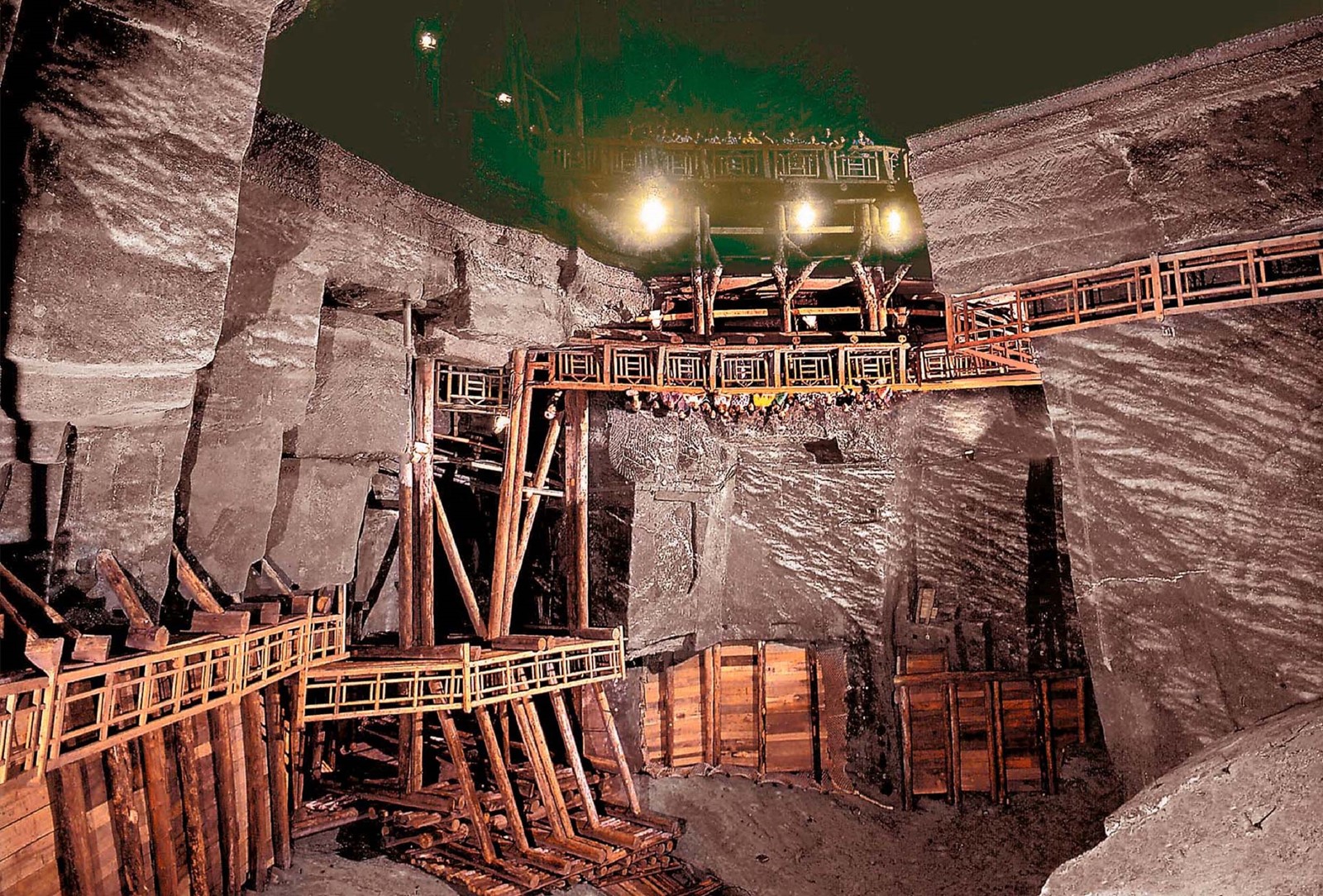
We were on a downward spiral into the strange “unearthly” world of the Royal Salt Mine at Wieliczka, a 300-kilometer labyrinth of underground corridors that dates back more than 900 years.
The illustrious “guest list” includes the famous astronomer Copernicus, composer Frederic Chopin, Franz Josef, emperor of the Austro-Hungarian empire, and Pope John Paul II, who grew up nearby.
But this is not your run-of-the-mill salt mine, if there is such a thing. It has been transformed by ordinary miners over the centuries into an incredible subterranean museum adorned with statues, even full size chapels — all composed of 100 percent rock salt. The workmanship of these salt-of-the-earth miners is worthy of world-class galleries.
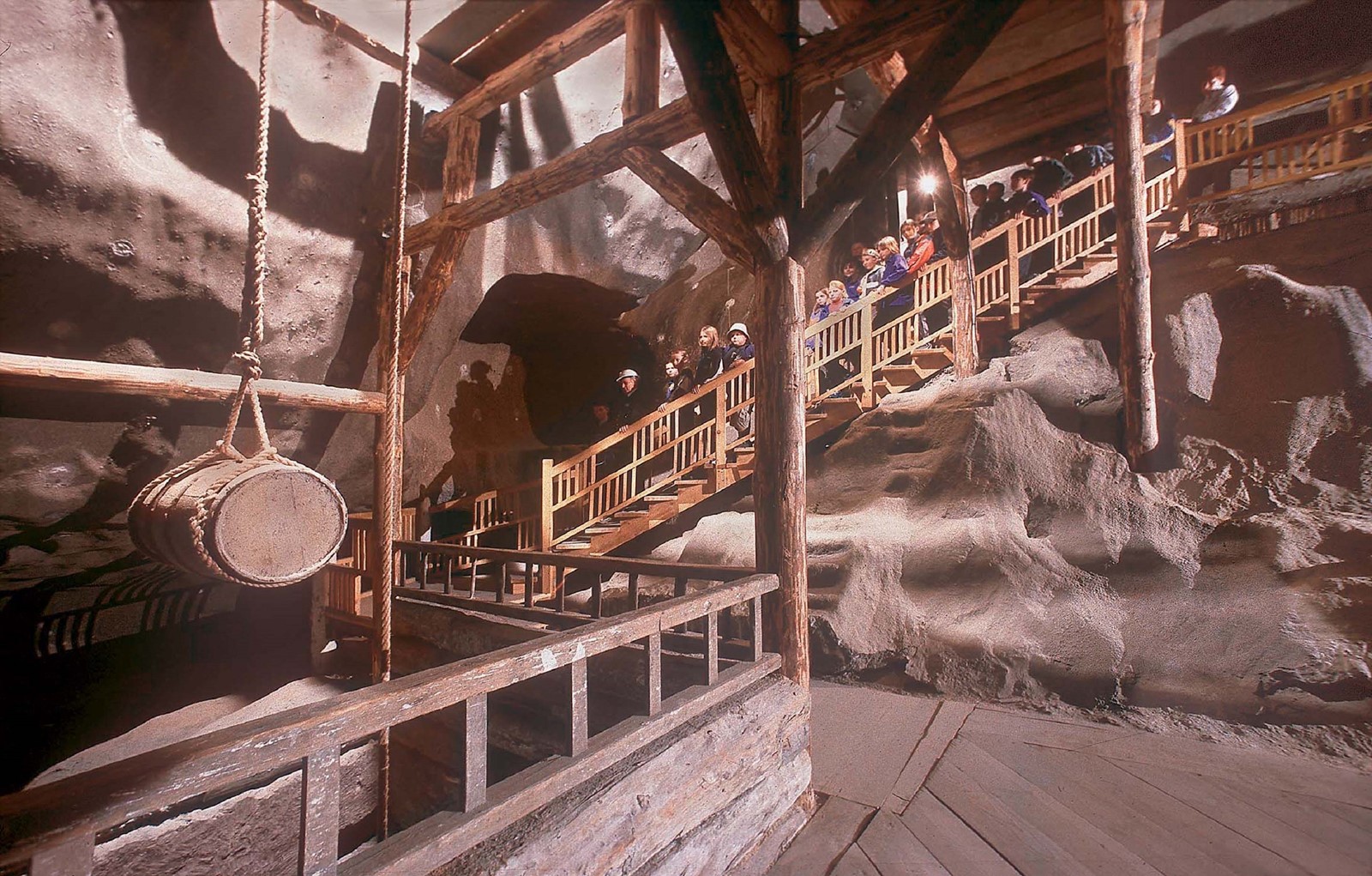
We descended 378 steps — each set of six steps ending at a platform, then zig-zagging to meet six more — until we reached the bottom where our tour would officially begin.
I ran my finger against the wall of the corridor and did a taste test. Definitely salty.
We passed the first few statues and saw some of the grooves made by tourists over the years until the “tongue troopers” took over.
There was the statue of Copernicus, one of the early visitors who died in 1543, and nearby the statue of the late Pope John Paul II. His is one of the last sculptures completed.
‘Our crown jewel’
As the statues are in workmanship, the miners have painstakingly created three chapels, richly decorated with both salt and wooden statues.
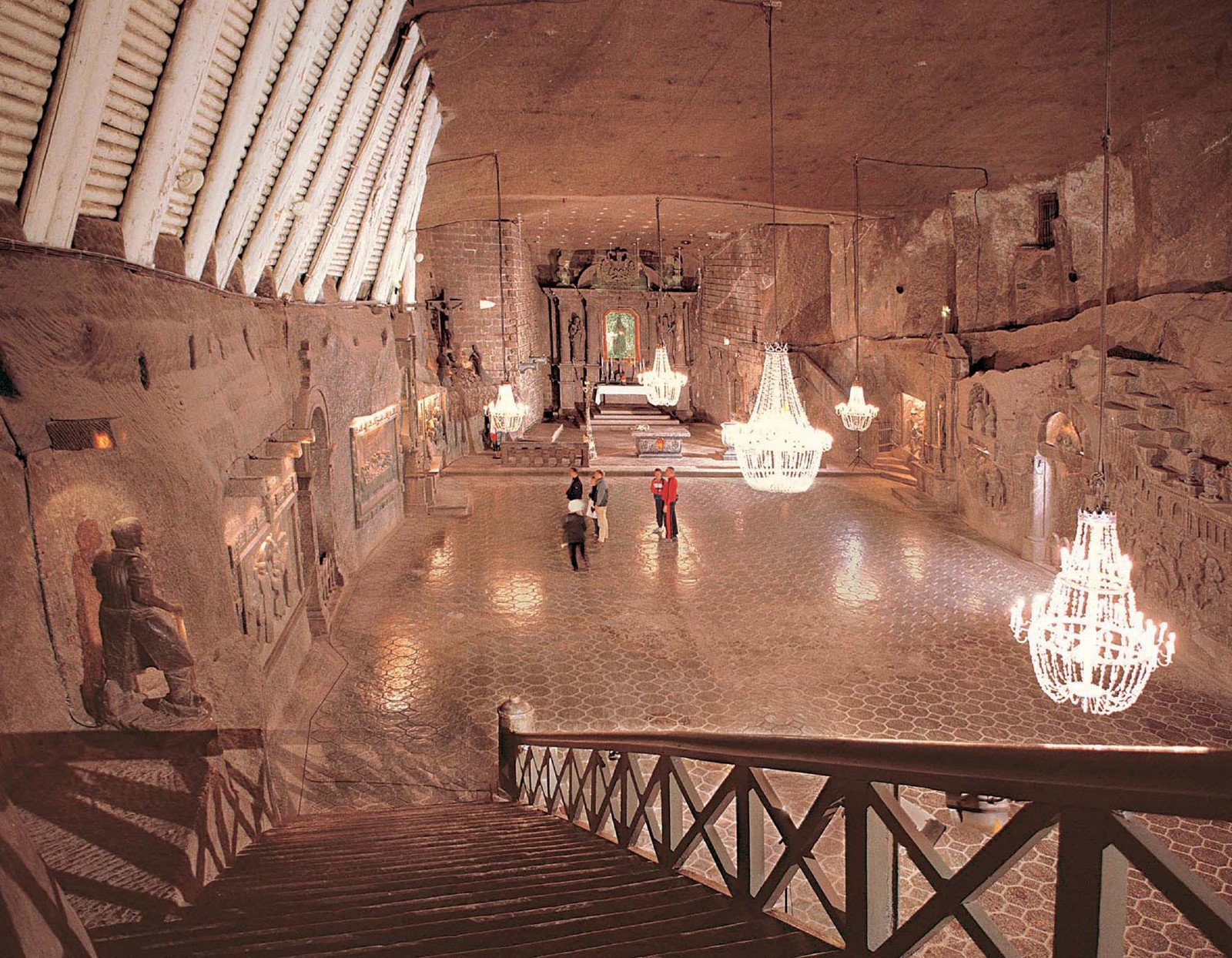
And the undisputed star of this underground show, at a depth of some 330 feet, is the St. Kinga Chapel, created by three ordinary miners, working one after the other, over a period of 70 years. It can hold 500 people and looks more like a cathedral.
“I think you will agree this is our crown jewel,” the guide said as we approached a balcony overlooking the chapel. It tested the imagination to realize that everything — the two staircases winding down into the chapel, the five huge chandeliers, the statues of Mother Mary, Baby Jesus and the Last Supper — were all carved out of salt.
Kinga Chapel, which was completed in 1964, can be rented today for receptions, balls or weddings for those who can afford it. Other smaller parts of the mine can also be rented for private occasions for lesser rates.
Plenty to explore
The tourist trail represents only a small portion of the mine. At roughly 450 feet, we were halfway down. Of the more than 2,000 chambers, we visited just 30 of them.
The air is brought in through a special ventilation system, a combination of salt air with iodine in it.
“It’s very good for asthma sufferers,” the guide informed us.
In fact there is a health spa on the third level of the mine where patients are treated for bronchial asthma and other respiratory diseases.
There are also two underground man-made salt water lakes, complete with wave makers, and a third lake that is natural. On the same level as the lakes is a snack bar and souvenir stand.
There are restrooms along the route, but sometimes placed not too strategically, so it’s wise to drink lightly before beginning your tour.
A museum displaying antique tools and a geological exhibit on the properties of salt round out the show. Small mine elevators then whisk you back up to ground zero.
An intriguing history
Wieliczka, a 20-minute drive from famed Krakow, is the oldest salt mine in Europe and has been listed as one of the top 12 attractions in the world by UNESCO. Almost 4 million people visit the mine each year, the vast majority from Europe.
The origin of the mine is a bit of a mystery, and the most popular legend can test even the wildest of imaginations. It seems that the daughter of King Bela IV of Hungary was responsible for the discovery.
On her marriage to a Polish duke, the princess received a salt mine in Hungary as her dowry. However, shortly after the ceremony, she either cast or lost her engagement ring in the mine shaft.
When she later came to Poland with her husband, they stopped at Wieliczka and she ordered a well to be dug, but lo and behold, instead of water, salt was discovered.
The legend grows even wilder here.
For when the first lump of salt was extracted, her engagement ring was found embedded in it. It had somehow made a “miraculous” journey from Hungary to Poland via the salt trail.
In any event, believe it or not, the mine was off and running.
The first miners were lowered down long shafts by ropes and used torches and manual tools to extract the salt. In the 17th century, horses were dropped down to haul salt and turn the huge elevator gears.
The animals rarely saw daylight again, living out their brief years underground, except for one week a year when they were brought to the surface for a “vacation.”
Building the chapels
The skills of the Wieliczka miners were well known in Medieval Europe. Still, the work was dangerous and many were killed.
As the miners were very religious, they adopted the custom of erecting a small wooden cross or wooden memorial whenever one of them perished.
But in 1697, a wooden chapel was consumed by fire and it was thenceforth forbidden to construct anything flammable within the underground.
So the miners turned to the obvious component — salt — for their future works. They began with small statues and crowned this magnificent underground museum with the St. Kinga Chapel.
Two brothers, Jozef and Tomasz Markowski, and a third man, Antoni Wyrodek, are generally credited with being the main sculptors of St. Kinga Chapel. They worked one after the other for seven decades.
St. Anthony’s Chapel, where services at the beginning of each workday took place beginning in 1698, was carved by unknown miners.
The third chapel, Holy Cross, houses the only wood chapel and sculptures on the tourist route, transferred there from an unsafe place in the mine. It is the only timber chapel that has been preserved intact and dates back to the 17th century.
You have to remind yourself from time to time that all of the sculptures — The Last Supper, Christ Preaching in the Temple, The Flight Into Egypt — all three chapels, everything you see, is the work of simple miners. The dedication and perseverance of these unsung heroes is truly amazing.
While the Royal Salt Mine at Wieliczka is well known throughout Europe, it is still pretty much a secret for North American travelers, even many of those who flock to nearby Krakow.
Poland is sitting on a salt mine, which could turn out to be a touristic gold mine.
Dominick A. Merle is co-founder of the International Food, Wine & Travel Writers Assn. and is based in Montreal.
 PREVIOUS ARTICLE
