


Lakeshore puts nonnative plants on notice
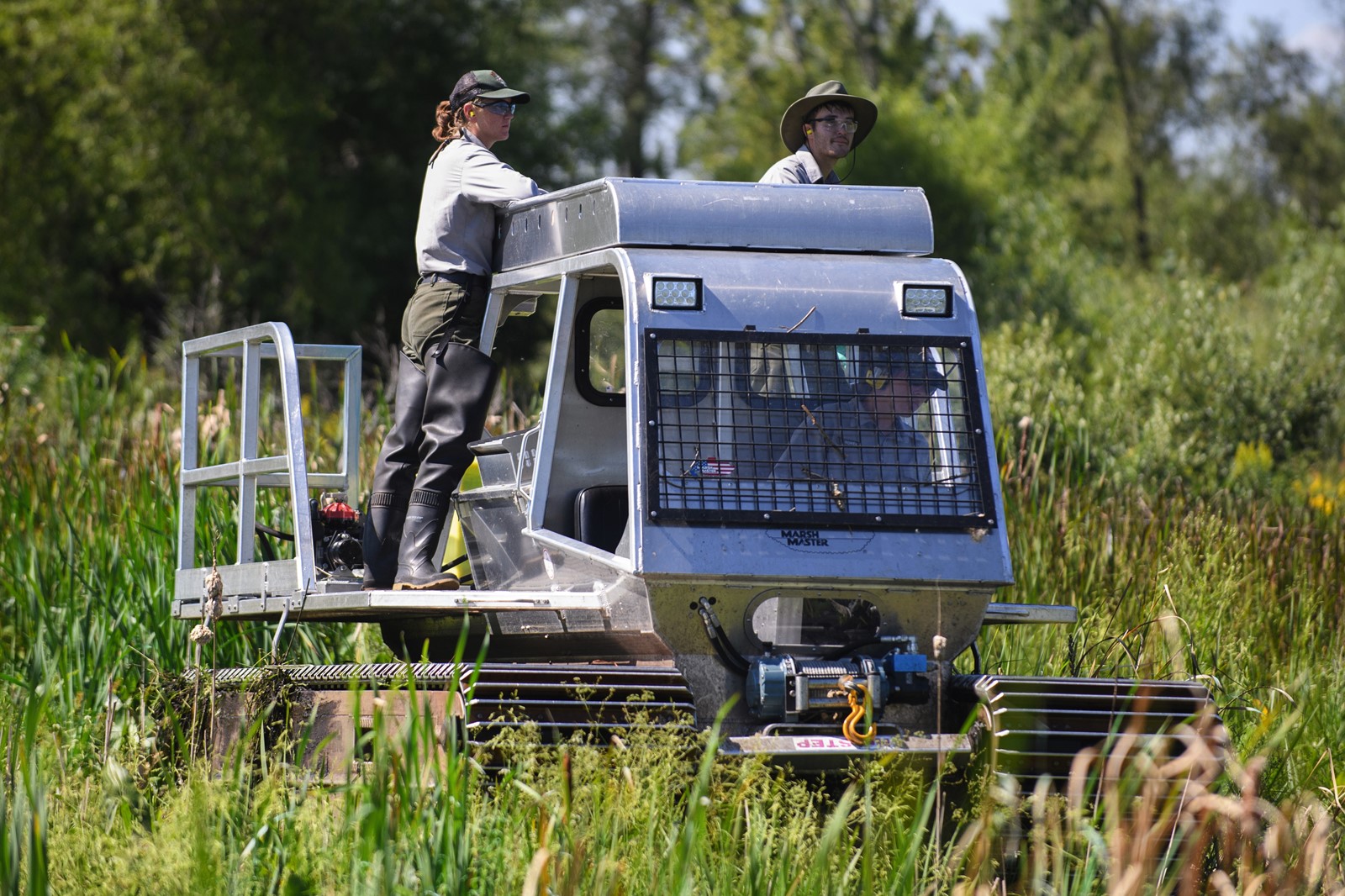
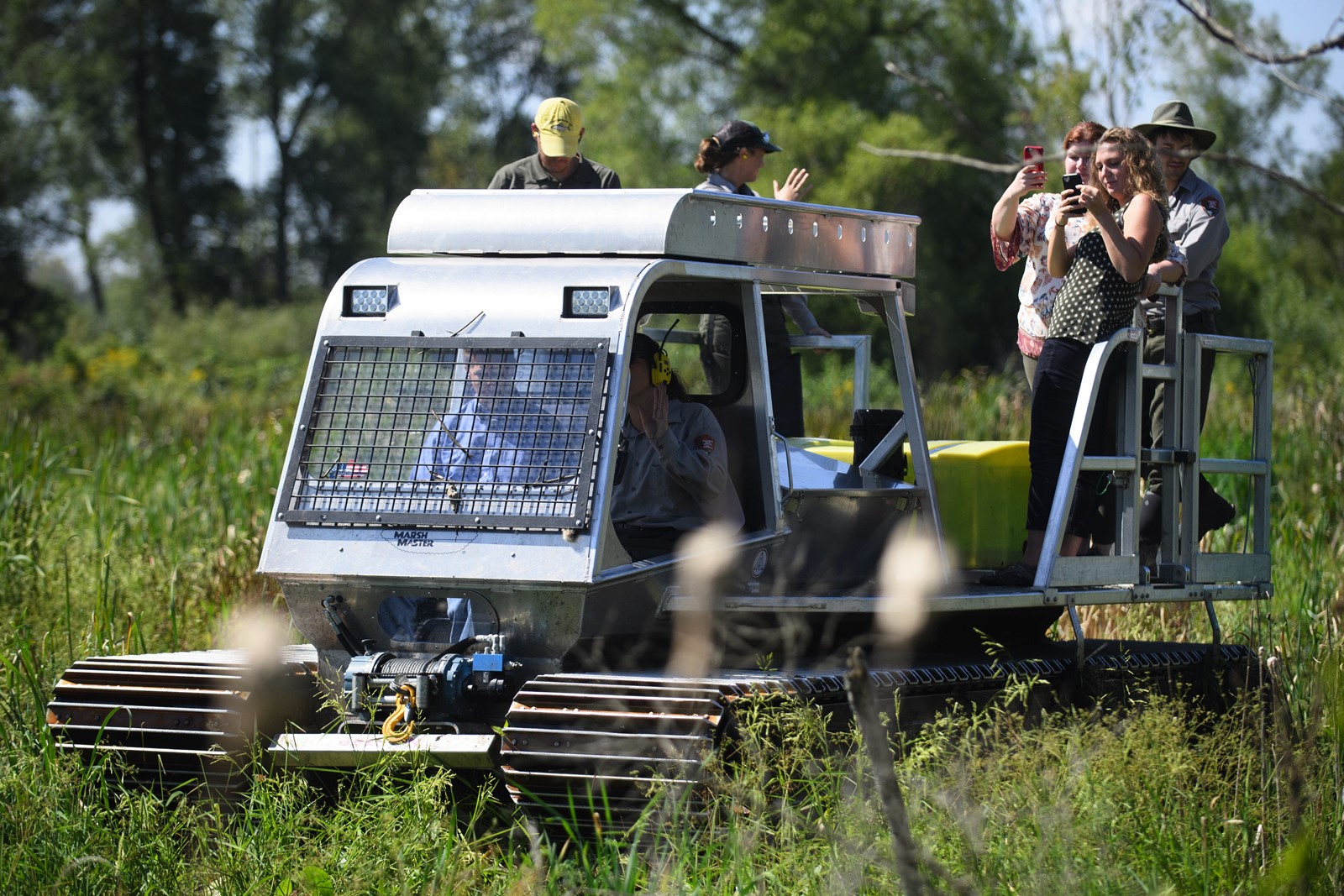


The Indiana Dunes National Lakeshore has a new tool for removing nonnative species from its wetlands: Marsha.
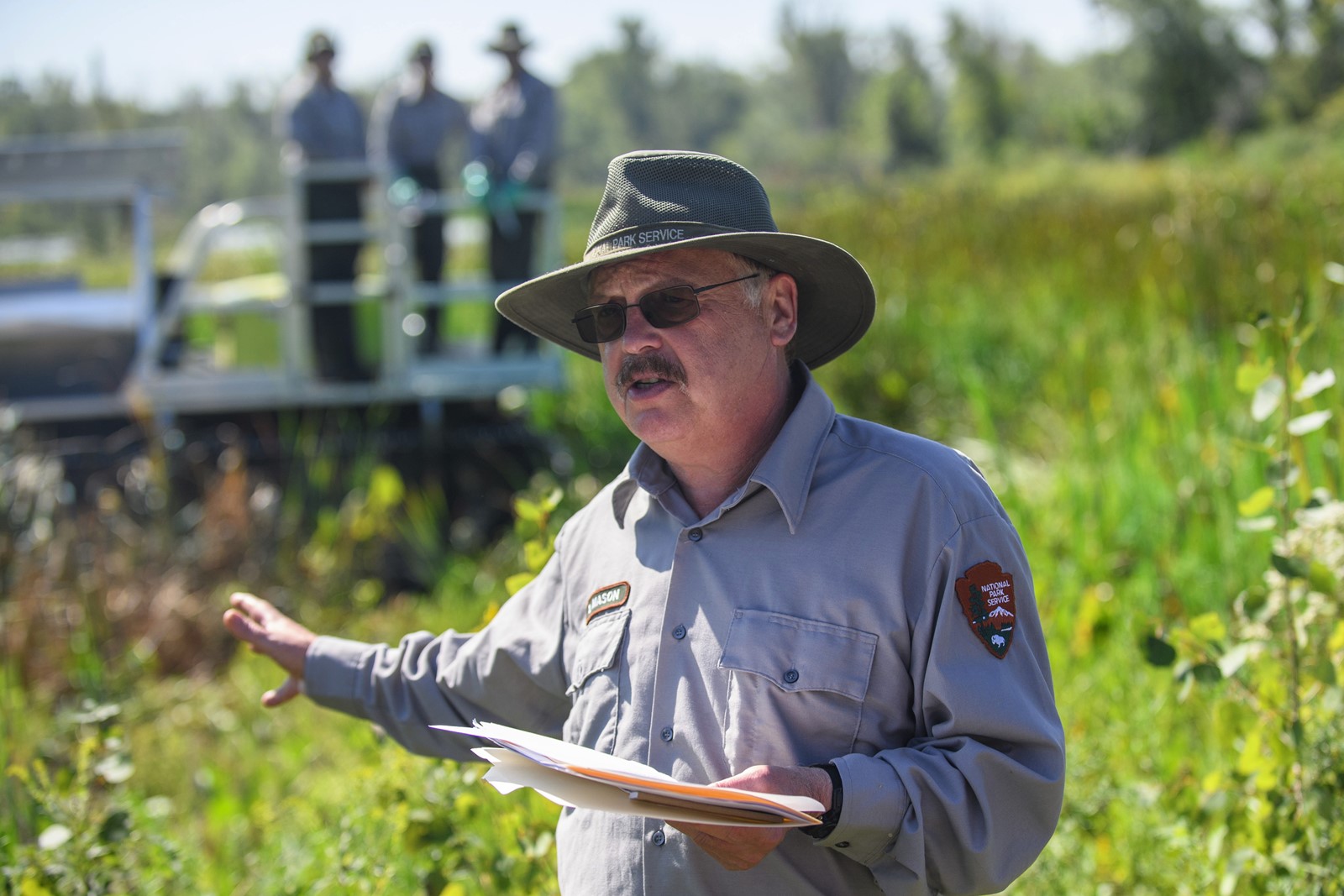
That’s what Dan Mason, a botanist with the park, calls the park’s Marsh Master, an amphibious vehicle with a 100-gallon sprayer and other tools for removing phragmites, hybrid cattails and other species that crowd out the plants that should be there.
The vehicle, unveiled Wednesday during a demonstration at the Great Marsh near Beverly Shores, was bought with funds from Save the Dunes, NIPSCO, and the Great Lakes Restoration Initiative, and cost more than $160,000, officials said.
The Lakeshore had been renting the vehicle at a cost of $13,000 a month for three or four months a year for the last four years, Mason said, adding that was more than enough to buy the Marsh Master.
The problem was funding, he said.
“We didn’t have enough money to buy the Marsh Master with one year’s funding,” he said.
That’s where the others came in.
NIPSCO kicked in $76,144 from its New Source Review Mitigation Fund, which Kelly Carmichael, vice president of environmental for the utility, said was part of an air violation settlement.
Save the Dunes offered $80,000 it received from another settlement agreement, and the Great Lakes Restoration Initiative provided $7,121, for a combined total of $163,265.
“It takes a community to say, ‘We want this, and we want to better these lands,’ ” said Natalie Johnson, executive director of Save the Dunes. “This is truly a game changer, and we at Save the Dunes could not be more excited or proud to be a part of this today.”
Mason said the Great Marsh was drained for urban development in the 1920s.
When the National Lakeshore acquired the land, it had more than 30 homes, trees, shrubs and remnants of a housing development.
In 1999, restoration of the marsh began, he said, adding it took three or four years to restore its hydrology. But with that restoration came nonnative plants.
Mason said people wearing backpack sprayers initially tackled the nonnative plant species, but they risked falling and getting hurt.
He said the Marsh Master does the work of 15 people with less damage to the wetlands because the vehicle weighs less in pounds per square inch than a person does and also is safer.
The vehicle, he said, can do the brunt of the work while a handful of people follow along to attend to edges and other details.
“We need to make sure this is running all the time to go after these invasive species,” he said.
The Marsh Master can be loaned out to the Indiana Department of Natural Resources, Indiana Dunes State Park, The Nature Conservancy and other organizations charged with removing nonnative plants, said Paul Labovitz, the Lakeshore’s superintendent.
“This is war,” he said of the battle against the plants. “This is a war machine.”
 PREVIOUS ARTICLE
