


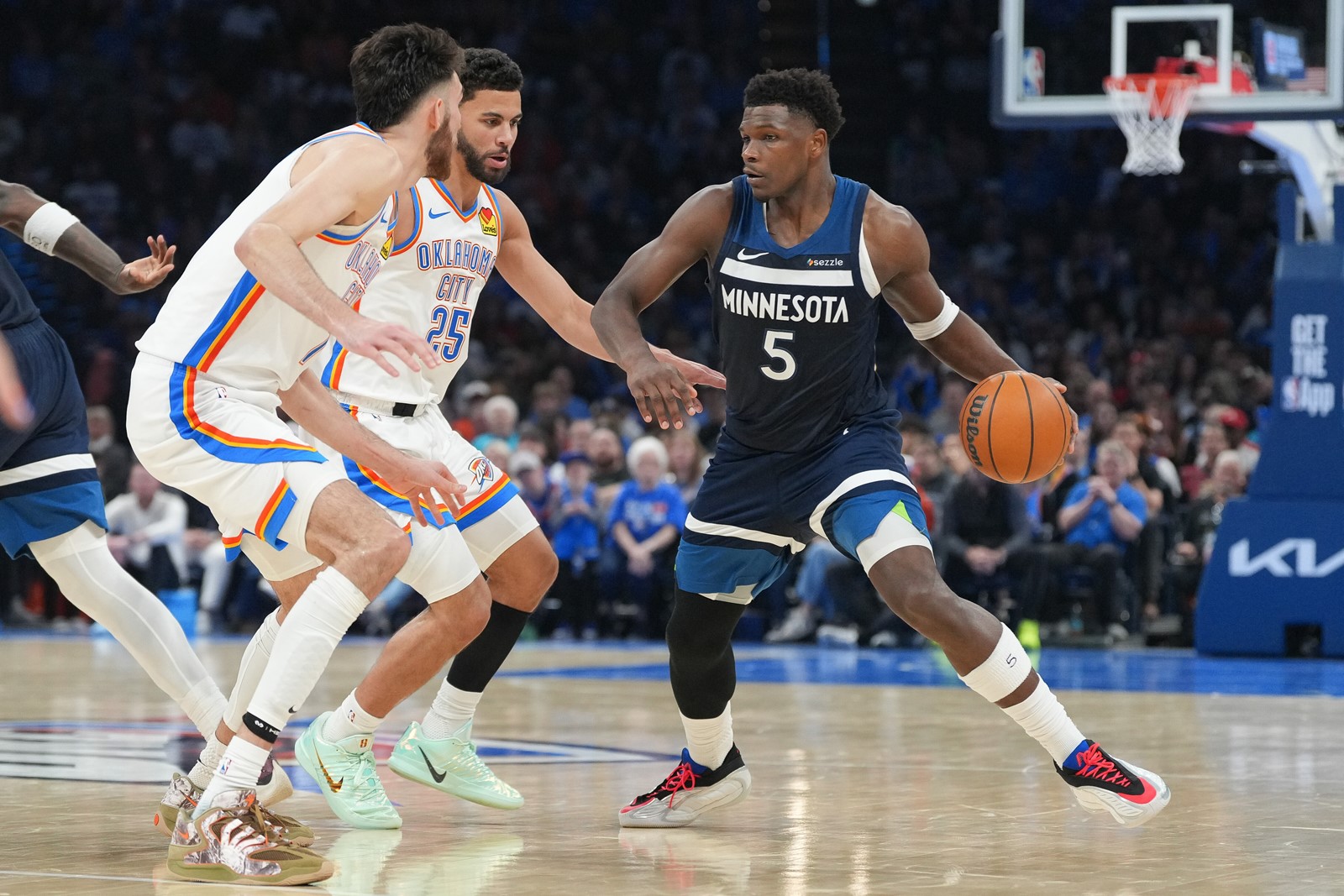
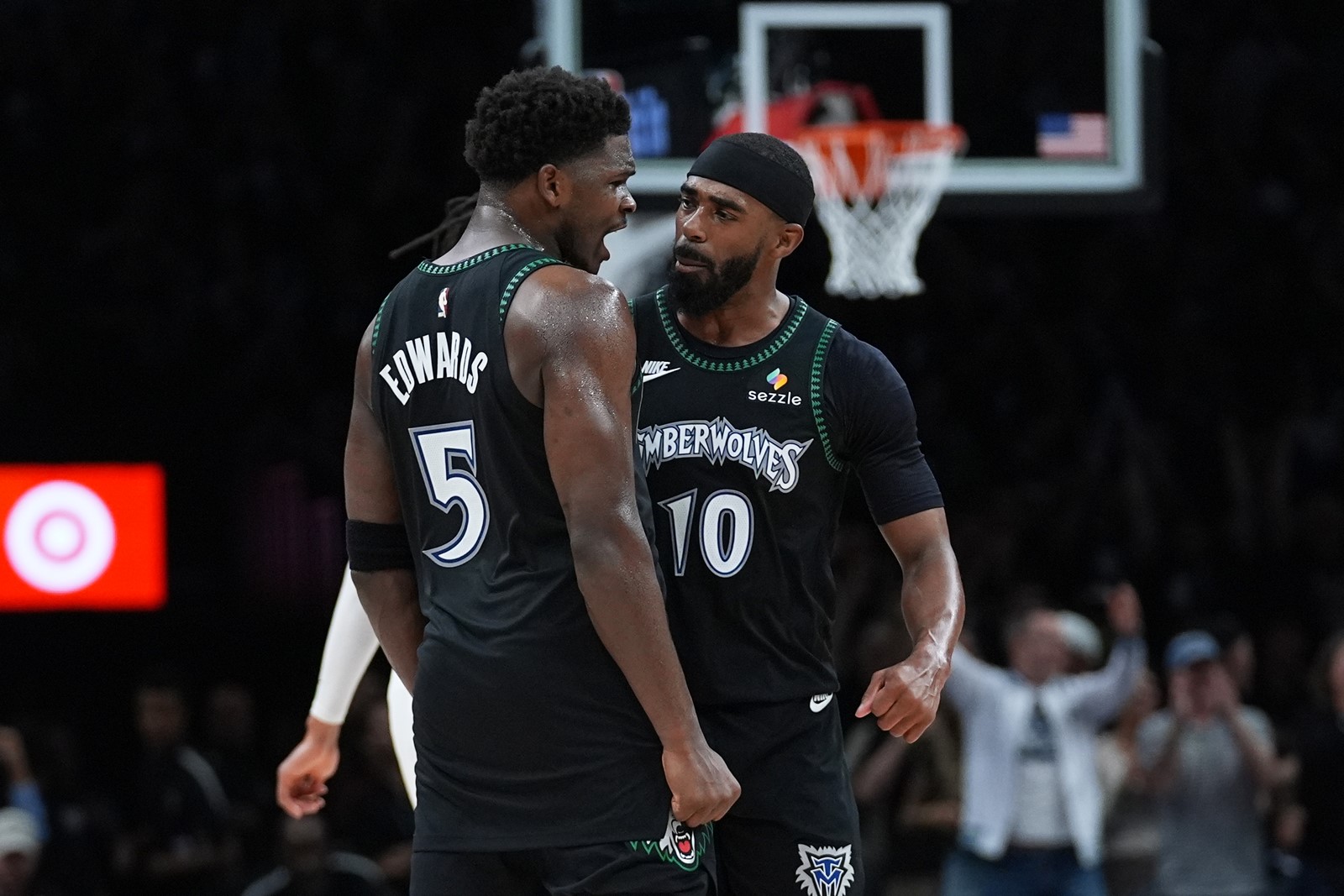
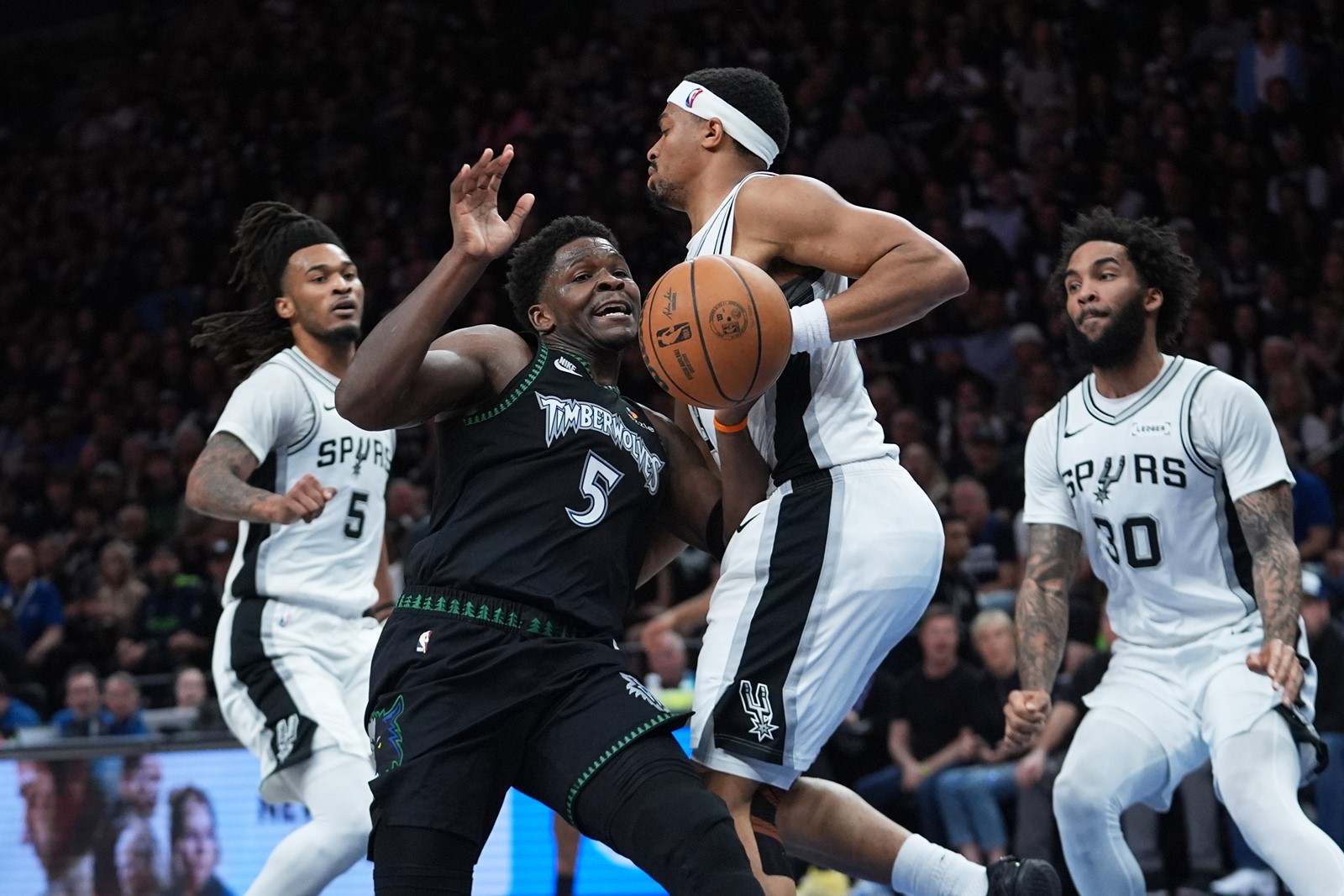
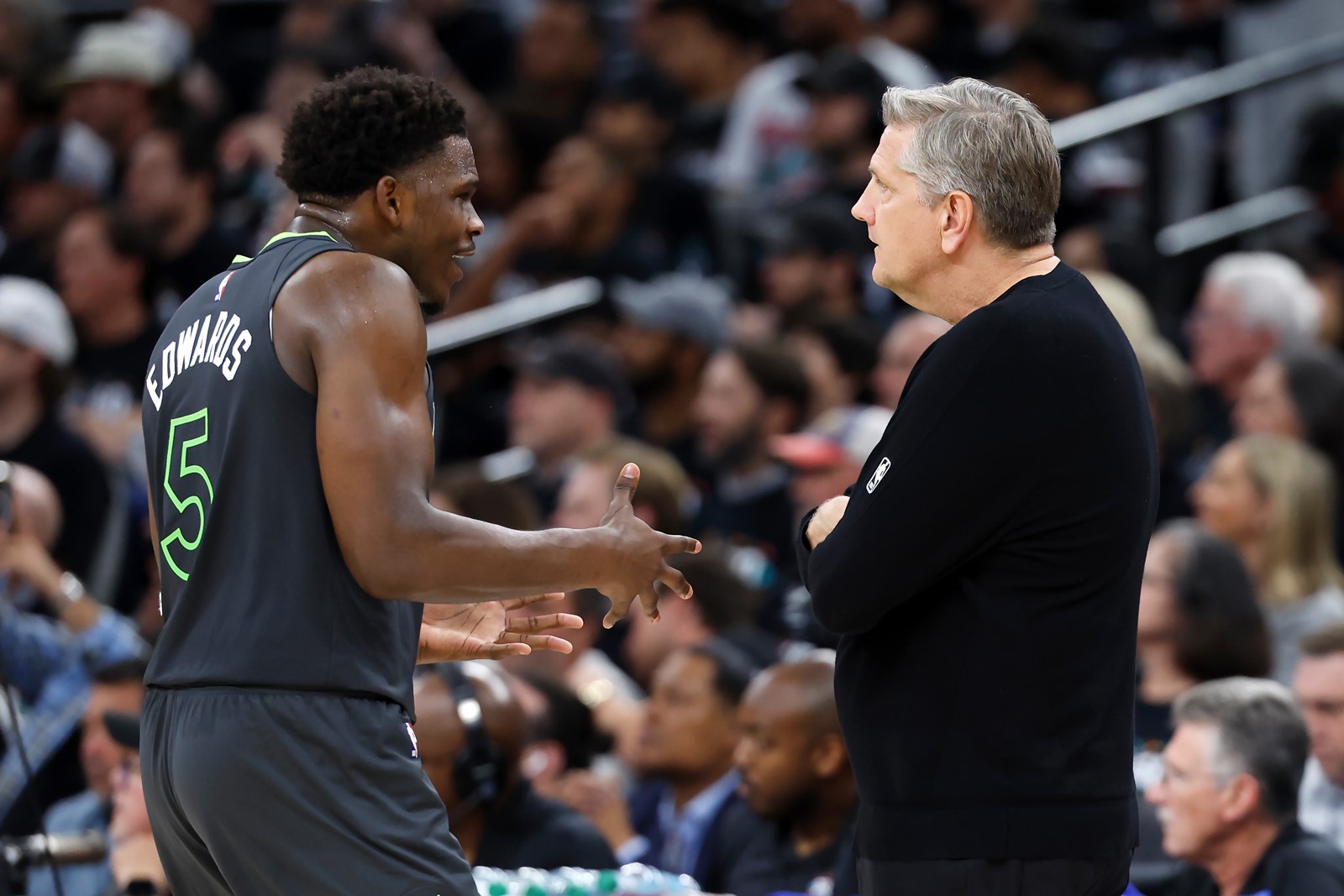


At his after-season media availability a year ago, Timberwolves basketball boss Tim Connelly discussed how Minnesota could “manage the game” better, and how the team’s general execution — particularly late in the game — would likely improve alongside the maturation of Jaden McDaniels and, more notably, Anthony Edwards.
Asked then if Minnesota would allow that process to take place organically, or perhaps bring in another Mike Conley-like veteran to provide a little cushion and assistance, Connelly sided with the former.
“We’re either going to win or lose with Ant,” Connelly said.
“It doesn’t mean we’re not always trying to look for complementary skill sets that can help him reach what we think he can be, but we’re either going to win a championship or not get there on the back of Ant,” Connelly said. “The greatest thing is he embraces that responsibility. He’s such a positive teammate. Obviously, he’s supremely talented, but I think there’s nobody in the league that we could choose who’s more ready for that level of responsibility.”
There was logic in the approach. Frankly, the best wings in the NBA — Luka Doncic in Los Angeles, Jayson Tatum in Boston, Shai Gilgeous-Alexander in Oklahoma City, Cade Cunningham in Detroit — all assume the role of floor general for their respective teams.
“The natural point guard isn’t there,” Wolves coach Chris Finch said. “Many teams don’t have one. So their best players have the ball and initiate offense in some way.”
The Wolves deemed it time to do the same with Edwards. The official transition took place just days before the regular season opener, when Finch moved Donte DiVincenzo into the starting lineup in place of Mike Conley, leaving Edwards as Minnesota’s official lead guard.
On Saturday, a day after Minnesota’s season ended at the hands of San Antonio, Finch called the move “original sin.” Moving DiVincenzo into the starting lineup seemed to help get the best out of the Italian sharpshooter, but Edwards’ insertion at floor general likely hurt all others involved.
“Ant included,” Finch said. “He had really good moments there. I think it was good for him overall, but it maybe affected us as a team a little bit more. It kind of threw off the rhythm and style with which we had been playing.”
Such a shakeup created a style-of-play shift that eroded any of the continuity Minnesota hoped to build on at the outset of the season. The Wolves opened the season with an easy schedule, yet stood at just 10-8 through 18 games. Things improved as the season wore on, but only marginally.
The Wolves’ offense was eighth in the NBA a year ago, including fifth-best from Jan. 1 on, and dropped to 13th this season. The team’s assist percentage plummeted from 11th best to 21st. Edwards himself dipped from 4.5 assists per game to 3.7.
Without an organizer on the floor, Minnesota’s isolation percentage rose from 7.8% a year ago to 9.6% this season.
It didn’t work. It led to a big uptick in directionless possessions in which Edwards or Julius Randle tried to make something happen on their own. And while that worked well at various points in the season, it is not a sustainable solution.
The conclusion drawn by Finch and seemingly every player up and down the roster was that while some teams don’t require a traditional floor general, Minnesota does.
“Definitely having a guy that can just settle everything down offensively, (like), ‘Okay, we need to play, we need a shot for this person or that person, we need to get downhill,’ (and) so forth,” Wolves forward Naz Reid said. “But having a guy who really moves the offense in that direction where he knows what’s best for the offense, it’s definitely huge. You definitely need a traditional point guard, I think, in my opinion.”
Because Reid is a good offensive player, as are McDaniels and DiVincenzo. There were many capable mouths to feed and no one in the heart of the rotation who was adept at operating a spoon.
Minnesota has capable passers and decision makers. McDaniels certainly belongs in that bucket. He and Ayo Dosunmu believe they’re candidates to serve as Minnesota’s “point guard” moving forward.
The Wolves seem to have realized it’s not Edwards.
“I think we learned that, like all star players, they’re going to have the ball in their hands a lot. But he needs help,” Finch said. “We can’t just burden him with having to make decisions and create for everybody else, as well as himself. … Ant’s a hard-wired scorer. That’s what he does. That’s what he does best, and we need to be able to set him up better.”
Who better to do that than a floor general who understands where people need to be and when to help all succeed?
“I definitely do think it will help a lot, especially with Ant, maximizing the guys on this team, Jaden, somebody that can set them up without them having to work so hard to make the plays that they make,” Conley said. “Those guys are working on both ends of the floor and getting double teamed and just having to do so much with the ball, taking so much energy from them when you have guys out there that can think for them, tell them to run the floor, go backdoor for an easy layup.
“Things that I think traditional point guards or guys that have that ball skill can provide for the team and be dynamic while doing it, also score the ball, also take something off their plate there where they don’t have to try to score 30 every night and they have another guy they can rely on to ease that pressure.”
 PREVIOUS ARTICLE

