




JATILUWIH, Indonesia — Far from Bali’s beaches and hotels, farmer I Ketut Jata stands on a mountainside, staring at terraced land that is too dry to grow the rice his family has long relied on for food and income.
“It is no longer possible to work in the fields as a farmer,” he says.
Bali’s water crisis is worsening from tourism development, population growth and water mismanagement, experts and environmental groups warn. Water shortages already are affecting UNESCO sites, wells, food production and Balinese culture and experts say the situation will deteriorate further if existing water control policies are not enforced across the island.
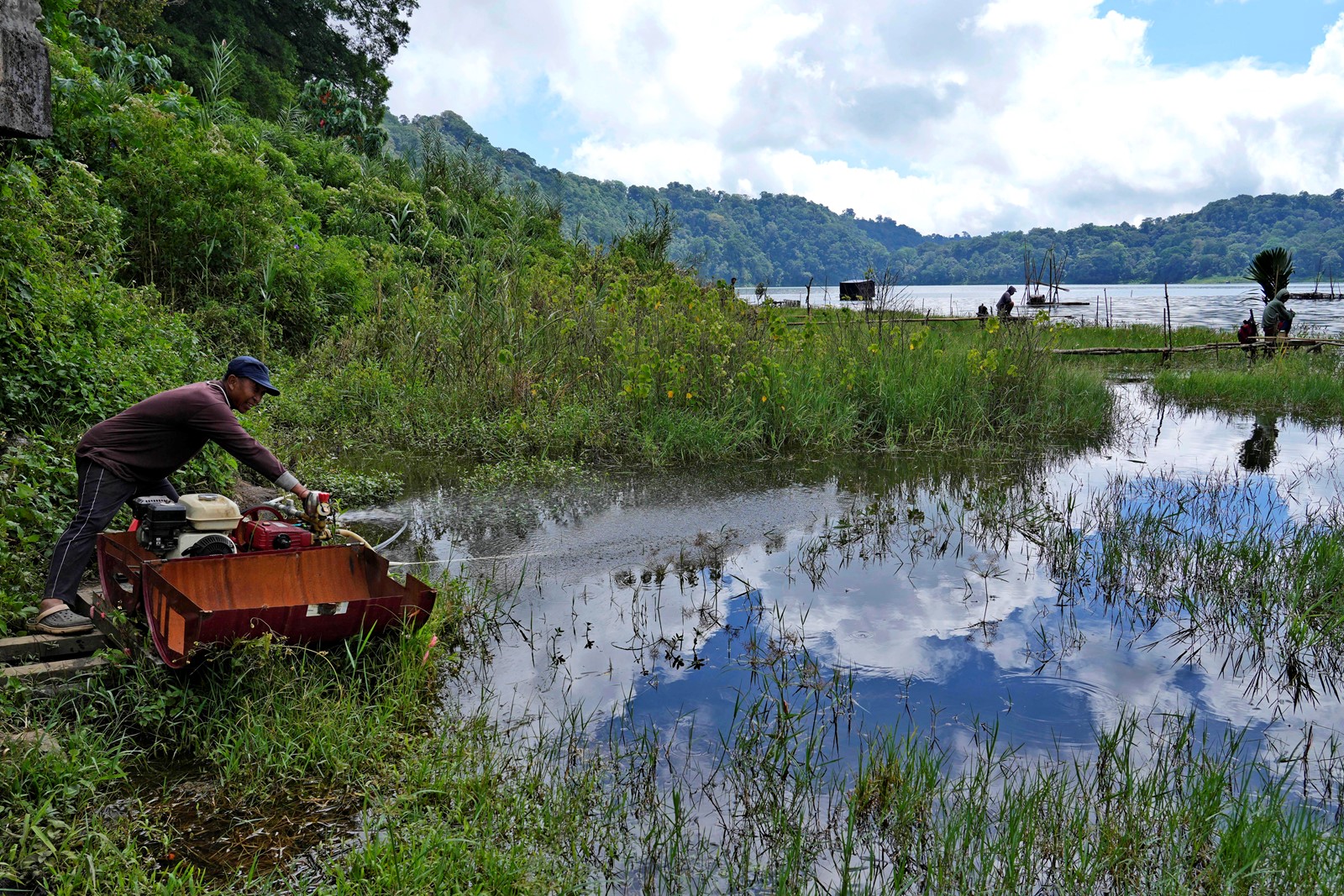
A tropical, volcanic island in the center of Indonesia’s archipelago, Bali relies on water from three main sources: crater lakes, rivers and shallow groundwater. A unique traditional irrigation system, called the “subak,” distributes water through a network of canals, dams and tunnels.
The subak, made a UNESCO site in 2012, is central to Balinese culture, representing the Balinese Hindu philosophy of “Tri Hita Karana”— harmony between people, nature and the spiritual realm.
Pressures are severely straining the subak and other water resources, says Putu Bawa, project manager for the Bali Water Protection program, led by a Bali-based nongovernmental organization, the IDEP Foundation.
The island’s population jumped more than 70% from 1980 to 2020, to 4.3 million people, according to government census data. Tourism growth has been even more explosive: Fewer than 140,000 foreign visitors came to the island in 1980. By 2019, there were more than 6.2 million foreign and 10.5 million domestic tourists.
With the tourism boom, Bali’s economy has prospered — at a cost. Rice fields the subak once coursed through have been turned into golf courses and water parks, while forests that naturally collect water and are vital to the subak have been felled for new villas and hotels, Bawa said.
Stroma Cole of the University of Westminster, who has researched tourism’s impact on Bali’s water supplies, says another issue is that the water table is dropping because Bali’s residents and businesses rely on unregulated wells or boreholes for clean water, instead of government-owned piped supplies.
In less than a decade, Bali’s water table has sunk more than 164 feet in some areas, according to data provided by IDEP. Wells are running dry or have been fouled with salt water, particularly in the island’s south.
Bali does have regulations meant to manage its water supplies, but there’s no enforcement, Cole said.
IDEP is currently installing sensors in wells across the island to better research monitor water levels.
But development across the island has continued, including a new government-backed toll road that activists say will further disrupt the subak system. New hotels, villas and other businesses are adding to demand.
 PREVIOUS ARTICLE

