


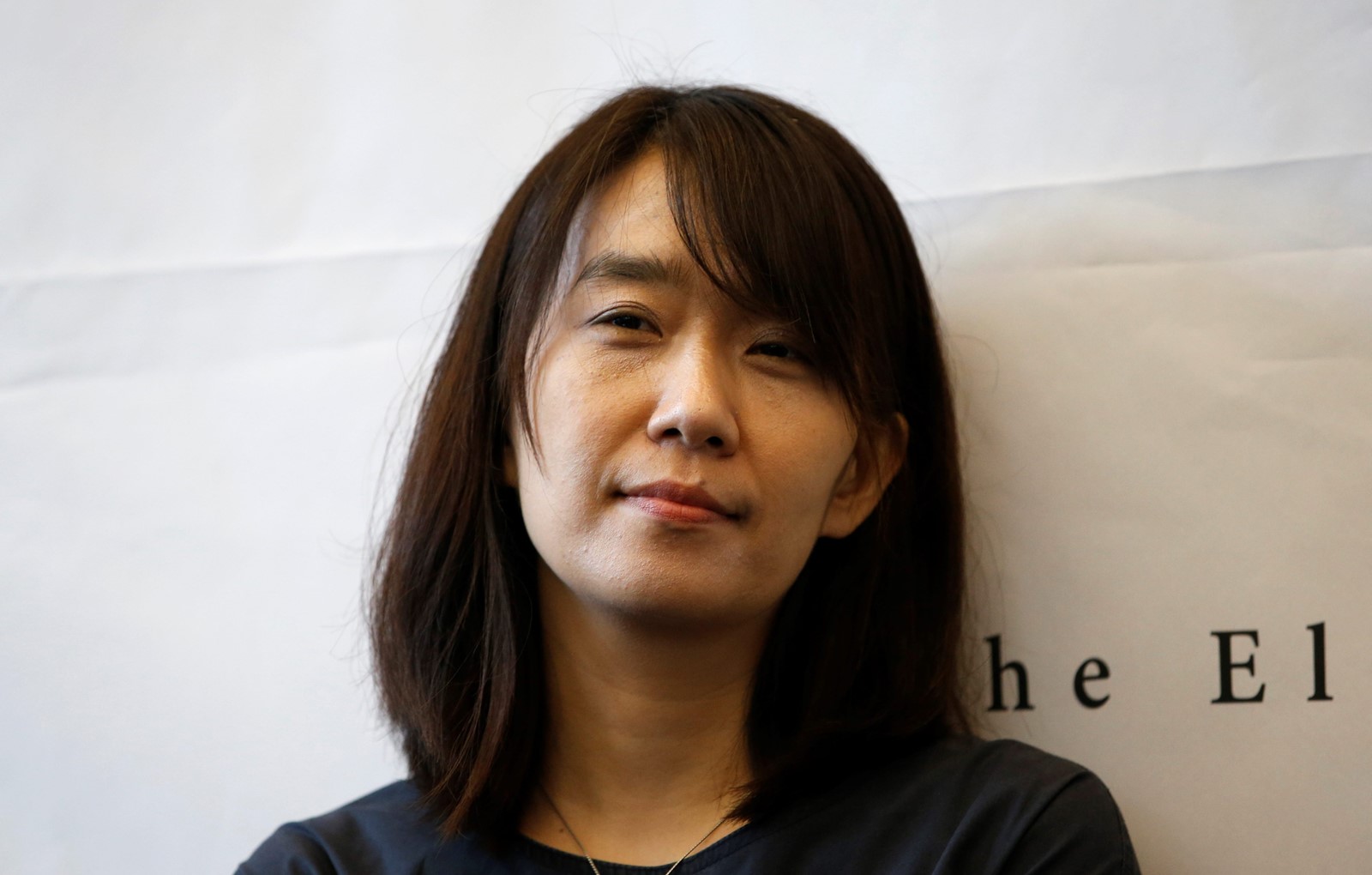


STOCKHOLM >> South Korean poet and novelist Han Kang was awarded the Nobel Prize in literature Thursday for a poetic and unsettling body of work that the Nobel committee said “confronts historical traumas and exposes the fragility of human life.”
A slow-burning international literary star who has won multiple awards in South Korea and Europe, Han is the first Asian woman and the first South Korean writer to win the Nobel literature prize. She was awarded for books, including “The Vegetarian” and “Human Acts,” that explore the pain of being human and the scars of Korea’s turbulent history.
Nobel literature committee member Anna-Karin Palm said Han writes about “trauma, pain and loss,” whether individual or collective, “with the same compassion and care.”
Nobel committee chairman Anders Olsson praised Han’s “empathy for the vulnerable, often female lives” of her characters.
Han is the second South Korean national to win a Nobel Prize. Late former President Kim Dae-jung won the peace prize in 2000 for his efforts to restore democracy in South Korea during the country’s previous military rule and improve relations with war-divided rival North Korea.
Speaking to the Swedish Academy by phone, Han said she was both “honored” and surprised to become South Korea’s first Nobel literature laureate. As for celebrating the win, she said: “I’m going to have tea with my son and I’ll celebrate it quietly tonight.”
Han, 53, won the International Booker Prize for fiction translated into English in 2016 for “The Vegetarian,” an unsettling novel in which a woman’s decision to stop eating meat has devastating consequences.
Accepting that award, Han said writing novels “is a way of questioning for me.”
“I just try to complete my questions through the process of my writing and I try to stay in the questions, sometimes painful, sometimes — well — sometimes demanding,” she said.
 PREVIOUS ARTICLE
