


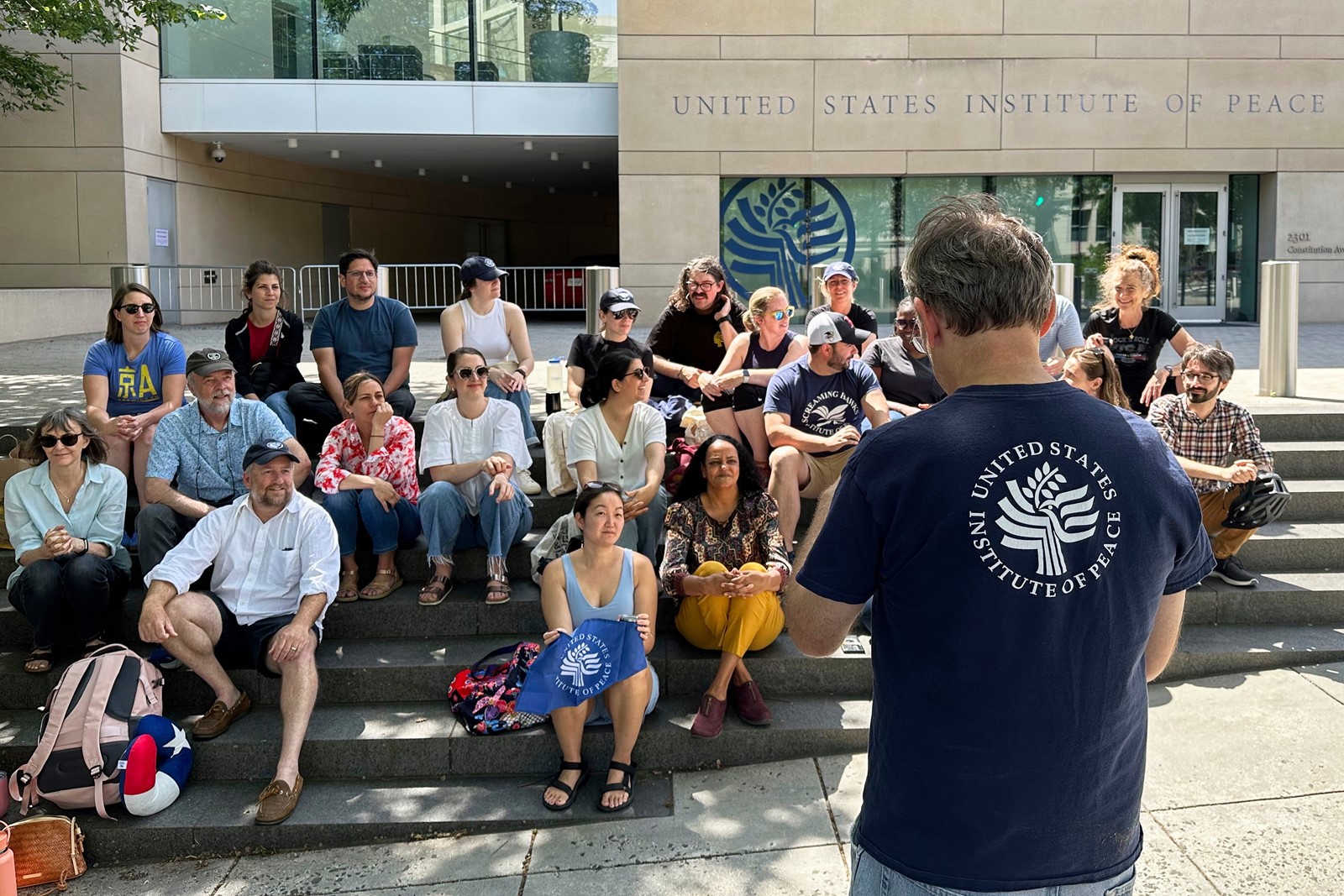


WASHINGTON >> Thea Price anticipated changes under the second Trump administration, but she never expected her life to be thrown into such disarray.
Along with the 300 other employees of the United States Institute of Peace, Price was fired, rehired and then fired again as part of President Donald Trump’s crusade to shrink the federal government, a chaotic effort that cut tens of thousands of jobs and shrank or dismantled entire agencies.
One year later, many of those impacted are left wondering whether their pain was worth it.
“Nobody was prepared for the complete destruction,” said Price, a former program operations manager. “And for what?”
The Department of Government Efficiency, or DOGE, led by then-Trump adviser Elon Musk, instigated purges of federal agencies with the expressed mission of rooting out fraud, waste and abuse.
USIP, a congressionally funded independent nonprofit, became a symbol of the upheaval. DOGE staffers entered the USIP building early last year, setting off a battle over who controls the institute, which later saw Trump plant his name on its Washington headquarters.
The blow to its workers came on March 28, 2025, when they were fired, a decision a judge later reversed and then another one reinstated — whiplash that still weighs on the former staffers. A year on, DOGE’s toll on people’s lives is clear — what was actually saved in the process of upending them is not.
Musk set a target of $2 trillion in savings. The DOGE website says it has saved about $215 billion through job cuts, contract and lease cancellations and asset sales, as well as grant rescissions.
More than 260,000 workers left federal service due to Trump administration initiatives in 2025, according to the Office of Management and Budget, including reductions in force, early retirement, deferred resignations and a hiring freeze.
“President Trump was given a clear mandate to eliminate waste, fraud and abuse from the federal government,” said White House spokesperson Davis Ingle when asked how much was saved. “In just a year, he has made significant progress in making the federal government more efficient to better serve the American taxpayer.”
Organizations that have examined elements of the DOGE operation, along with the Government Accountability Office, a congressional watchdog of how taxpayer dollars are spent, have not been able to pinpoint how much was saved, or lost, by the reform efforts. Many challenge the Republican administration’s numbers.
Dominik Lett, a budget analyst at the Cato Institute, a libertarian think tank, said there were basic mistakes on the DOGE pages tracking savings, leading him to believe the numbers were too high. He said Cato and other organizations have shied away from trying to arrive at a number because of the complexity of the moves.
“Who is getting fired matters. How they’re getting fired, will there be lawsuits?” was among the questions Lett has. Even terminating leases and contracts wasn’t as simple as it sounds.
In the end, he said, “we don’t know how much DOGE has saved.”
In her analysis of media reports and public sources, Elaine Kamarck, a senior fellow at the Brookings Institution think tank, found that about 25,000 people who were fired were rehired because they were deemed to be essential.
“What DOGE did is it cut so big and so deep and so randomly that when the Cabinet secretaries came in, and Elon Musk was gone, they realized that they had to bring some of these people back,” Kamarck said.
With that, Kamarck estimated the savings might hit between $100 billion and $200 billion, though final figures remain highly uncertain.
Created by Congress during the Reagan administration, USIP was meant to promote peace and prevent global conflict. At the time it was shuttered, the institute operated in more than two dozen conflict zones, including Pakistan and Afghanistan.
Employees watched as DOGE dismantled another organization, the U.S. Agency for International Development. Then, DOGE staffers showed up multiple times at USIP and ultimately took over the headquarters. Most of the institute’s board and the acting president were fired.
On the evening of March 28, 2025, termination notices began showing up in employees’ personal emails. Within two hours, most of the 300-plus staffers were gone.
USIP leaders and employees sued, arguing it was independent of the executive branch. A federal judge ruled Trump had acted outside his authority, in a decision that restored control of the institute and reinstated workers with backpay — though few returned as operations resumed gradually.
In June, an appeals court stayed that decision. And for the second time, the staff was fired.
 PREVIOUS ARTICLE
