




During its 12-year history, White Pony Express has become a powerful, unifying community-building force in the Bay Area.
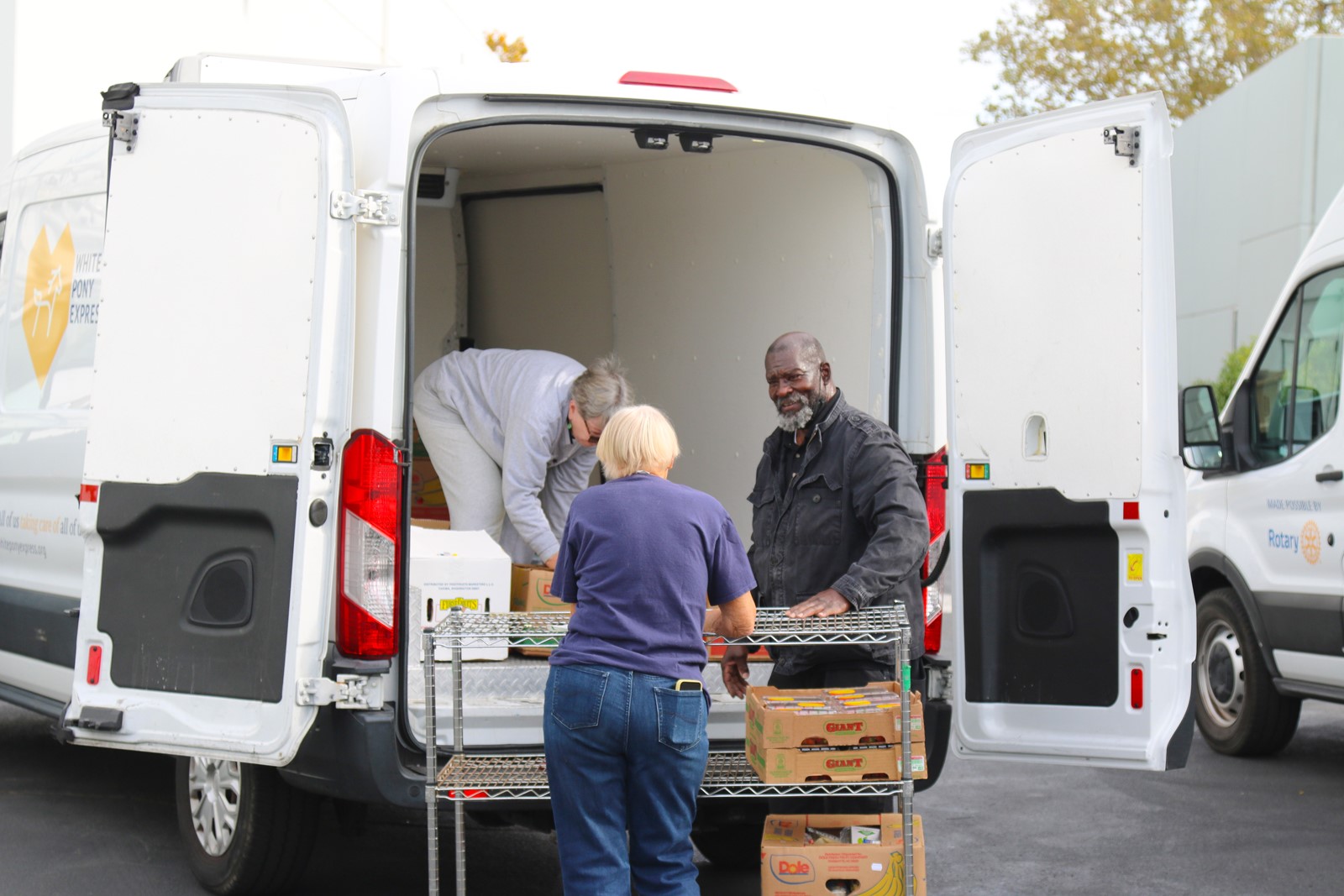
The Concord-based nonprofit food rescue organization run as of last year by a slim staff of 17 and a robust group of nearly 2,000 volunteers has rescued more than 27 million pounds of food, served 130,000 people in Contra Costa County and partnered with more than 100 nonprofits.
It has also delivered 1.5 million essentials such as clothing and hygiene items to vulnerable communities as well as bolstering the efficiency of service organizations meeting multiple needs at schools, low-income housing and senior centers, food pantries and other locations.
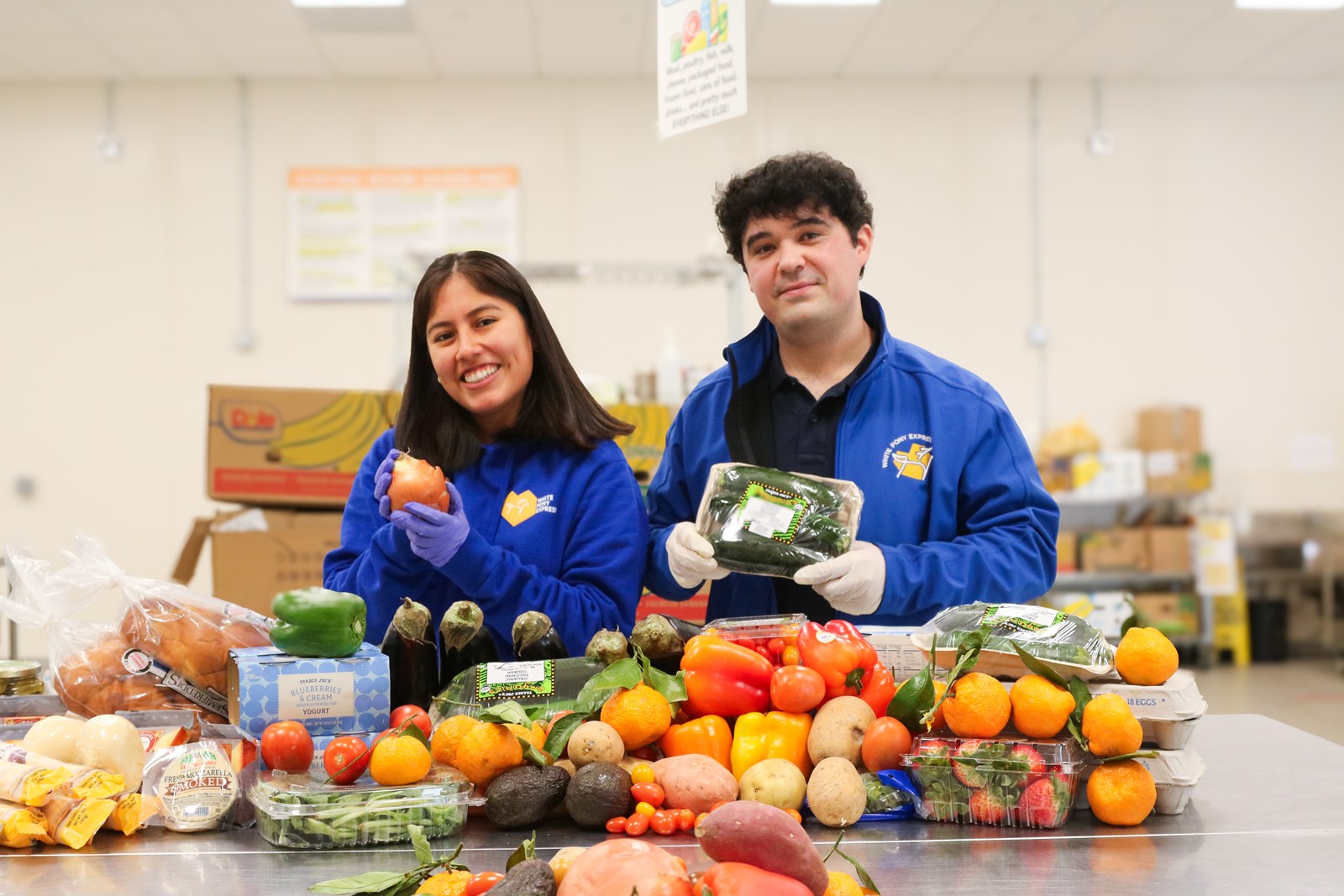
Built on a unique model created in 2013 by its founder, Dr. Carol Weyland Conner, White Pony Express (WPE) has pitched itself in neighbor-helping-neighbor opposition to hunger. In this country where residents throw away nearly 40% of the U.S. food supply while one in four Americans at the same time skips meals or relies on food banks, WPE prioritizes providing fresh, healthy, high-quality perishable food.
Experts say average meal costs are at 20-year highs during the current economy and only 2% of surplus food is being donated. Perishables such as vegetable, fruits and dairy items — the most commonly disposed of food — are collected by WPE and redistributed within 24 hours to nonprofit recipients. In many cases, this allows them to concentrate not on providing essential nutrition but on their core missions, such as housing support, health care, job training and placement and other services.
Despite the success of a proven model that includes a mighty volunteer workforce and a robust, protective six-month funding reserve for operations, WPE’s situation has recently become precarious if not dire. In the face of massive action by the federal government, cuts to the U.S. Department of Agriculture and Federal Emergency Management Agency on top of cuts to the state’s Cal Food program, SNAP/CalFresh, community project funding grants and other funding sources have erased nearly $450,000 from WPE’s budget.
In response, the organization is calling for individuals, businesses, foundations and other philanthropic groups to support their “Nourish to Flourish” spring fundraiser, which is running now through May 31. Immediate needs set the goal for raising $350,000 — enough to sustain operations without interruption during a critical time.
“You read in the media about the impact of the cuts on nonprofits,” Eve Birge, WPE’s chief executive officer says in an interview. “We’re living that. We see the desperation in the faces of people we serve.
“To not have the resources to take steps to help our most vulnerable community members is heartbreaking. All it takes for us to be the connector to our nonprofit partners and uphold our responsibility is our trucks, team and distribution center where we store the food.”
Birge says their operational model — with its primary focus on providing fresh, perishable food and collaborating in creative partnerships — is special and supremely viable.
“You don’t see cans in our warehouse. We specialize in high-quality food that just needs to be picked up and delivered to shelters, senior centers, nonprofits and communities located in food deserts.”
Asked about signs of response or actual dollars coming in from early adopters who have caught wind of the campaign, Birge admits foundations appear slow to react.
“This is the tragic reality we face. Foundations are reluctant to make up for the cut shortfalls. There’s the feeling there need to be ‘pain points’ for the federal funding that has been committed to service organizations to come back. They don’t want to pick up the slack and be left forever holding the responsibility.”
Although individuals donating have been consistent and continue to be generous supporters, Birge suggests the dollars needed this year due to the cuts are higher than ever. With most people experiencing firsthand the negative implications of a downturn in the stock market, she is reaching out to more corporations, clubs like the Rotarians and small businesses.
“One of our highest values is collaboration,” she said. “We recognize this is work we cannot do alone. We’re the invisible partner to about 110 nonprofits. This year, because we’re looking at such a large shortfall in funding, we’re engaging with more food partners. We want no good food to go to waste.
“We’d adore partnering with those big-box places like Costco and Target that partner with food banks (food banks and large entities are generally known to enter into contracts dictating exclusivity). “What we need are smaller places such as restaurants, catering companies, cafeterias and small markets. Basically, I’m talking about anybody who has surplus food at the end of the day.”
Importantly, businesses and others that sign on avoid paying for hauling fees and receive tax write-offs for donated goods. In addition to the cost-saving incentives, Birge says the fact that 12,000 pounds of salvageable, fresh food will go free of charge to recipients — instead of into landfills — is a win-win and boosts company morale.
Birge began her post as chief executive officer in 2019, but was already a volunteer and familiar with the spirit that drives the organization. Having worked in service-oriented positions related to reforming the juvenile justice system, in one example, and at the federal level in U.S. Education Department’s Office of Safe and Healthy Students and the U.S. Justice Department’s Office on Violence Against Women, she says she finds one-on-one interactions the most rewarding.
“The thing that drew me to White Pony Express is the idea of ‘all of us taking care of all of us.’ We are one human family and have a responsibility to care for each other,” Birge says. “Every day, I learn about people’s ability to give and sacrifice. It inspires me to take my own responsibility and not just pass by someone in need.
“These cuts are significant, and it’s my job to keep our doors open. I look to the volunteers, the people who come here three to four days a week, who drive their own pickups to deliver the food. It gives me faith in our community. They will not let White Pony Express go. They help me believe that together we will continue to make a difference.”
To donate to the “Nourish to Flourish” campaign or learn more about WPE, visit donorbox.org/whiteponyexpress or whiteponyexpress.org online, respectively.
Lou Fancher is a freelance writer. Reach her at lou@johnsonandfancher.com.
 PREVIOUS ARTICLE
