





Did you know that three things have happened since the last time we saw each other, when I was in kindergarten, an elementary-schooler asked Reed Sigmund a few months ago.
“I was like, three things?!” Sigmund, the artistic director of Stillwater’s Zephyr Theatre, joked good-naturedly.
“And he was like, ‘Yep. I’m over 5 feet tall now. I can do a Rubik’s Cube now. And do you remember when I was scared of the play?’ I said, I do, pal, yeah. ‘Well, I’m in love with theater now.’”
In the moment, Sigmund tried to display equal enthusiasm for each of the kid’s major life updates. (“Those are three amazing things!” he remembers saying.) But it was the third that was most touching to Sigmund, an actor and longtime Children’s Theatre Company cast member who joined the Zephyr as director of education in 2021 and added the artistic director role earlier this year.
In the years since a major financial crisis threatened the future of the nonprofit theater in 2022, Sigmund and new executive director Jim Weckwerth have led the theater to reemerge in the St. Croix Valley not simply as a rebooted sequel of what it once was but as a new version of itself. High-quality theatrical performances are still an optimal end result, the duo said, but the focus now is more on the process; less on bringing people into a theater and more on bringing theater to the people, through Sigmund’s long-running focus on youth education and school outreach programs and new outdoor play formats like this summer’s “The Hobbit,” which will be staged at Aamodt’s Apple Farm.
“We focused a lot of attention on rebuilding (the community theater program), but we were always committed from the beginning to keep the education programming going — and that never missed a beat,” said Weckwerth, who was named the theater’s interim executive director in 2023 and later accepted the position permanently. “We’re not just doing this temporarily. We’re not just doing this because we have to be. This is our mission. This is what we’re meant to be doing, and we’re embracing it.”
Sigmund is set to direct the Zephyr’s outdoor production of “The Hobbit,” which is scheduled to run July 23 through Aug. 2 at Aamodt’s; 6428 Manning Ave N, Stillwater. Two tiers of tickets are available: For $40 a person, all ages, you’ll have a provided seat close to the ‘stage.’ Or, for $35 for adults/$20 for kids under 10, you can bring your own camp chairs (no blankets, please) and pick a spot on the lawn, first-come-first-served. Showtime information and ticket information is available by navigating to “Events” at stillwaterzephyrtheatre.org.
In the lead-up to the production, the theater is also hosting An Evening in the Shire, a Middle-earth-themed community night, at 7 p.m. on June 6 at Aamodt’s. Along with live music, food and games, Sigmund and actors will present a preview of the summer show. Tickets to the event, which is also a fundraiser for the Zephyr, are also available online.
‘We’re starting to get some footing now’
In late 2022, the Zephyr was on the brink of implosion.
A week or so into October of that year, the theater’s founding executive director, Calyssa Hall, somewhat abruptly furloughed most of the staff and resigned her own position, leaving payroll checks bouncing and the nonprofit teetering. The theater owed some $50,000 in credit card debt, nearly $100,000 in unpaid staff wages and even more than that in back taxes, not to mention that the organization’s legal ability to accept tax-deductible donations had been allowed to lapse several years earlier with no apparent change in fundraising practices.
In interviews with the Pioneer Press, Hall and others who supported her seemed to blame the troubles on poor timing; that the Zephyr’s Board of Trustees had simply misunderstood the natural ebb-and-flow cycle of theatrical budgeting and had overreacted during the lean period before an ostensibly profitable holiday show — which, ultimately, ended up being scrapped in 2022 amid the budget crisis. Hall, for her part, subsequently moved up to Marine on St. Croix and launched a new theater company, Frosted Glass Creative.
But the Stillwater community clung to the Zephyr and kept it alive, Nicole Bartelt, the then-new board chair, said at the time. And that support has only grown over the past four years, current executive director Weckwerth said.
“It took a lot of people, and a lot of good leadership volunteering a lot of time,” Weckwerth said. “This community really does want local theater and wants to support it, and all of that together has helped us slowly get to this place to where we feel like we’re starting to get some footing now, some traction.”
Bartelt, whose term on the board has since ended, was a key player in the Zephyr’s recovery, Weckwerth said.
“It was one of those situations where it was the exact right person at the exact right time,” he said.
Weckwerth himself was formerly a Lutheran pastor but found that, as with individuals, nonprofit organizations need guidance navigating challenging times, too. Gradually, he moved from congregational work toward consulting, especially regarding strengthening leadership and fundraising, he said. As a longtime Stillwater resident, he’d been an audience member at the Zephyr and an occasional volunteer, he said; as it happened, the theater’s struggles were ones he was equipped to help solve.
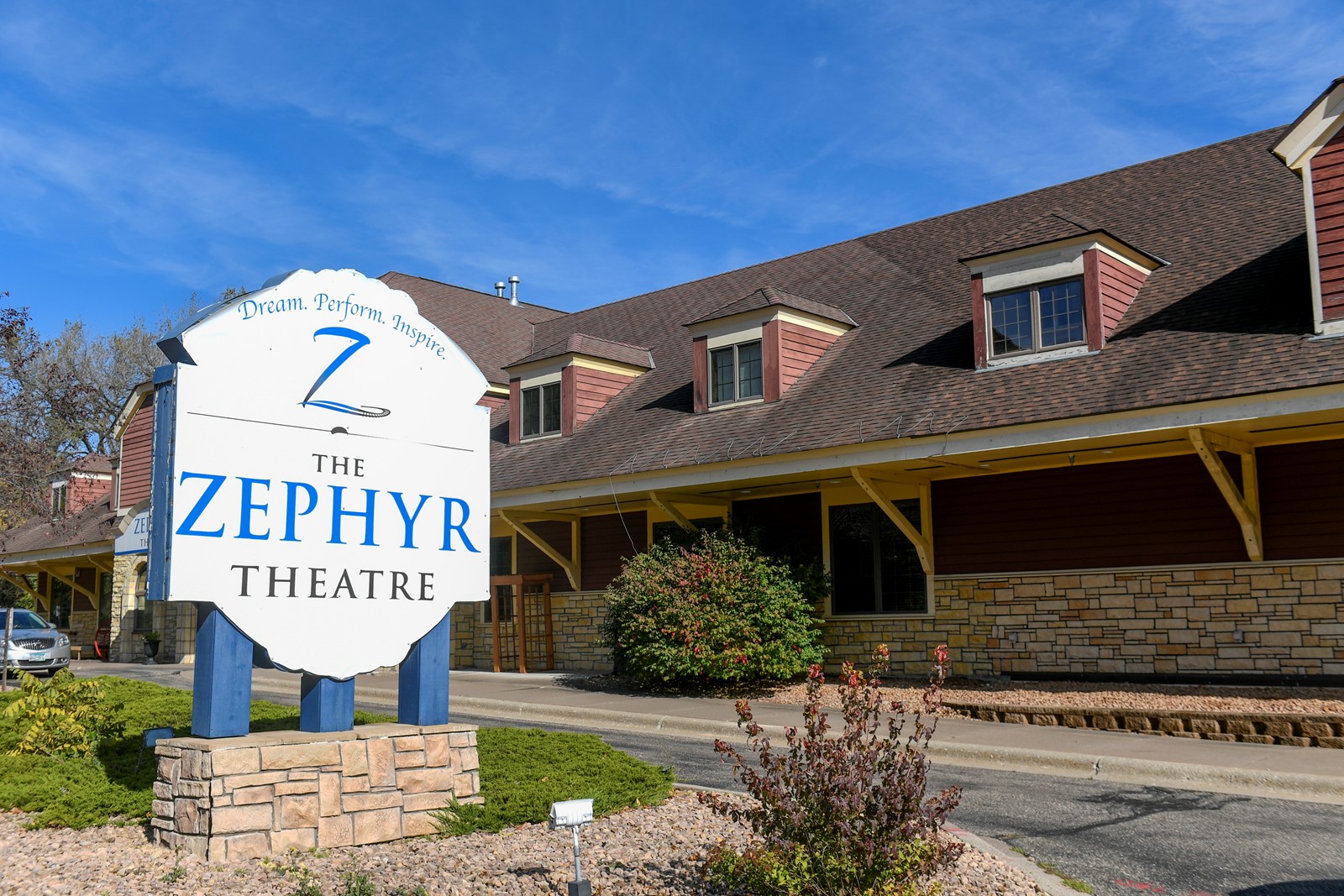
Among the difficult but necessary changes was the sale of the Zephyr’s building, a onetime train depot on Main Street that subsequently became home to a charter school.
“Had we not sold that building, we would not be here right now,” Weckwerth said. “But think about what that does to your mission as an organization. It was a 180-degree turn, in some other direction. We didn’t even know quite what that was at the time.”
‘We’re gonna have to find creative solutions’
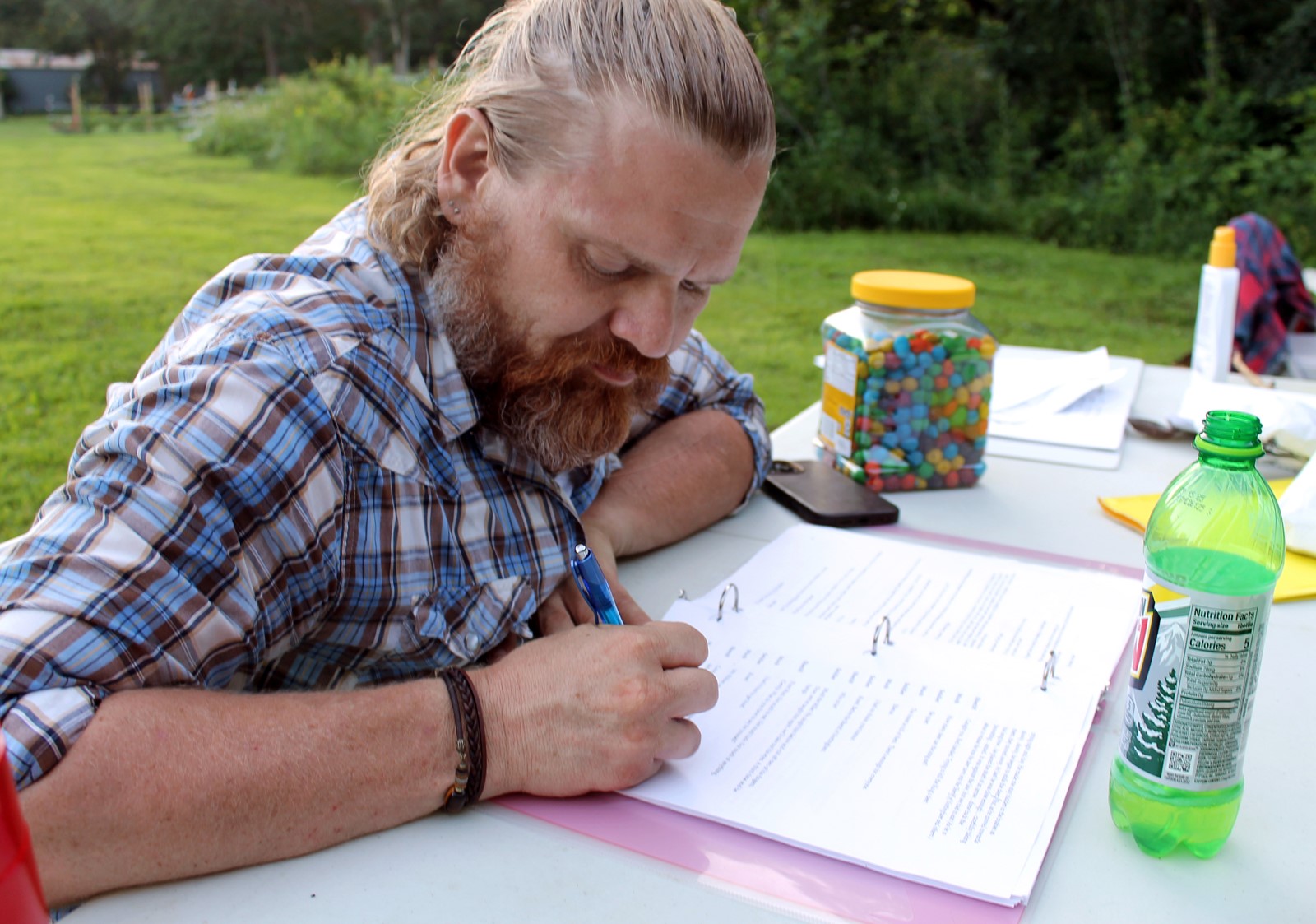
The answer, it turns out, is an enunciative, gregarious, well-caffeinated actor with a bushy auburn beard and penchant for singing along to ‘80s music playing over a cafe loudspeaker.
“Reed has been a great partner through all these years,” Weckwerth said. “We work well together, and we drink lots of coffee.”
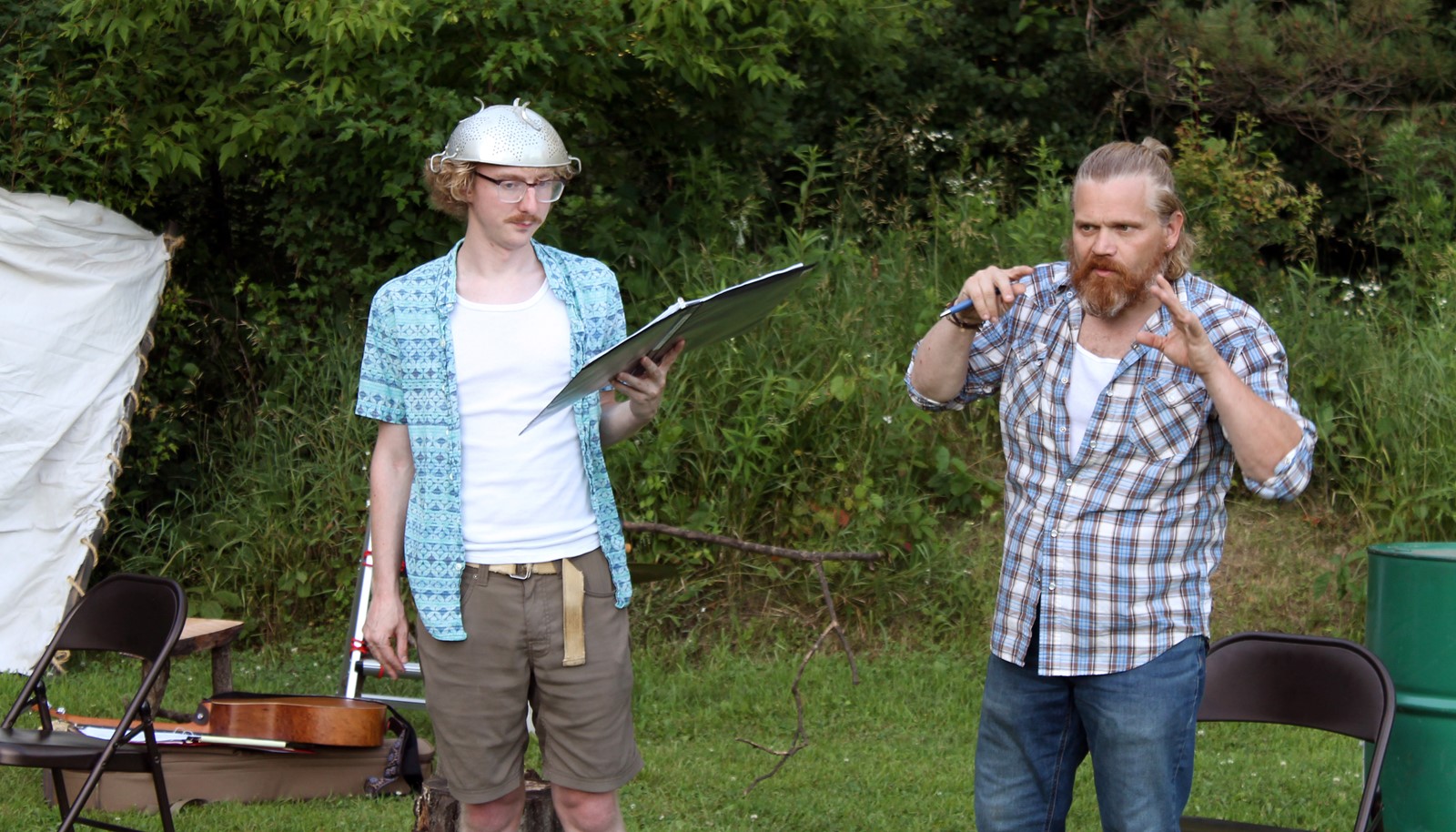
Last summer, Sigmund made his professional-theater directorial debut with a rendition of “Robin Hood” that, like next month’s “Hobbit” will be, was staged outdoors at Aamodt’s Apple Farm. Earlier this year for the Zephyr, Sigmund tapped fellow Children’s Theatre vet Amanda Espinoza to concoct and direct a Gilligan’s Island-inspired twist on Shakespeare’s “Twelfth Night.”
“I’ve never been about preaching to the choir,” Sigmund said. “I don’t only want to reach, connect or work with people who already have a passion for theater. It’s connecting with those who never knew that theater was a possibility; who never had either access or interest or even the opportunity to experience theater.”
This year, in St. Croix Valley schools from Stillwater to Hudson, the Zephyr Theatre has reached about 1,400 students, Weckwerth said. With support from nonprofit The Partnership Plan and other organizations, the theater runs a variety of co-curricular and after-school programs in elementary schools and summer theater for students of all ages. The goal is not theatrical education per se but rather, as Weckwerth put it, an “education program via theater.”
To illustrate this point, Sigmund offered another elementary-school story: On more than one occasion, a student has expressed a desire to play not just a villain, but a villain who loses — which, he said, the kids report is not something they always observe in the real world. These classroom plays are fully devised by the students, so Sigmund will ask what it should look like for the “good guys” to win the day, without inappropriate weapons or violence or threats.
“They’ll be like, ‘(As the villain), it means that I change my mind. I have to listen to them,’” Sigmund said. Indeed, he said, theater is “really about educating people to listen to each other, to understand that there’s going to be problems; we’re gonna have to communicate and we’re gonna have to find creative solutions in order to make this work.”
“Getting to watch kids grow; honestly, just seeing them want to have an impact and seeing them realize that they can have an impact — that’s a prize, man.”
 PREVIOUS ARTICLE
