




The town of Macondo never existed. It was never supposed to. And yet, here it is.
The idyllic town in Colombia was the imaginary setting for “One Hundred Years of Solitude,” the 1967 novel that helped Gabriel García Márquez win the Nobel Prize and that, over the years, led to many offers from Hollywood to create an adaptation.
The author always refused, insisting that his novel, in which the real and fantastical converge, could never be rendered on screen. His Macondo, he said, could never be built.
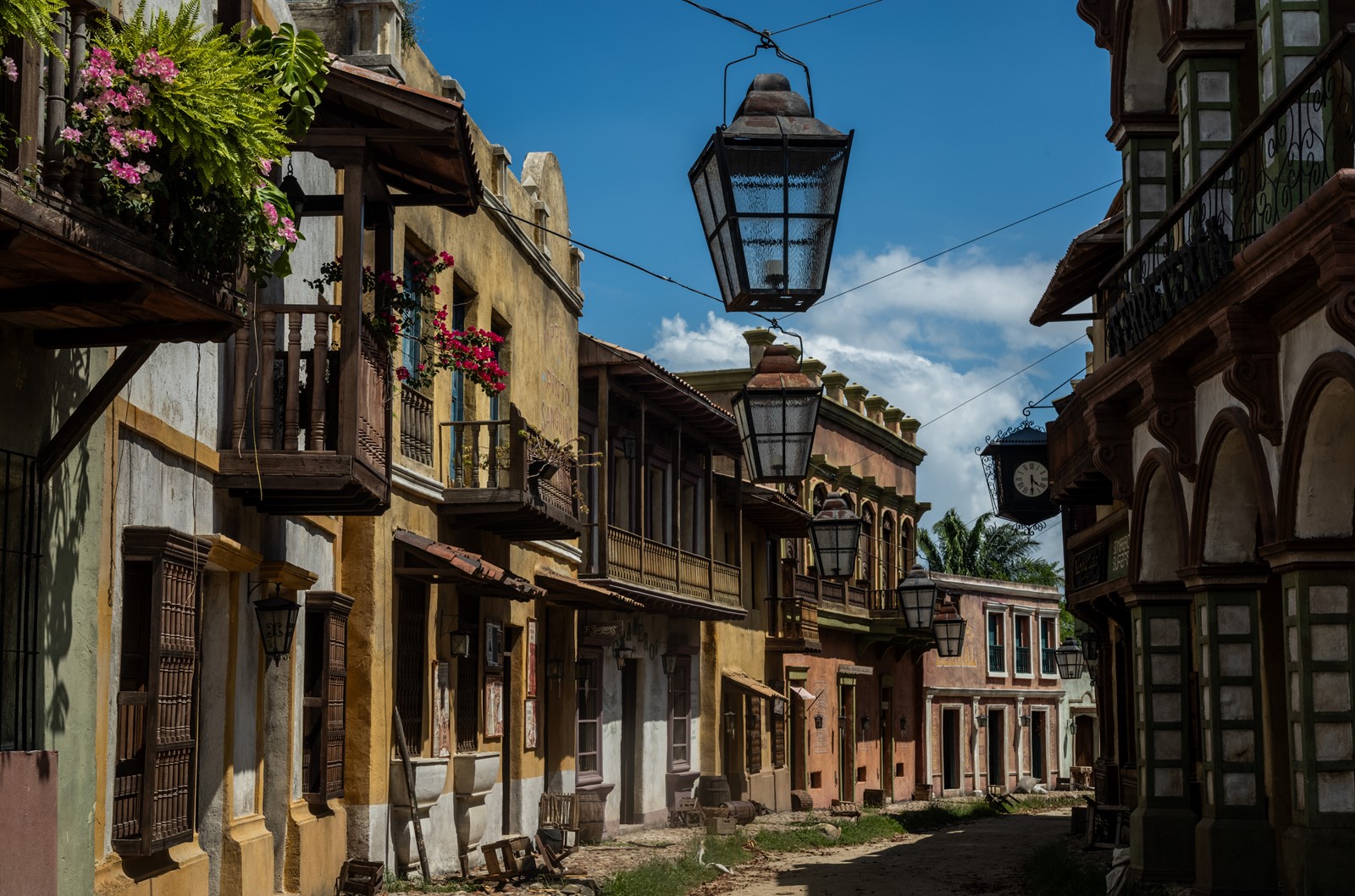
But now, in a rambling field outside the city of Ibagué, stands Macondo. Built by Netflix from the ground up for the first-ever screen adaptation of the novel, the town has real birds nesting in its trees and dogs wandering its narrow streets.
García Márquez did not want Hollywood to make a movie from his book, his son Rodrigo García said, because he could not picture English-speaking actors playing the Buendías, the family at the center of the novel. Nor could he see the epic story being squeezed into two hours — or three, or four, for that matter.
And then there was the issue of magical realism, which the author used to conjure his experience of Latin America’s capricious, stranger-than-fiction reality.
In the novel, which opens in the 19th century, the people of Macondo marvel at things already considered ordinary elsewhere: a daguerreotype machine, magnets, ice. But no one questions the presence of a ghost — or whether a baby can be born with the tail of a pig or flowers can fall like rain from the sky.
On screen, magical realism has proved notoriously hard to replicate: The visual effects used to create such images in the past tipped at times into fantasy or horror, or just looked silly. The 2007 film adaptation of “Love in the Time of Cholera,” the author’s other best-known book, was a box-office flop.
But in the decade since García Márquez died, much has changed and, in a turn he could not have imagined, Netflix has been able to overcome his old objections.
For one, the streaming giant could make a big-budget adaptation of the novel in Spanish, having proved the global appeal of Latin American content with hits like “Narcos” and “Roma.”
Netflix could also make a series, not a film, giving the plot more room to stretch out. Finally, it could film it in the author’s native Colombia, with mostly Colombian actors, said Francisco Ramos, the company’s vice president of content for Latin America. Netflix could make “Cien Años de Soledad,” not “One Hundred Years of Solitude.”
The author’s family said yes, and the first season, made up of eight hourlong episodes, began airing Wednesday. The second is in progress.
García, the author’s son, said the family had agreed in part because they felt a series could produce “the sensation of having experienced 100 years of life,” which is a hallmark of the book, he said.
“That, to me, is what’s important,” he said. “It’s the total experience of immersing yourself.”
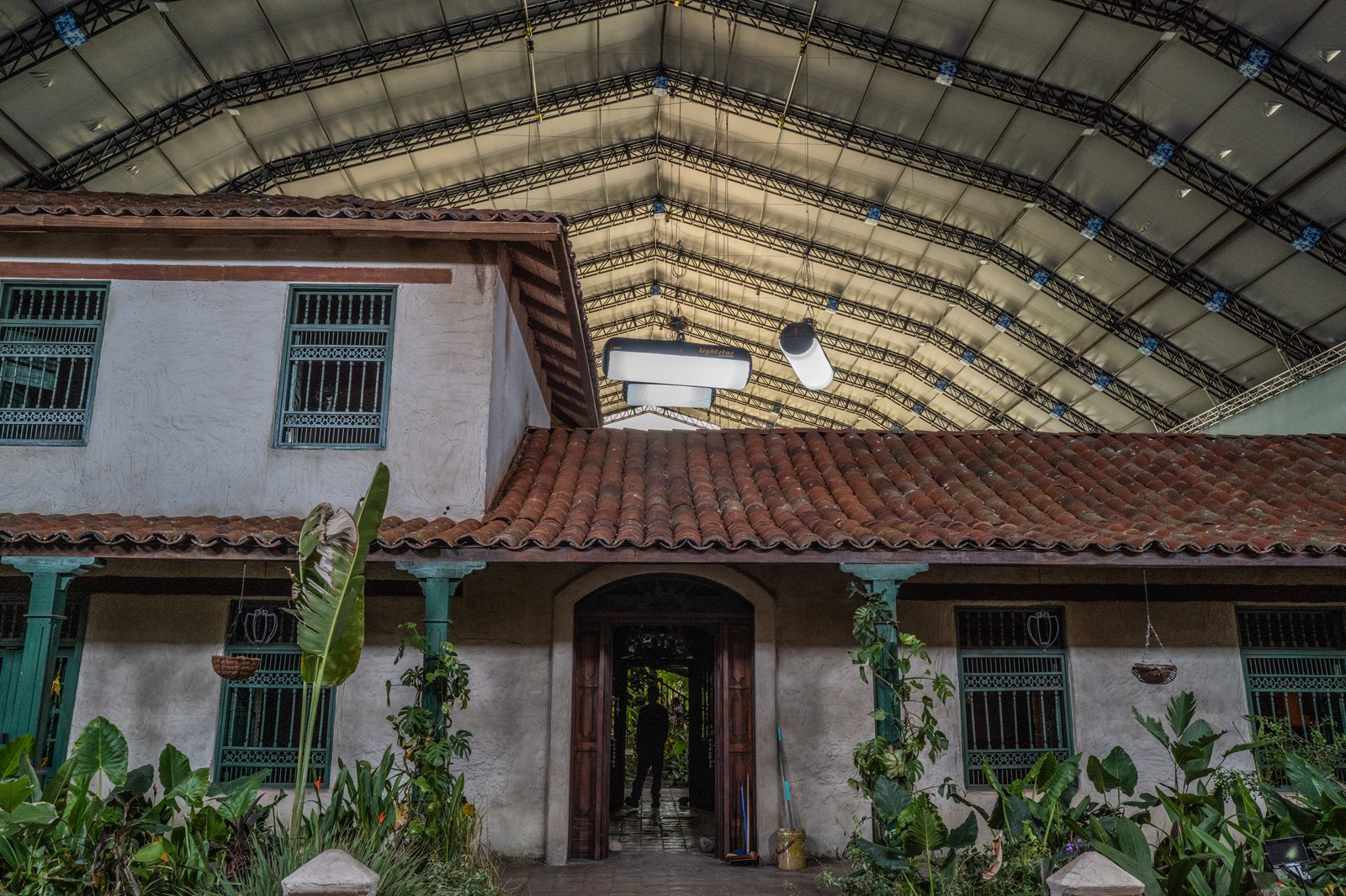
And so now, Macondo — and a studious replica of the Buendía home, sheltered beneath a hangar — have become reality.They are so real, so immersive, in fact, that sometimes the actors aren’t sure where the fiction begins or ends.
On a recent afternoon, as the actor who plays an older Úrsula, the Buendía matriarch, prepared to shoot a scene in the kitchen, she held out an egg before cracking it on a bowl and laughed.
“Is it real, or is it fake?” asked the actor, Marleyda Soto.A total commitment to recreating reality, or the novel’s version of reality, would guide their work, the creators decided. With that, would they — finally — get magical realism right?
Inside Macondo
In Colombia, where García Márquez appears on the currency, many people can recite his book’s opening lines: “Many years later, as he faced the firing squad, Colonel Aureliano Buendía was to remember that distant afternoon when his father took him to discover ice.”
In the series, the scene lets viewers see how what might appear ordinary elsewhere is often experienced as magical in Macondo, a town isolated by a dense jungle swamp near the Caribbean coast.
When ice comes to the town for the first time, it is not just a novelty, a sign of modernity, but an otherworldly spectacle. Mirroring the author’s elaborate description of the moment, and hewing closely to the text, the filmmakers create a theatrical scene in which light and shadow evoke an almost religious experience.
The ice also signals the arrival of the first outsiders to Macondo. They are a troupe of Gypsies who bring the esoteric knowledge — and basic scientific instruments — that charm José Arcadio, the Quixote-like family patriarch.
He eventually sets to work on alchemy, melting down his wife’s gold coins and leaving his family to fend for itself. While his head is buried in a book, one of his sons runs off with the Gypsies. Later, his daughter nearly floats off in her bassinet. He casually pulls her down, more annoyed by the distraction than amazed.
Like other scenes where the impossible occurs, the moment is presented in the series without drama or fanfare, much as it is in the novel by the author.
That approach was part of “visually capturing a special book,” said Alex García López, one of the first season’s two directors. “This is the culture of the Caribbean,” he said, where Catholic mysticism mingles with Indigenous and Afro-Caribbean beliefs about life and death, the body and the soul.
Portraying reality as it is experienced by the characters became the guiding vision of the project, García López said. What is familiar, what is theirs, is taken for granted; the new enchants and ultimately destroys.
That is strong social commentary. It is also playful, said García López, who is from Argentina. “It’s typical of Latin America,” he said, “to think that everything that comes from abroad is better than what we have at home.”
The next figures to bring the outside world to Macondo are a magistrate from the capital and a priest, the personification of politics and organized religion.
Against the wishes of the Buendías, they transform the town, painting houses in the blue of their political party and erecting a church. Like the Gypsies, they also claim one of the family’s sons, who will head to war.
Flesh and blood
To keep the production grounded in the characters’ reality, the filmmakers shot the scenes involving magical realism in front of the camera, avoiding visual effects whenever possible, said Laura Mora, who is co-directing the series.
“That had to do with a formal decision on our part,” Mora said. “‘Everything has to feel very homemade, very analog, very, very on-camera.’”
So, for example, the ghost that haunts the Buendías was not a translucent apparition made in postproduction, the directors said. He was a flesh-and-blood actor — with lots of blood.
Likewise, the scene in which the town’s priest levitates after drinking hot chocolate was not filmed in a studio against a screen. The actor was hauled up right on the set, using ropes and harnesses.
And in the memorable scene when it rains flowers, thousands of real (and plastic) flowers truly did fall from above while the cameras were rolling.
Mora said the hope was that if the magical scenes looked just like the rest of the drama, they would be more convincing.
“For the actors, that was delightful, because everything was happening on the set,” Mora said. No one had to be told to imagine things that were not there, she said. “That was really beautiful.”
An homage to Colombia
The town of Macondo embodies the commitment Netflix made to the author’s family when it got the rights to the book in 2018.
No series on this scale had been made in Colombia before. In building the town, an effort that took hundreds of workers more than a year, Netflix gave reality to a bygone world, recreating the Colombia that García Márquez had created, down to the details.
On a recent, sweltering afternoon, Bárbara Enríquez walked through Macondo, a set she helped create as one of the two production designers on the series. She pointed to a towering rubber tree, which was all that had stood in the field before.
Now it was the center of a town filled with buildings modeled on architectural styles from the 19th century, she said: vernacular, Colonial, Republican. There was the book’s bordello and bar, Catarino’s, its school, hotel and church. Dozens of species of plants were shipped in by the landscape designer to re-create the flora of the Caribbean coast.
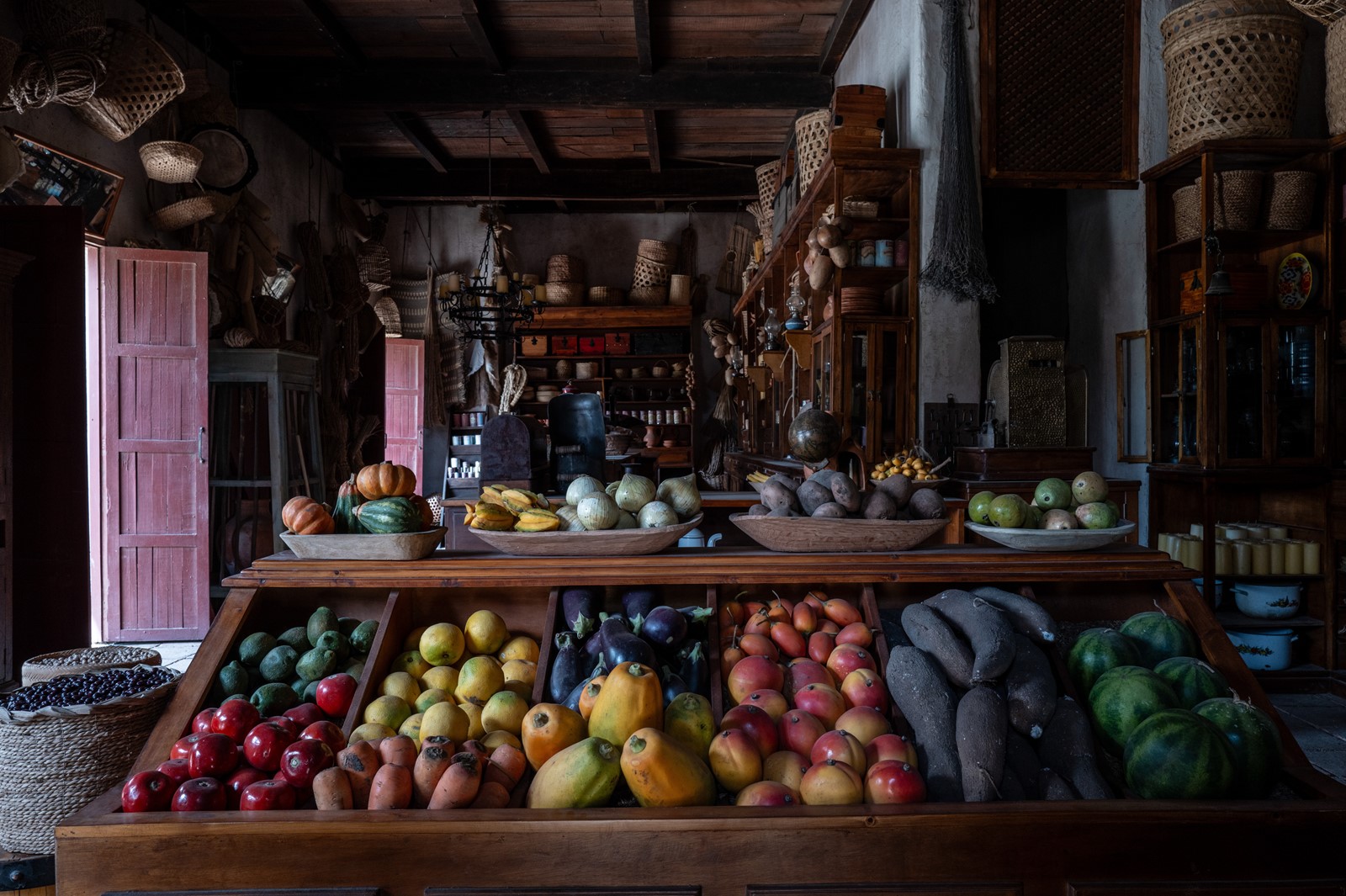
Enríquez, who designed the set for the 2018 film “Roma,” stepped into the town’s general store.
Her team scoured the country for the antique furniture on the set. She pointed to a woven basket: They commissioned Colombian craftspeople to weave them, along with hats, hammocks and the distinctive shoulder bags known as mochilas.
To recreate Macondo, Netflix also relied on museums, documents, researchers and historians. The costume designer used drawings made by a 19th century traveler and a government commission to create a wardrobe of thousands of garments.
“In the end,” Enríquez said, “‘One Hundred Years’ is a homage to Colombia.”The first season recreates the 19th century; the second will follow Macondo into the 20th. Enríquez said she hoped the deeply researched production would work like a time machine, making Colombians say, “That’s right, it was just like that.”
In the end, “you enter into the fiction,” she said. “Everyone enters the world of the fiction, and you embrace it.”
 PREVIOUS ARTICLE
