


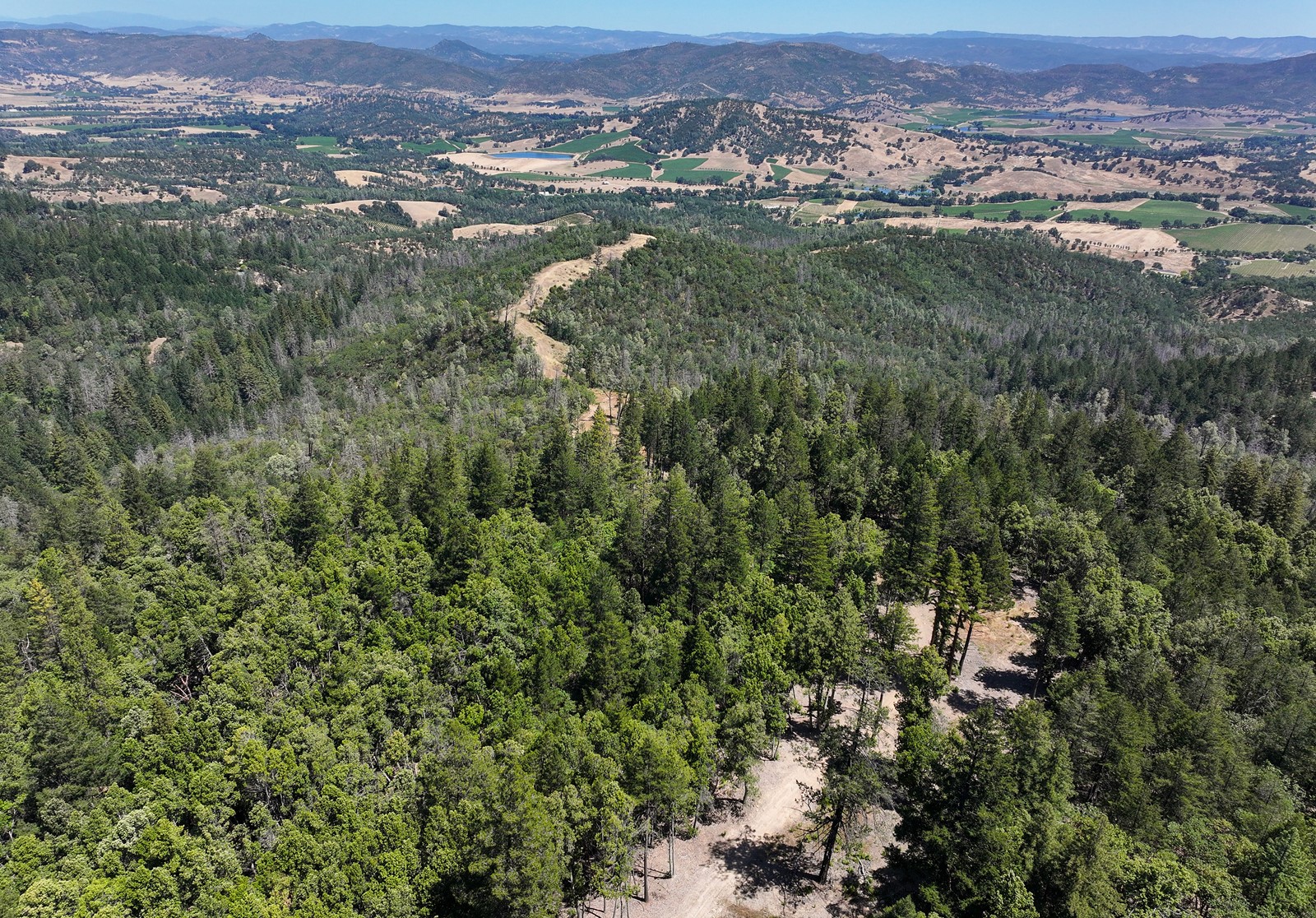


Plans for Napa County’s first green burial cemetery, hailed by proponents as a natural extension of land conservation work, are meeting resistance from Howell Mountain residents who say the project could ruin the area’s water system and contribute to dangerous traffic conditions.
The county is in the midst of reviewing the project, presented by advocates as an ecological alternative to a traditional cemetery since it uses only biodegradable materials in burials and not embalming chemicals.
Proposed by Eternal Preserve Holdings LLC on roughly 109 acres at 1225 Howell Mountain Road, south of Angwin, the project would add eight interment areas totaling about 16 acres along with publicly available trails, a new well, and a welcome center with exterior restrooms and parking spots. The Howell Mountain Cemetery project would involve demolishing two existing cabins in the area, and renting an off-site office in downtown St. Helena to manage sales and daily operations of the cemetery.
But area residents pushed back at a Napa County Planning Commission meeting earlier this month, saying in public comments the project doesn’t fit the area, and they were concerned about impacts the project could have on water, the environment, traffic and fire risk.
Commissioners ultimately voted Wednesday, June 17, to continue the item to a later, unspecified date so questions about the impacts of the project could be answered by county staff, including about the specific hydrology and geology of the area.
Applicant Susan Lapsley said at the meeting The Wildlands Conservancy nonprofit — the parent company of Eternal Preserve Holdings — is primarily focused on conservation, and the Howell Mountain project was a natural extension of that work. Only a small portion of the land would be used for the interment areas, she noted.
“This is about conserving the land, conserving the wildlife and really preserving it long-term,” Lapsley said.
The group already operates Morgan Oaks Eternal Preserve, a green cemetery established about six years ago in Placer County, north of Lincoln. Though green burial providers are uncommon, the Green Burial Council website lists six cemeteries and seven funeral homes in California that provide such services, including Pleasant Hills Memorial Park in Sebastopol.
According to Stephanie Brow, cemetery manager of Morgan Oaks, people choose green burial because it’s a more affordable and environmentally responsible option. She said Morgan Oaks typically carries out about one to three burial services each month.
“Everything that’s put into the earth is biodegradable,” Brow said at the June 17 meeting in Napa. “We don’t have a vaulting system, it’s literally back into the soil. The body can feed the soil and leave a legacy.”
Green burials work by burying bodies in biodegradable shrouds or caskets made of wood or other natural materials. The bodies are interred into a grave without a vault at individual burial plots, at a depth of around 5 feet, allowing for natural decomposition. According to a city report prepared for the Napa Planning Commission, the body needs to be preservative-free, embalmed with non-toxic products. Urns can also be buried, with cremated remains mixed with an additive to make the ashes available to plants and soil.
Lapsley noted regulations from the state Department of Consumer Affairs Cemetery and Funeral Bureau — the body responsible for overseeing cemeteries — allows for a high end of about 1,000 bodies buried per acre, but the Howell Mountain project planners don’t anticipate that density moving forward. Lapsley also noted bodies interred using green burial practices fully decompose within two to five years.
According to the city report to the commission, the project would allow for simple grave markers made of select rock from the site or wood, with names and dates etched on them.
Public commenters raised numerous concerns about the proposal — including concerns about water contamination and increased traffic without a dedicated left turn lane into the cemetery.
Jeff Parady, an area resident and the owner of Pope Valley garage, said at the meeting the Pope Valley area lacks groundwater and relies on water that would run off from the project site — including into his pond.
“The best way to preserve this is to not molest it, as is being proposed,” Parady said. “It’s disgusting.”
Area resident Armin Fisher wrote in an emailed comment the environmental review didn’t appear to evaluate whether the proposed burial areas could impact nearby groundwater resources.
“The existence of springs and nearby drinking-water supplies warrants a more detailed investigation of site-specific groundwater conditions,” Fisher wrote.
The commissioners also said they wanted more information.
Commissioner Molly Moran Williams said at the meeting she supported the general concept of a green burial cemetery, but wanted to see more data on the geological and hydrological conditions of the proposed burial sites. She also said she wanted to better understand the traffic impacts to the area, and how many visits the cemetery would add.
Commissioner Walter Brooks added he couldn’t see the project moving forward without a dedicated left-turn lane. He said he didn’t think the idea of adding publicly accessible trails alongside the burial site was compatible, and doing so would add more traffic.
Brooks also said he favored putting the property into a 100% conservation easement — so vineyards or housing couldn’t be developed at the site later on. And he said the county should carry out a full environmental impact report on the project, and that the commission needed to better understand the water conditions of the area.
“What we’re hearing here is that this whole community is relying heavily on the springs in this part of the watershed, and so this hydrology and the coupling of the surface water and potential contamination into springs is a deep, deep concern and I feel like we need to understand that really thoroughly,” Brooks said.
 PREVIOUS ARTICLE
