


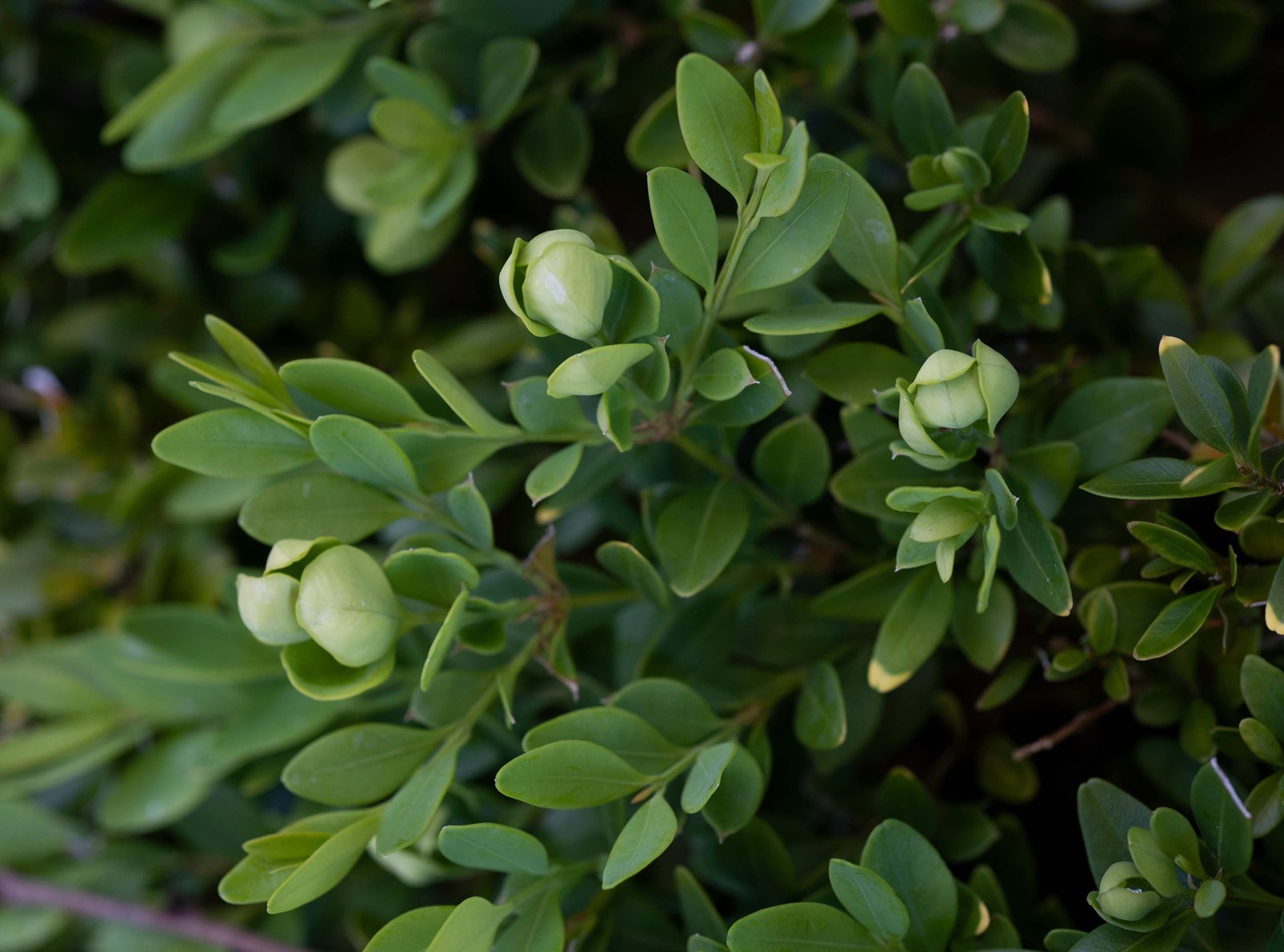


“I am worried about my boxwood. The leaves on some of the plants have taken on a cupped shape and look funny. What is happening, and is there something I should do to help the plants?”
— Elaine Feinstein, Skokie
The description of the problem on your boxwood indicates that you have boxwood psyllid (Psylla buxi) on your plants. This insect only feeds on boxwood, so you do not have to worry about any adjacent plants to your infested boxwood.
The psyllid nymphs, which are the immature stage of the insects’ development, are only active for a very short period of time in the spring and feed on developing foliage, which causes the cupping of leaves that you are seeing. The nymphs remove sap from the expanding new leaves, affecting the appearance of the boxwood, but are of no concern regarding the plant’s health.
The boxwood psyllids overwinter as eggs inserted between the bud scales on the boxwood. The eggs begin to hatch in spring as the buds begin to open and the new leaves expand with the warming spring weather.
The nymphs are sheltered within the cupped leaves and are very difficult to treat with a contact insecticide. The adults emerge in late May and early June, and will feed without causing any noticeable damage. There is only one generation per year.
You can choose to do nothing at this point, as your insect problem is primarily an aesthetic issue. It’s also a good example of why one should always understand the pest issue in the garden before resorting to using a chemical approach. The populations can build over time, so the situation is something to monitor next year.
If practical for you, prune off the cupped leaves and destroy them to remove the nymphs before they become adults around the middle of May. Shearing a hedge and removing the foliage should work well too, if your boxwood are in a formal hedge.
Should the populations continue to build on your boxwood in subsequent years, try using a low-impact option, such as an insecticidal soap or summer horticultural oil applied just when new growth begins. These products need to contact the insects to work with no residual effect, so an additional treatment may be needed in a few days.
Products containing an active ingredient such as acephate (systemic) or permethrin will have a residual effect and can be sprayed on foliage in early May in order to control very high infestations of nymphs. Most gardeners will not need to apply any chemical controls for this insect.
For more plant advice, contact the Plant Information Service at the Chicago Botanic Garden at plantinfo@chicagobotanic.org. Tim Johnson is senior director of horticulture at the Chicago Botanic Garden.
 PREVIOUS ARTICLE
