


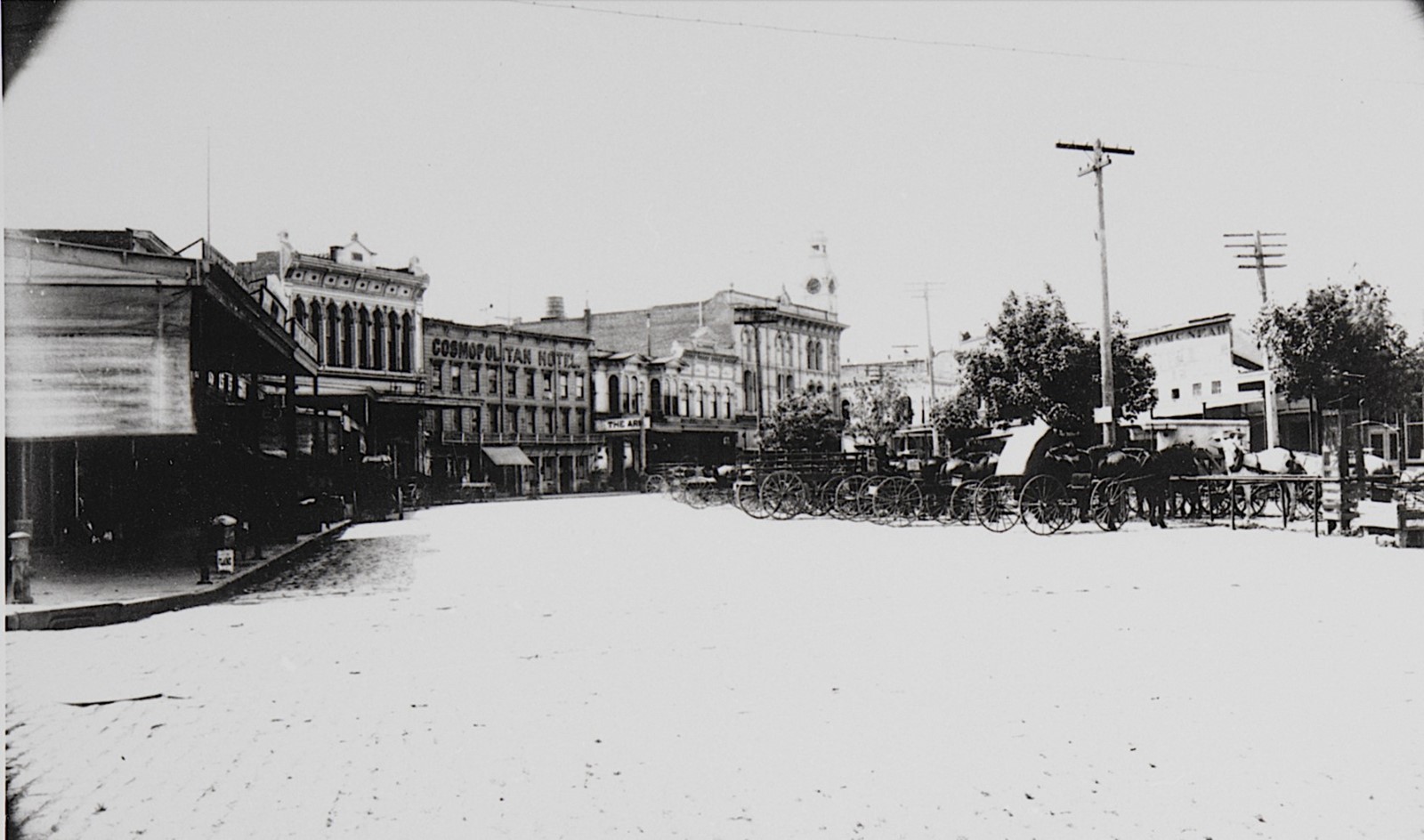


The Chinese residents of 19th century Petaluma — now largely forgotten but once a flourishing community of artists, shopkeepers and business-owners, whose expansive contributions to the downtown area were considerable — will at last be celebrated with the placement of a memorial marker in downtown Petaluma.
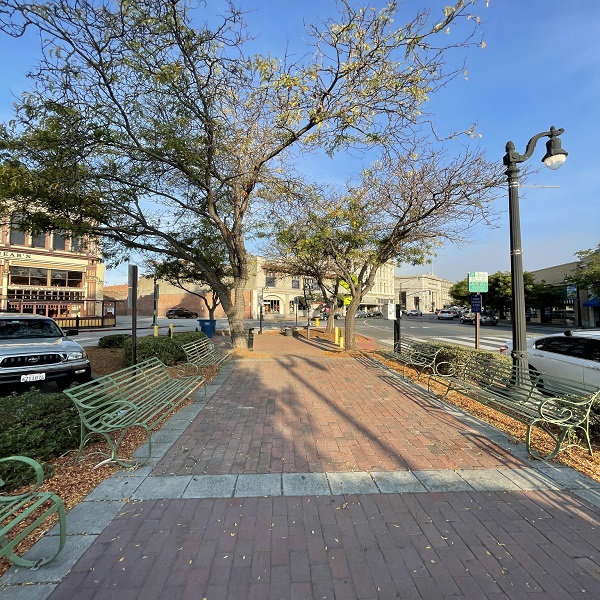
At 5 p.m. on Nov. 15, at the recently renamed Historic Chinatown Park, formerly known as Center Park — located across from McNear’s Saloon and the Mystic Theatre — a plaque will be unveiled at a public ceremony. Hosted by the Historic Chinatown Park Committee, the event will feature a ribbon cutting, goodie bags for children, light refreshments, a traditional Lion Dance performed by Sonoma County Vietnamese Association and an ancestral offering led by SSU professor Chingling Wo.
“From the 1860s to the early 20th century, Chinese people lived and worked in downtown Petaluma,” reads the plaque, which is being installed on a base designed by sculptor Francoise LeClerc, whose own ancestry if French and Taiwanese. “They labored as brickmakers, farmhands, merchants, river and railroad workers — helping to build the town’s infrastructure, agriculture and economy. Their neighborhood included homes, shops, wash houses, a Joss House, and a Christina mission school.
“Amid rising anti-Chinese sentiment in the 1870s,” the plaque text continues, “they faced discrimination, violence, and exclusionary laws — including the 1882 Chinese Exclusion Act and the 1892 Geary Act, authored by Congressmember Thomas J. Geary. a former Petaluma lawyer. In the 2920s, the last remnants of Chinatown were demolished. With gratitude, we honor the resilience, labor, and lasting contributions of Petaluma’s early Chinese residents.”
The committee is made up of local artists, educators, parents and health professionals, who presented their proposal for a renaming of the park to the Petaluma City Council in May, which has been designated Asian American, Native Hawaiian and Pacific Islander Heritage Month. The City Council voted unanimously to rename the park, acknowledging that the surrounding are was a significant part of Petaluma’s Chinatown.
“Right here, Chinese workers once helped build Petaluma,” said Lina Lin Hoshino, who organized and curated the Petaluma Museum exhibit “Chinatown Unearthed: Facing the Past for a Better Future.” The exhibition displayed images, maps and archaeological discoveries describing the lives of the Chinese who lived here, why they came to Petaluma, what they accomplished, and how they were eventually pushed out as a result of exclusionary laws and xenophobic actions.
The plaque, said Hoshino, “expresses our gratitude for their contributions — from reshaping the Petaluma River to laying track, farming, building and running businesses that formed the city’s foundations. It marks their story in the very landscape where it happened.”
According to newspaper reports of the time, hundreds of Chinese residents lived in the downtown area in the mid 1800s, with hundreds more residing and working at nearby farms and ranches.
“This dedication is about telling the fuller truth of our city,” said Mayor Kevin McDonnell. “Honoring Chinese pioneers is not only a look back, it affirms who we are today as a community grateful for their lasting contributions.”
For local residents who claim Chinese ancestry, the ceremony is expected to carry deep personal significance.
“Seeing Chinese history recognized in our community affirms that we do belong, and that our stories are an essential part of Petaluma’s story,” said Libby Lok, a sixth generation Chinese American who grew up in Petaluma. “I’m proud of our city and glad that my children get to see themselves reflected in our shared history.”
Warren Mar, who served on the committee, descends from Chinese railroad workers who came to American to make better lives for themselves, and often faced fierce oppositions, suspicion, ignorance and hate.
“What happened to my family generations ago is happening again in new forms,” he said. “The same exclusionary policies that targeted Chinese workers now appear in the targeting of today’s immigrants.”
The ceremony of Nov. 15 is free and open to the whole community. Attendees are encouraged to bring flowers or other offerings to honor the ancestors. Historic Chinatown Park is at 7 N. Petaluma Blvd. For additional information, please contact Jonathan Luong at jluong@cityofpetaluma.org.
 PREVIOUS ARTICLE
