


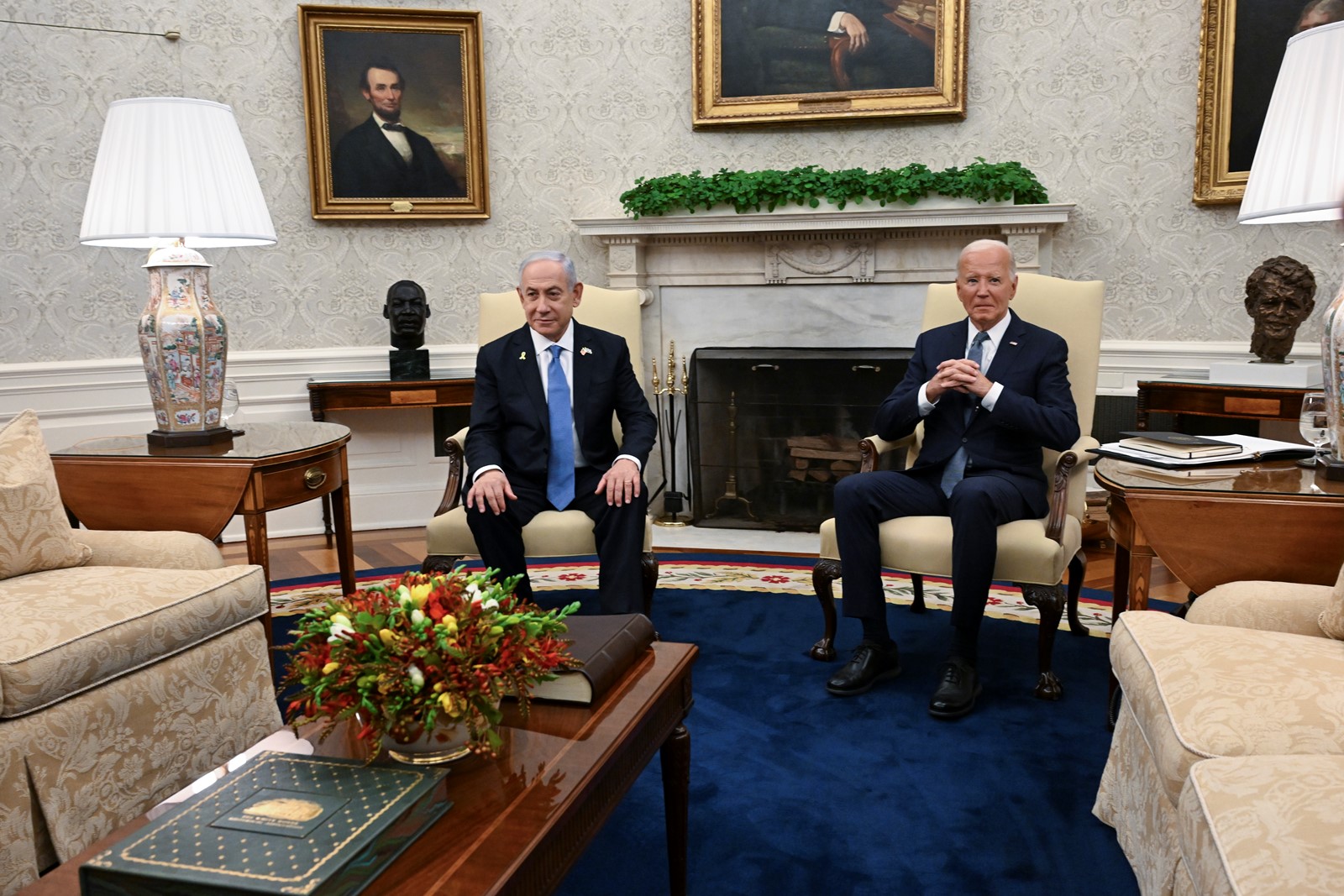


JERUSALEM >> A quarrel between President Joe Biden and Israeli Prime Minister Benjamin Netanyahu over Israel’s approach to cease-fire talks mirrors growing domestic tensions between Netanyahu and senior Israeli security officials over his perceived resistance to a swift deal with Hamas.
Biden has publicly chided Netanyahu for failing to agree to another truce in the Gaza Strip. Senior leaders from Israel’s military have also privately grown frustrated with the prime minister for introducing new conditions to the fraught negotiations, according to two Israeli officials who spoke on the condition of anonymity to discuss a sensitive matter.
For weeks, the security officials have privately complained that Netanyahu is holding up talks by, among other things, reintroducing a demand that Israel continue to operate checkpoints along a strategic highway in northern Gaza during any cease-fire. In May, Israel had softened its position on that point.
Over the weekend, the previously private gripes gained a public airing when a major Israeli news network, Channel 12, broadcast accounts of leaked arguments between Netanyahu and the chiefs of Israel’s foreign and domestic intelligence agencies, Mossad and Shin Bet.
Channel 12 reported that the chiefs accused Netanyahu of blocking the deal, while the prime minister was said to have accused them of being weak negotiators.
Netanyahu has blamed Hamas’ intransigence for stalling the negotiations, rather than his own, citing his decision to send negotiators to Cairo over the weekend to continue the talks. But he did not deny private disputes with his security chiefs, complaining only that the leaked reports were themselves harmful to the negotiations.
“The fact is that it is Hamas which is preventing the release of our hostages, and which continues to oppose the outline, and not the government of Israel, which has accepted it,” Netanyahu told ministers at the start of a Cabinet meeting Sunday. Hamas has repeatedly denied the claim.
There is less debate within the Israeli establishment about the merits of assassinating Ismail Haniyeh, the Hamas leader and top truce negotiator, who was killed in Iran last week.
Biden’s frustration with Netanyahu is in part related to the assassination, which the U.S. president said had “not helped” the prospects of a cease-fire agreement.
But among Israeli security officials, the prevailing assessment is that a deal could still be reached within days if Netanyahu set aside some of his conditions, according to the two Israeli officials who spoke on the condition of anonymity.
 PREVIOUS ARTICLE

