




After her son died by suicide nine years ago, Roslyn Scharf, a lifelong fitness devotee, began searching for a trainer who could not only help her build physical strength, but who also understood the emotional release she needed from her workouts at the time.
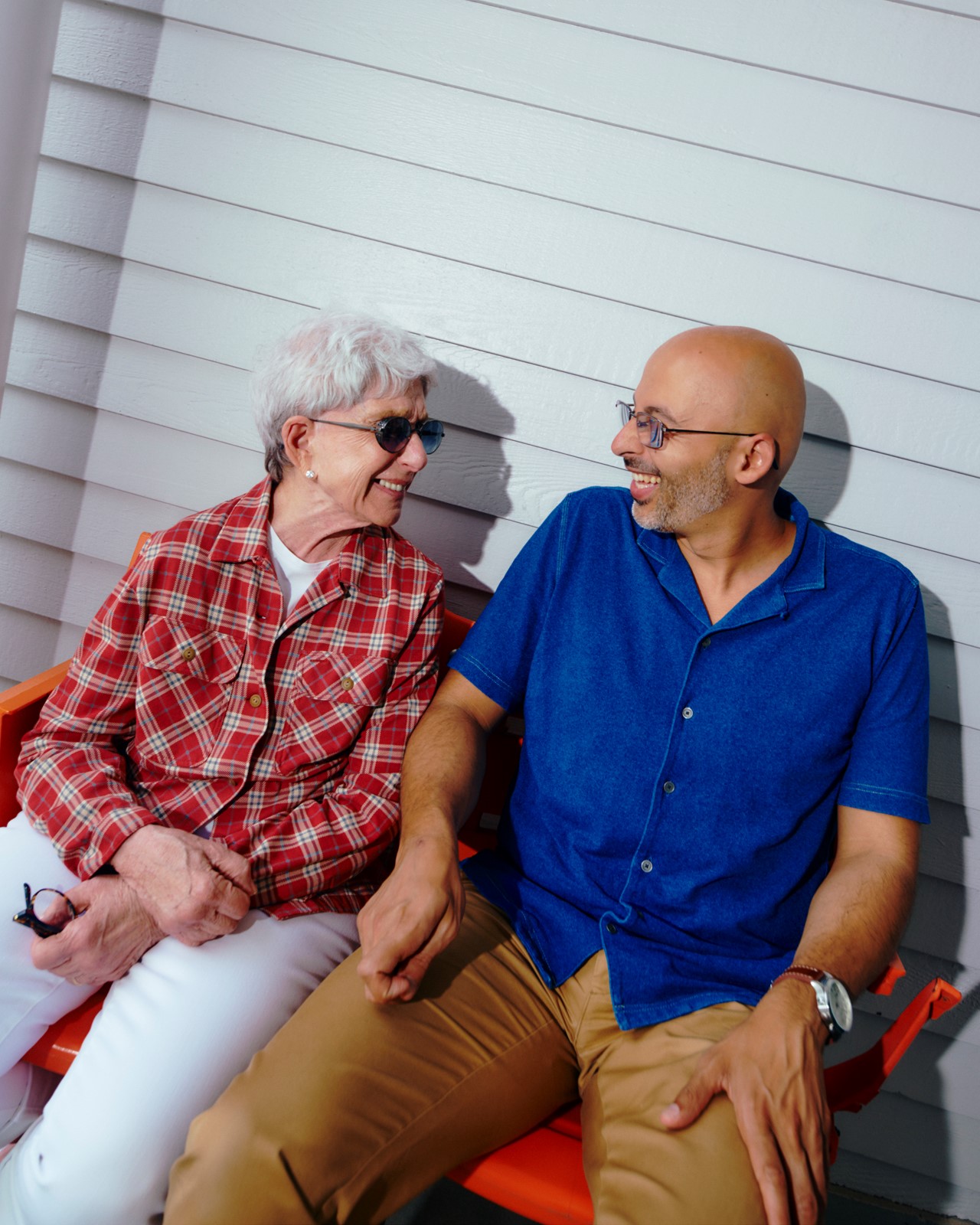
She found that in Omid Malekan, who was 40 years her junior and a relative stranger. But he had lost a friend to suicide years before and was not afraid to hold Scharf as she wept through reps.
“He dried my tears,” said Scharf, 83. “And he made sure I did my squats.”
Three days a week, every week, they worked out. “When Roz makes a commitment, she shows up!” said Malekan, 42. The more time they spent together, the more they realized they had in common.
“Here I am, a grandma, and here he is, a young man still single and trying to find himself, but we fell in love with so many of the same things,” Scharf said.
Both are devoted New York Mets fans who text or call each other over wins and losses, and both are avid readers. Scharf, who lives in Manhasset, New York, on Long Island, invited Malekan, who goes back and forth between Queens and Long Island, to join her book club, which has met monthly for more than 20 years. He is the only middle-aged man among “a dozen octogenarian women who love him,” she said.
This kind of exchange of perspectives and life experiences is a hallmark of cross-generational friendship, which experts said could be an antidote to social isolation, an issue particularly pervasive among older Americans, and ageism.
It may also help to boost life satisfaction and learning. A 2021 report from Generations United, a nonprofit that promotes policies that connect generations, cited data suggesting that older adults in intergenerational programs may experience a reduction of falls and frailty and an increase in strength and balance.
In a 2019 AARP survey, more than 90% of respondents who had an older or younger friend said they provided things their other friendships could not deliver — namely, a new perspective, inspiration and a greater appreciation of their experiences.
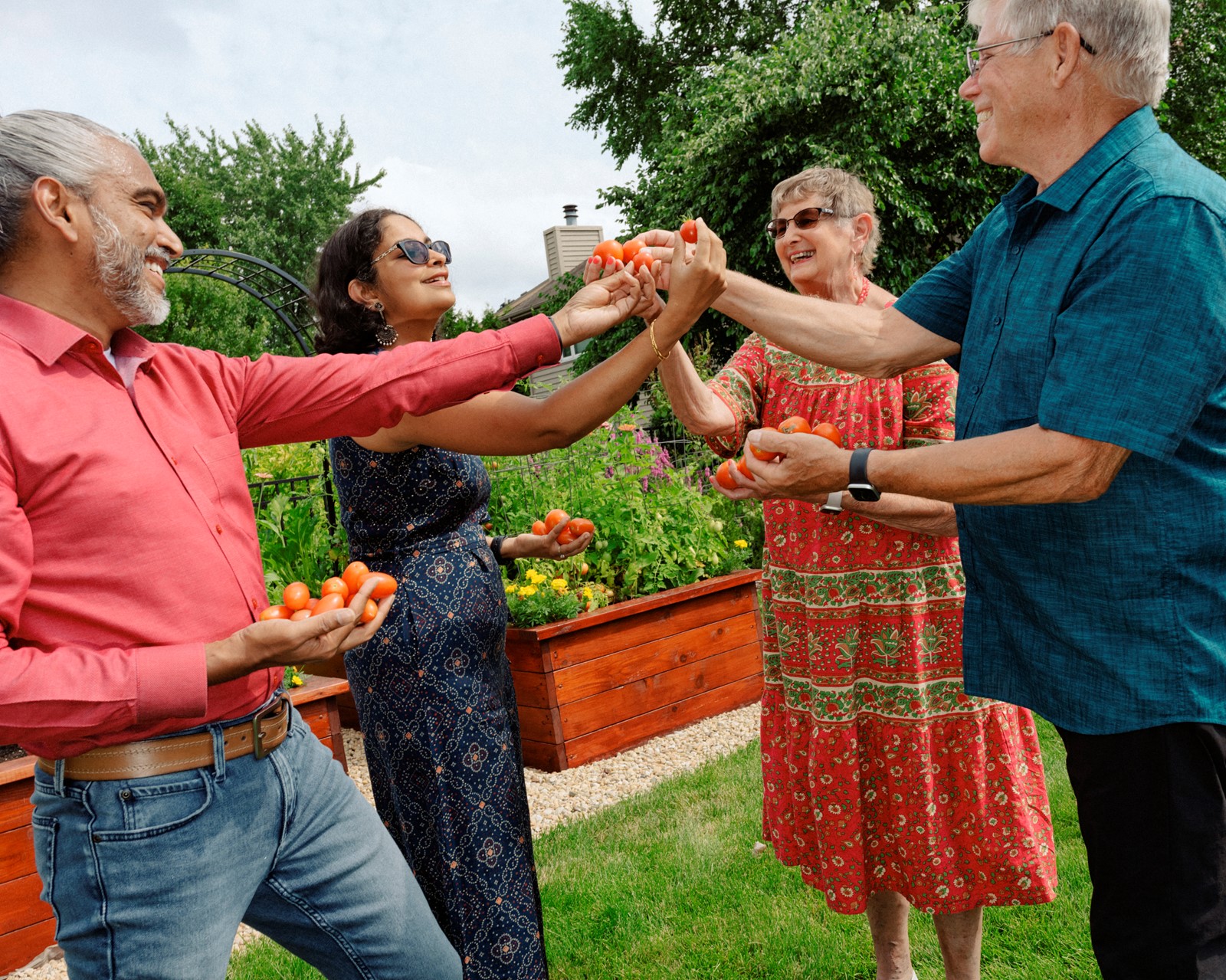
Aarti Veernala, 38, believes the age difference between herself, her husband, Rahul, 43, and the couple’s neighborhood friends Joe Hunter, 76, and his wife, Judy, 81, helped them connect on a deeper level right from the start.
The foursome met in 2017 when the Hunters were on an evening stroll through their neighborhood in Aurora, Illinois, while the Veernalas were on their porch. The older couple stopped to tell Rahul Veernala that he’d dropped a piece of mail, which led to some friendly small talk. Judy Hunter asked whether the couple had children, and Veernala surprised them all by letting it slip that his wife was about five weeks pregnant — the first time the Veernalas had told anyone other than their parents.
Since that fateful overshare, the families have made an effort to really get to know each other, Aarti Veernala said. “That’s something you usually don’t see in people your own age, because we’re all in a hurry,” she added. “There’s always a little bit of haste in our actions. But Joe and Judy take the time to understand us.”
Now, the two couples are closer than friends, joking that they’re “framily,” Rahul Veernala said. The Veernalas’ two children call the Hunters, who have four sons of their own, “grandma” and “grandpa” and have had sleepovers at their house.
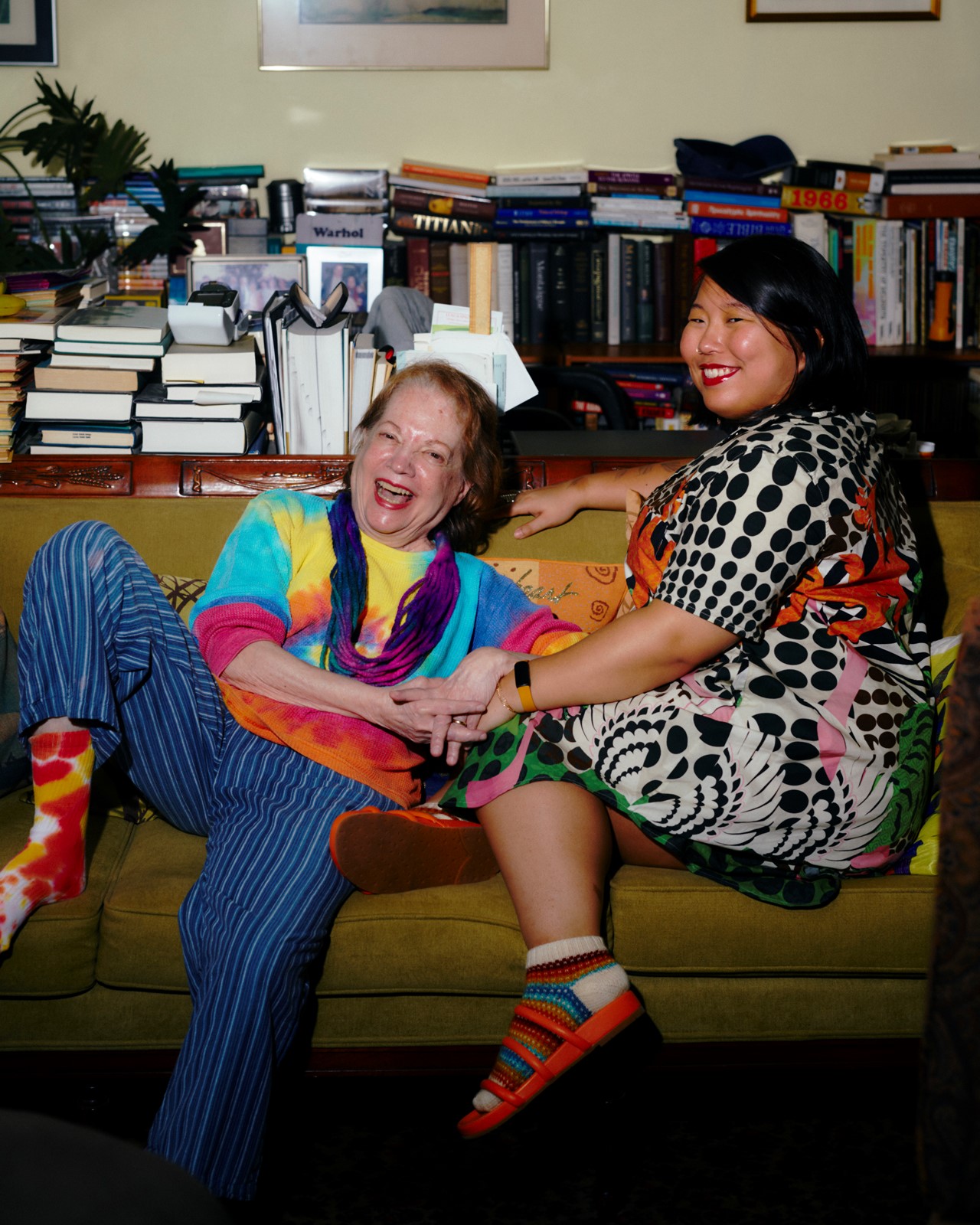
The desire to stay active and socially engaged has led to a special friendship that Judy O’Meara, 80, and Bowen Kim, 29, didn’t see coming. When O’Meara reached out to her neighborhood community Listserv to organize a crafting group about a year ago, Kim, who is nonbinary and uses she/they pronouns, was the only person who responded. She had learned to knit during the pandemic and thought the crafting group sounded like fun.
A few months later, the pair sat together on the lawn of their apartment complex in the Bronx borough of New York City, realizing they’d lived one floor apart for six years but never interacted. They knitted for an hour — and have done so nearly every Friday afternoon since.
O’Meara, dressed in brightly colored clothing and tie-dyes, encourages her friend to be bolder with her knitting, giving her colorful yarn. And after Kim mentioned that her New Year’s resolution was to learn to cook a few Korean dishes, O’Meara showed up with a beginner’s cookbook in hand — all gestures that have shown Kim what it means to move through life with a sense of curiosity and generosity.
“This has really been my only experience getting to know somebody who was so much older than me,” Kim said. “Seeing her live in such an authentic, fun way, I think I have just been inspired to think more about how I want to live and be.”
 PREVIOUS ARTICLE

