


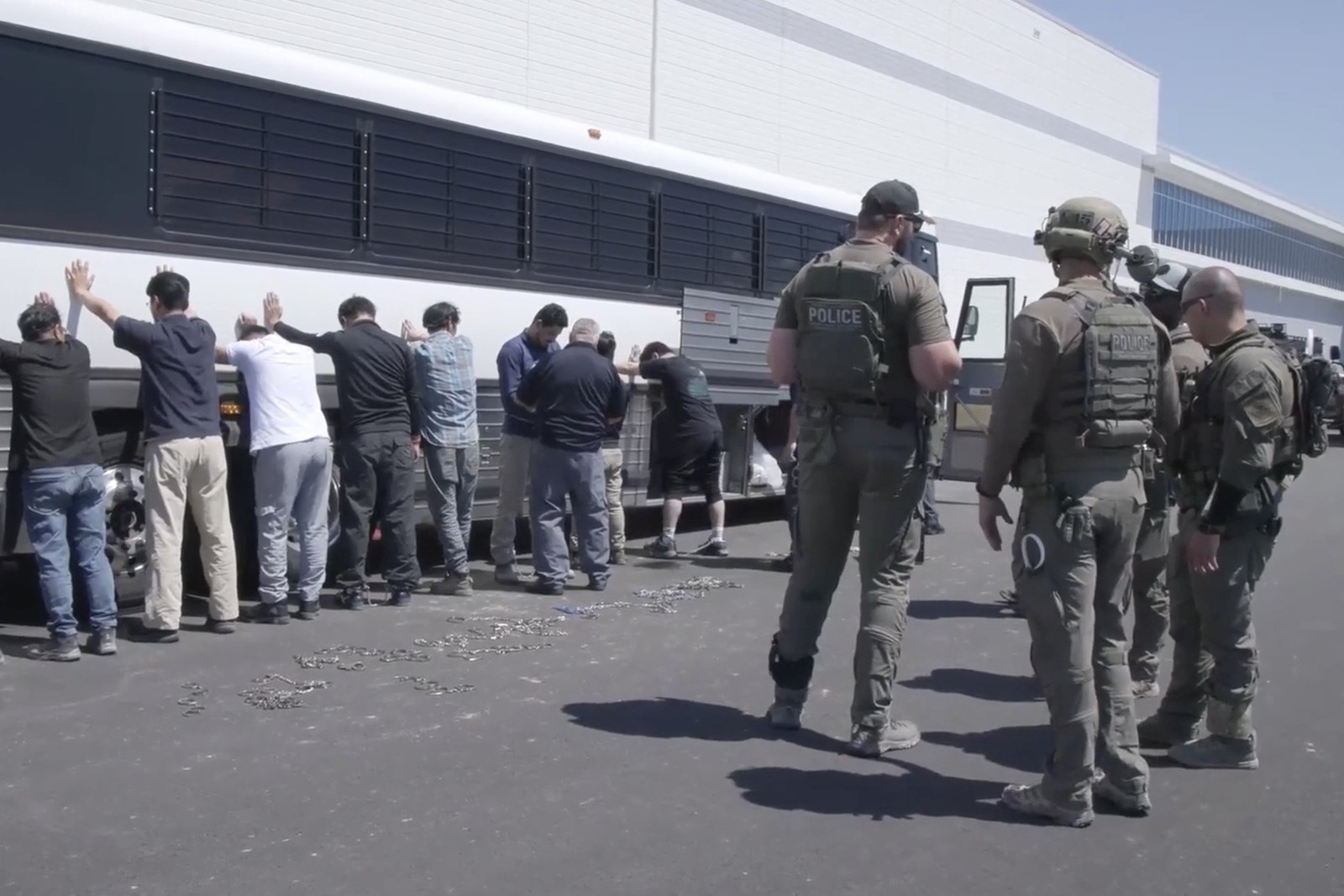


South Korea’s biggest conglomerates are rushing to contain fallout from a sweeping U.S. immigration raid at a Hyundai Motor Co.-LG Energy Solution Ltd. battery venture in Georgia that’s sparked concerns over billions of dollars in planned investments.
“We are well aware of the concerns that have been raised regarding our investment in the U.S. following the immigration crackdown,” South Korea’s Trade Minister Yeo Han-koo said at a government meeting Monday. “We will work with related agencies, including the Foreign Ministry, to explore ways to improve the system.”
Last week’s sweeping raid shocked South Koreans after images showed workers shackled at the wrists, waist and ankles. The operation was part of a broader U.S. crackdown on undocumented workers and came less than two weeks after South Korean President Lee Jae Myung and U.S. President Donald Trump held a summit to underscore their alliance.
They touted a trade pact that includes a $350 billion fund to help South Korean firms expand in the U.S. South Korean firms separately pledged $150 billion in direct U.S. investment in an effort to boost trade ties between the nations. But the sweeping immigration action is making some companies cautious.
LG Energy has tentatively decided to postpone the start of its EV battery plant with Hyundai in Georgia, the Korea Economic Daily reported Monday, without saying where it got the information. Hyundai has banned all U.S. trips by its staff, the newspaper said.
LG Energy had initially planned to begin production later this year, with the goal of churning out batteries totaling 30 GWh annually, but decided to push that back to the first half of next year, the publication said, saying it would likely affect production plans for Hyundai and its affiliate Kia Corp.
An LG Energy spokesperson said Monday the company had already delayed the start of production to next year, instead of this year, due to market conditions, adding it is too early to say whether last week’s events will affect the plant’s operations. A Hyundai Motor and Kia spokesperson, when asked about the news report, said it is too soon to determine any impact on its business.
Even before last week’s raid, some companies were growing wary. In May, Samsung Electronics Co. issued internal guidelines on U.S. business travel under the short-term ESTA visa, telling employees trips should not exceed two weeks, a company spokesperson said.
The raid underscores the risks for foreign firms that rely on subcontractors to plug workforce gaps while waiting months for U.S. visas to clear.
In a meeting with the ruling party leadership, SK Group Chairman Chey Tae-won, who leads the Korea Chamber of Commerce, urged the government to secure U.S. visa quotas to ensure smooth business operations and prevent similar incidents from recurring.
The high-profile immigration enforcement operation — the largest single-site action in the history of the Homeland Security Department’s investigative arm — also risks deterring South Korean businesses’ private expansion plans.
“We are at a very difficult situation,” Lee said at a meeting with rival party leaders in Seoul, without directly referring to the detention of South Korean citizens in the U.S. “I have often said in public in the course of holding summits with the U.S. and Japan that we must strengthen our national power, and there is a reason for saying that.”
 PREVIOUS ARTICLE
