


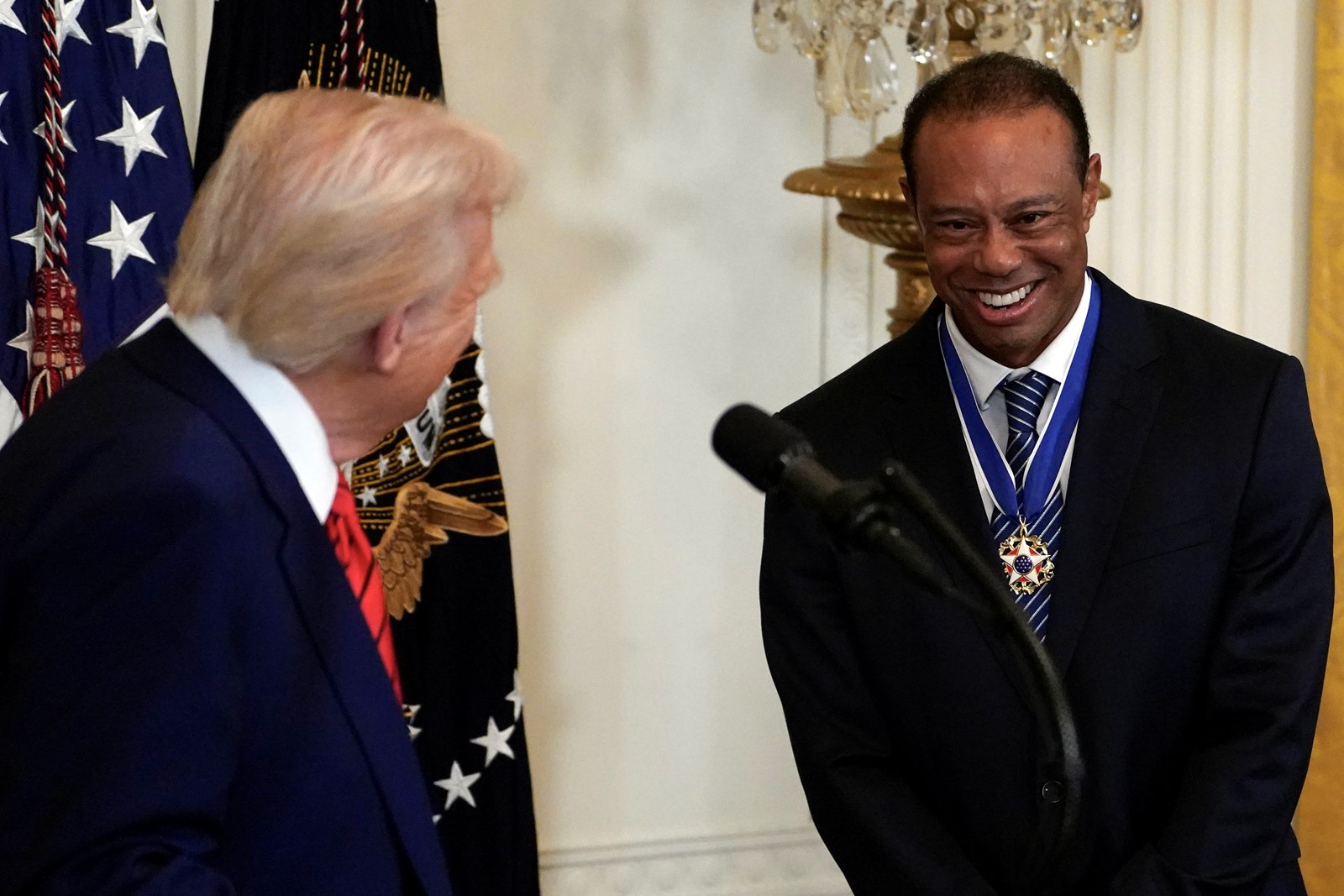


WASHINGTON — President Donald Trump marked Black History Month at the White House on Thursday by making an appearance at a celebratory reception with a surprise guest, golf legend Tiger Woods, while calling out other athletes in attendance and marveling at the size of the crowd.
Trump also announced he planned to bring Alice Johnson, a prison reform advocate whom he pardoned in 2020, into his administration to work on clemency issues.
The White House’s Black History Month reception preserved a tradition, but it comes in the wake of Trump issuing a wide-ranging executive order ending the federal government’s diversity, equity and inclusion programs has disrupted its observance elsewhere.
“Today, we pay tribute to the generations of Black legends, champions, warriors and patriots who helped drive our country forward to greatness. And you really are great, great people,” Trump said.
Trump didn’t mention his anti-DEI crusade in as he addressed hundreds of guests in a reception in the East Room, though he did make a brief reference of the The New York Times’ “1619 Project,” which highlights the lasting consequences of slavery in America.
Trump objected to the project during his first term, and in response created a commission to promote so-called patriotic education dubbed the 1776 Commission.
“The last administration tried to reduce all of American history to a single year, 1619. But under our administration, we honor the indispensable role black Americans have always played in the immortal cause of another day, 1776,” Trump said. “We like 1776.”
Trump has called DEI programs “discrimination” and pushed to eradicate diversity programs from the government, directed that DEI workers eventually be laid off and exerted similar pressure on the private sector to shift to an exclusive focus on merit.
The sweeping effort has sown discord and confusion across federal agencies, which have variously interpreted the order to limit how they can acknowledge race in history and culture or report demographic data on race and gender.
Joining Trump were Black political figures and activists who have been his vocal supporters. Invited guests, according to a White House official, included Republican Sen. Tim Scott of South Carolina; Republican Rep. John James of Michigan; Alveda King, a niece of civil rights leader Martin Luther King Jr.; Herschel Walker, the football legend who is Trump’s choice as U.S. ambassador to the Bahamas; and prison reform advocate Alice Johnson, whom he pardoned in 2020.
Other invited guests included figures from sports and entertainment, including former ESPN host Sage Steele; former NFL player Jack Brewer; and rap stars Kodak Black, Lil Boosie and Rod Wave, according to the official, who was not authorized to speak publicly and spoke on condition of anonymity.
In the wake of his executive order, the Defense Department issued guidance declaring “identity months dead” and said that working hours would no longer be used to mark cultural awareness months such as Black History Month, Women’s History Month and National Disability Employment Awareness Month.
That seemed to clash with a National Black History Month proclamation signed the same day by Trump, which called for “public officials, educators, librarians, and all the people of the United States to observe this month with appropriate programs, ceremonies, and activities.”
While the White House has issued its position, agencies of the government have discretion on whether to continue to recognize Black History Month, according to the official.
On Feb. 1, the first day of Black History Month, Transportation Secretary Sean Duffy announced that his department “will no longer participate in celebrations based on immutable traits or any other identity-based observances.” And in a diplomatic cable, Secretary of State Marco Rubio said the agency’s removal of DEI policies would dovetail with “eliminating our focus on political and cultural causes that are divisive at home and deeply unpopular abroad.”
The administration has issued a deadline to schools and universities to eliminate diversity initiatives or risk losing federal money. Major corporations have backtracked on DEI policies in hiring, promotion and workplace culture in recent months, with many citing potential legal challenges from the administration.
Black History Month has been recognized by every U.S. president since 1976, including Trump during his first term.
 PREVIOUS ARTICLE
