


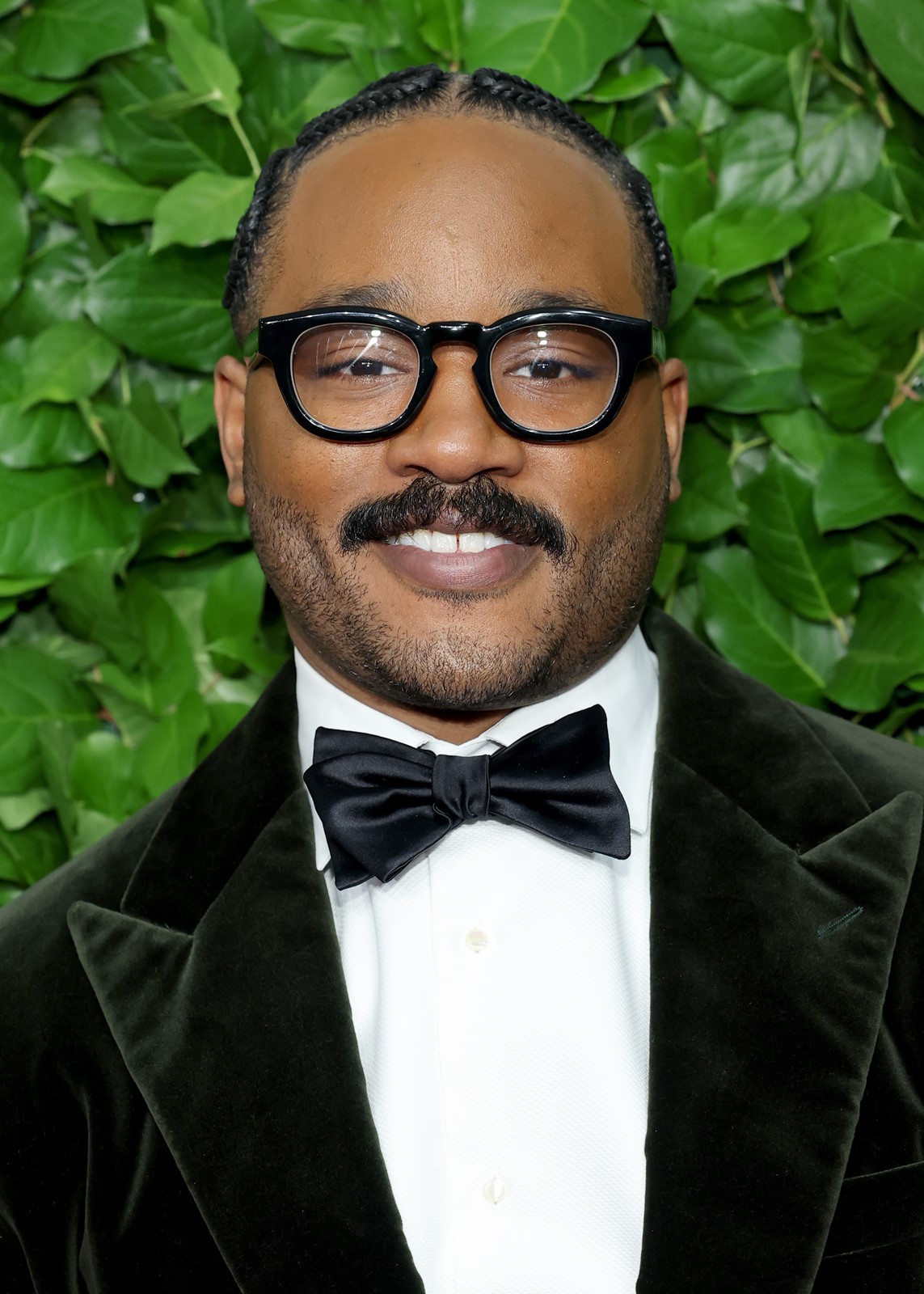


Oakland native Ryan Coogler said he and his wife, Zinzi, woke up early Thursday morning, clicked on YouTube and watched as “Sinners,” the Southern-gothic, musical horror epic they co-produced — and that Coogler conceived, wrote and directed — made Academy Awards history with a record 16 nominations, including for best picture, director and original screenplay.
“I don’t know that it’s truly settled in yet,” Zinzi Coogler, her husband’s producing and business partner, said in a joint interview with Variety. “We’re still trying to catch our bearings. Like, literally for any morning, it’s so early. But what an insane honor.”
Ryan Coogler joked that they still needed to get their children to school as he said he felt “so happy” that so many of his collaborators were also honored. The honorees include fellow Oakland resident Delroy Lindo, who received a nomination for best supporting actor, and Michael B. Jordan, Coogler’s longtime collaborator on “Fruitvale Station,” “Creed” and “Black Panther.”
“I was very impressed by everything that my collaborators were doing every day, so I’m so happy that everybody got recognized by their peers,” Coogler told Variety. “Obviously, I’m biased. I think these folks I work with are some of the best in the world. I feel really fortunate. Because it doesn’t always go that way.”
With “Sinners,” Coogler rewrote Academy Awards history. The R-rated, genre-defying film was both a box office hit and a critical success, landing on many year-end Top 10 lists. In a previous interview with Bay Area News Group, Coogler said it was his most personal and ambitious film yet.
Prior to Thursday, only three films in the Academy’s 98-year history had received as many as 14 nominations: “All About Eve” in 1950, “Titanic” in 1997 and “La La Land” in 2016.
Trailing “Sinners” in total nominations was Paul Thomas Anderson’s “One Battle After Another,” which received 13. For months, that film — which was partially filmed in Northern California — had been viewed as the frontrunner to win best picture at the March 15 ceremony. But the historic showing by “Sinners” is likely to upend expectations and set up an unusually competitive race for several major prizes, including best picture and best director.
Another Bay Area native, Palo Alto-reared director Jon M. Chu, saw his musical “Wicked: For Good” shut out of the 2026 Oscar nominations.
The film was a continuation of Chu’s critical and commercial 2024 hit “Wicked,” based on the “Wizard of Oz”-inspired stage musical. The first installment earned 10 nominations at last year’s ceremony, including for stars Cynthia Erivo and Ariana Grande.
Across the East Bay, the achievement by Coogler and his collaborators was celebrated as a hometown milestone.
Oakland Mayor Barbara Lee called the 16 nominations an “Oakland triumph,” saying in a statement Coogler “continues to put our city on the map with his visionary storytelling” and shows that local filmmakers can create works “that resonate globally while never forgetting where they come from.”
Lee also praised Lindo for his nomination, along with legendary Oakland singer-songwriter Raphael Saadiq, who received a nomination for best original song for co-writing “I Lied To You” with “Sinners” composer Ludwig Göransson and co-star Miles Caton.
Unfortunately, another Bay Area native, Palo Alto-reared Jon M. Chu saw his musical “Wicked: For Good” shut out of the 2026 Oscar nominations. “Wicked: For Good” was a continuation of Chu’s critical and commercial 2024 hit, “Wicked,” which was based on the “Wizard of Oz”-inspired stage musical. Chu’s first “Wicked” installment scored 10 nominations for the 2025 ceremony, including for stars Cynthia Erivo and Ariana Grande. But the consensus among critics and fans is that the second “Wicked” film failed to capture the magic of the first.
Coogler has said the time felt right to make “Sinners,” which unfolds around a juke joint in the Deep South in 1932. The film fuses blues music, gothic horror, nonlinear storytelling and themes of racial oppression into the story of identical twin brothers — Smoke and Stack — who return to their Mississippi hometown to bring music and culture to their local Black community.
In an interview with the Bay Area News Group, Coogler said the film drew heavily on memories of spending time with an uncle who grew up in Mississippi while listening to blues records in their Oakland home.
“(My uncle) came West and worked at a steel factory and we’d listen to blues records,” Coogler recalled. “That was like his pasttime. That, and he was a San Francisco Giants fan. We’d watch games on TV and if they weren’t on TV we’d listen to them on the radio. It was Giants and blues music and Old Taylor whiskey.”
Jordan plays both brothers, World War I veterans with a shared criminal past who buy an old sawmill to open their juke joint. But amid threats from the Ku Klux Klan and warnings about the supposed sins of blues music, the brothers and their crew soon confront a supernatural evil.
In the film, Lindo plays Delta Slim, an aging harmonica player and local musical legend. The London-born actor has long made the Bay Area his home after studying at the American Conservatory Theater in San Francisco and becoming associated with Berkeley Repertory Theatre. Nigerian actor Wunmi Mosaku received a best supporting actress nomination for her role as Annie, Smoke’s estranged wife and a Hoodoo practitioner.
The list of “Sinners” nominees extends well beyond the cast. Coogler’s longtime editor, Michael P. Shawver, and cinematographer Autumn Durald Arkapaw were also nominated, with Arkapaw making Oscars history as the first woman of color nominated for best cinematography. Several collaborators who previously won Oscars for their work on “Black Panther” and “Black Panther: Wakanda Forever” were again recognized, including costume designer Ruth E. Carter, production designer Hannah Beachler and composer Göransson.
With “Sinners,” Coogler becomes the seventh Black filmmaker nominated for best director, joining John Singleton for “Boyz n the Hood,” Lee Daniels for “Precious,” Steve McQueen for “12 Years a Slave,” Barry Jenkins for “Moonlight,” and Jordan Peele and Spike Lee for “BlacKkKlansman.” None of those directors won the best director Oscar.
 PREVIOUS ARTICLE
