




LAUSD schools — that the food is bad. … This is a really good, new introduction of how food is supposed to taste.”
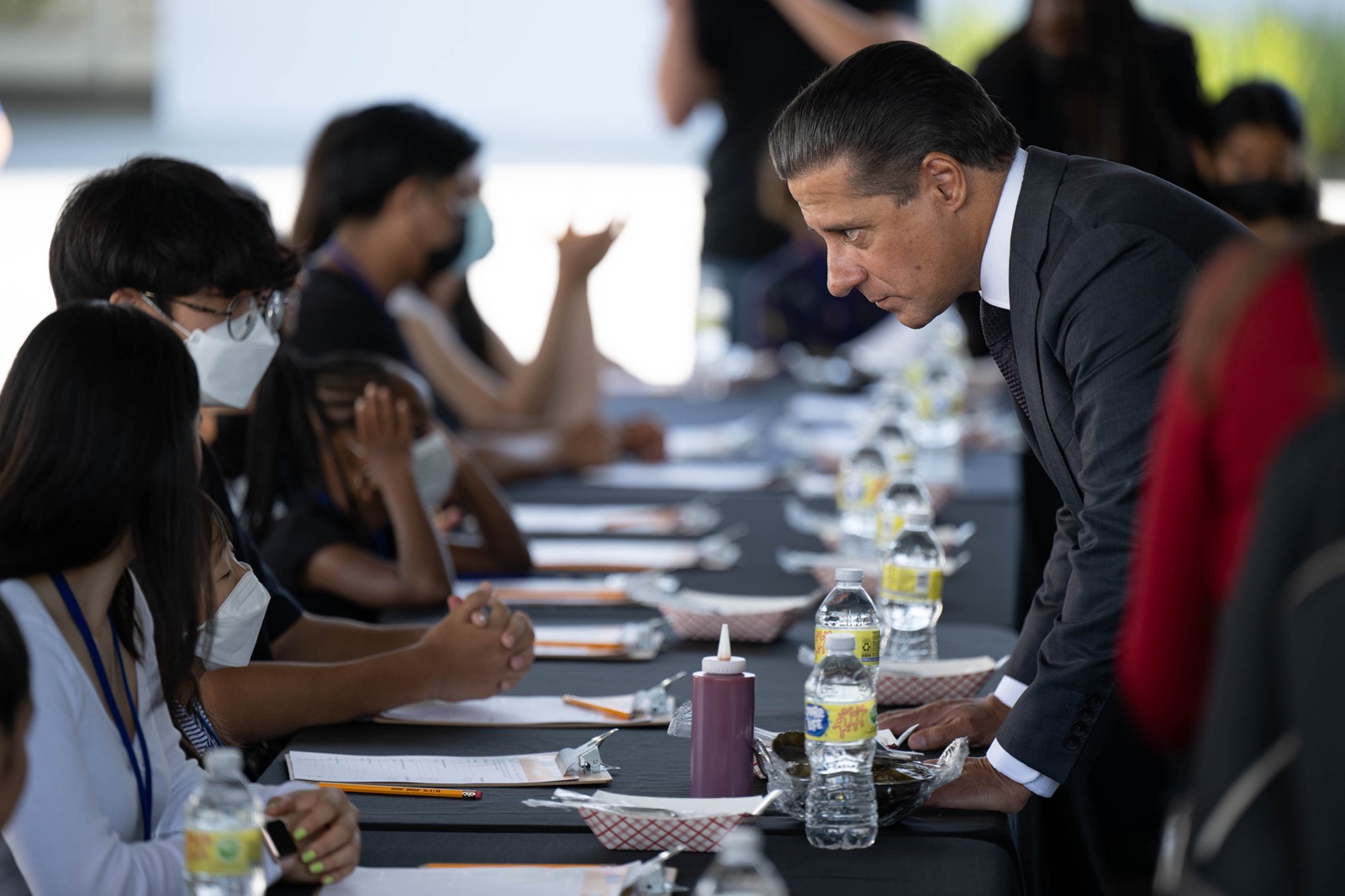
Johnson was one of more than two dozen students, from elementary to high school, who joined LAUSD Superintendent Alberto Carvalho at a school in downtown L.A. to taste test a dozen new menu items ahead of the school year, which starts Aug. 15.
The menu items ranged from a ramen bowl with chicken or tofu, to kung pao chicken, tacos, macaroni and cheese, and smoothies. There was also this item, which appeared to be the fan fave: carnitas bowls.
Not every item was a hit with all students, though. One made a face as she sampled the mango smoothie.
Another student, Johnathan McGee, an incoming junior at Los Angeles Center for Enriched Studies in Mid-City, said he was surprised that some of the items were “really good,” but admitted that other items, like the meatball sub sandwich were similar to meals he didn’t like last year.
“It’s kind of hit-or-miss,” he said.
District officials said they’re seeking feedback from students since they’re the ultimate consumers of cafeteria food.
Improving cafeteria food is part of L.A. Unified’s new strategic plan, which calls for elevating school nutrition by providing “fresher, healthier, and more appealing options informed by family and student feedback.”
More than 80% of LAUSD students qualify for free or reduced-priced school meals because of their family’s income level, though starting this school year all public school children in the state can receive free meals under California’s universal school meals program.
“It’s a human right to have your child fed every single day,” said Carvalho, who encouraged parents to send their children to school early enough that they can take advantage of free breakfasts, in addition to lunch.
Julissa Mendoza, who’s about to be a 12th grader at South Gate High School, said she’s somewhat lactose intolerant and has friends who are vegan. Due to their dietary restrictions, she and her friends have had limited choices from their school cafeteria — a challenge which the 17-year-old hopes the district will address this year.
“It wasn’t a choice — it was more like we had to abstain from the food,” Mendoza said at the start of the taste-testing event, where she said she was looking forward to seeing what vegetarian items the district would dish up.
Manish Singh, food services director for L.A. Unified, said his department began developing the recipes and putting together the menu near the end of last school year.
The district used to hold taste-testing events with students occasionally, but that got put on hold during the pandemic. Such events should resume this school year.
The district also is planning on rolling out a more culturally diverse menu this year, with ethnic cuisines highlighted each quarter, such as Hispanic, African-American, Asian and American Indian cuisines, Singh said.
Nearly 100 languages are spoken by students in the district, mirroring the diversity of Greater Los Angeles.
“Our goal is to expose people to different kinds of cuisines,” Singh said. “One, they get to see something different. … Also, I think it brings cultures together, makes people appreciate what we, as a diverse community, have to offer.”
 PREVIOUS ARTICLE
