




It seems no one is taking COVID-19 seriously anymore, said Mollee Loveland, a nursing home aide who lives outside Pittsburgh.
Loveland has seen patients and coworkers at the nursing home where she works die from the viral disease.
Now she has a new worry: bringing home the coronavirus and unwittingly infecting her infant daughter, Maya, born in May.
Loveland’s maternity leave ended in late June, when Maya wasn’t yet 2 months old. Infants cannot be vaccinated against COVID until they are 6 months old. Children younger than that suffer the highest rates of hospitalization of any age group except people 75 or older.
Between her patients’ complex medical needs and their close proximity to one another, COVID continues to pose a grave threat to Loveland’s nursing home — and to the 15,000 other certified nursing homes in the U.S. where some 1.2 million people live.
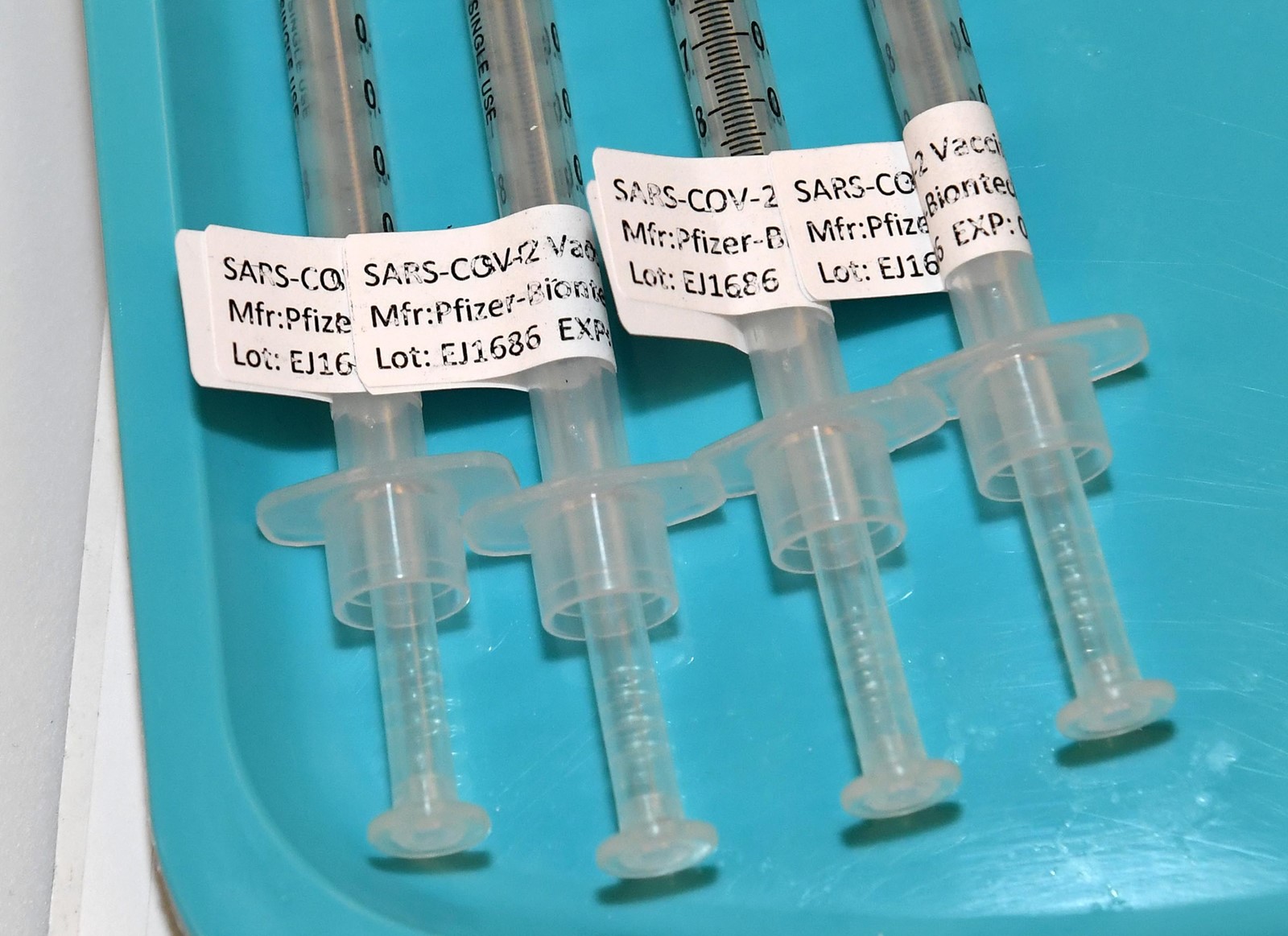
Despite this risk, a CDC report published in April found that just 4 in 10 nursing home residents in the U.S. received an updated COVID vaccine in the winter of 2023-24. The analysis drew on data from Oct. 16, 2023, through Feb. 11, 2024, and was conducted by the Centers for Disease Control and Prevention.
The CDC report also revealed that during January’s COVID peak, the rate of hospitalizations among nursing home residents was more than eight times that of all U.S. adults, age 70 and older.
Billing complexities and patient skepticism
Last winter’s low vaccination rate was partly driven by the end of the federal government’s paying for administering the shots, said Rajeev Kumar, a Chicago-based geriatrician.
While the vaccines remain free to patients, clinicians must now bill each person’s insurer separately. That makes vaccinating an entire nursing home more logistically complicated, Kumar said.
Kumar is president of the Post-Acute and Long-Term Care Medical Association, which represents clinicians who work in nursing homes and similar settings, such as post-acute care, assisted living, and hospice facilities.
“The challenges of navigating through that process and arranging vaccinations, making sure that somebody gets to bill for services and collect money, that’s what has become a little bit more tedious,” he said.
In April, after the study was released, the CDC recommended that adults 65 and older get an additional dose of an updated vaccine if it’s been more than four months since their last dose. That means most nursing home patients who have had only one shot in fall or winter are not considered up to date on the COVID vaccines.
Kumar and his colleagues are encountering more skepticism of the COVID vaccines, compared with their rollout.
“The long-term care population is a microcosm of what’s happening across the country and, unfortunately, COVID vaccine reluctance remains persistent throughout the general public. It’s our most significant challenge,” according to an emailed statement from David Gifford, chief medical officer at AHCA/NCAL, which represents both for-profit and nonprofit nursing homes.
Nursing aide Loveland also has observed doubts and misinformation cropping up among patients at her job: “It’s the Facebook rabbit hole.”
But there are ways to push back against bad information, and states show wide variation in the proportion of nursing home residents who got vaccinated last winter.
For example, in both North and South Dakota, more than 55% of residents at nursing homes that reported data have gotten an updated COVID vaccine this fall. Nationally, that share is 32%.
Building trust through relationships
One major medical system operating in the Dakotas, Sanford Health, has managed more than two dozen nursing homes since a 2019 merger with the long-term care chain Good Samaritan Society.
In some of these nursing homes more than 70% of residents were vaccinated last fall and winter — at one Sanford facility in Canton, South Dakota, the rate exceeded 90%.
Sanford achieved this by leveraging the size of the health system to make delivering vaccines more efficient, said Jeremy Cauwels, Sanford’s chief medical officer. He also credited a close working relationship with a South Dakota-based pharmacy chain, Lewis Drug.
But the most crucial factor was that many of Sanford’s nursing home patients are cared for by doctors who are also employed by the health system. At most Sanford’s North and South Dakota nursing homes, these clinicians provide on-site primary care, meaning patients don’t have to leave the facilities to see doctors.
These employed doctors have been critical in persuading patients to stay up to date on their COVID shots, Cauwels said.
This article is from a partnership that includes NPR and KFF Health News. Distributed by Tribune News Service.
 PREVIOUS ARTICLE
