


How to take advantage of
the season’s crop
at its freshest
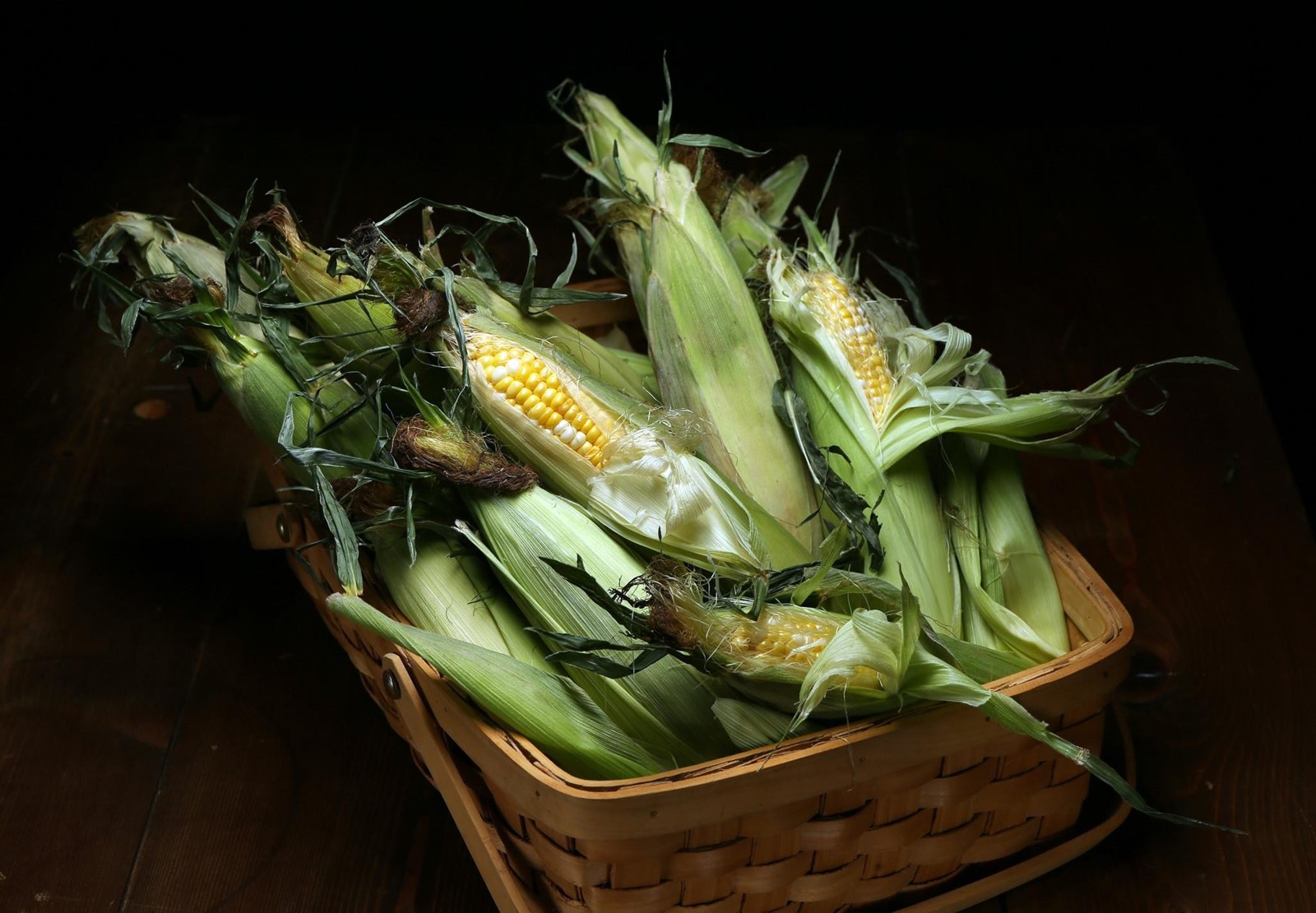



If you believe Rodgers and Hammerstein, apparently the great state of Oklahoma once teemed with thundering herds of elephants.
Starting each spring, from the dusty plains of Grainola in the north to the equally dusty plains of Gene Autry in the south — seems they’re fairly rotten with dusty plains down there — these tusked and terrifying beasts wrought naught but death and destruction across the land until late summer, when the corn crops grew high enough to block their sight lines. Thus blinded — the corn being as high as an elephant’s eye — they’d abandon their stampede to hibernate through the unrelenting Oklahomaic winters.
Once again, corn saves the day. All hail, mighty, mighty corn.
Why you need
to learn this
Your corn crib is busting at the seams, filled to the rafters, stuffed to the gills. What to make with all that corn? Besides your lip-smacking, homemade high fructose corn syrup, that is.
The steps you take
First off, let’s be clear: It’s late summer. Fresh sweet corn is as common as Cincinnati street pigs, so, for now, can we eschew the canned and frozen numbers?
Now, for those of us of solid Midwestern stock (Not to brag, but a recent DNA test traces my lineage back 37,000 years to the backseat of a Rambler parked outside a tavern in Carbondale, Illinois), you’ll be possessed of an almost psychotic love for corn on the cob. Boiled, roasted or grilled, dripping with melted butter, seasoned with salt and speckled with pepper, what could possibly be better?
On the other hand, as the lion I met outside the vegan carryout joint told me, shrugging his shoulders, “Hey, sometimes you just get tired of antelope.” “Yeah,” I laughed, “but wait; lions have shoulders?”
You too, then, might want to try something nonantelope-ish on your corn on the cob. Consider:
And salt. Don’t forget the salt.
You get the picture. If your corn is salted properly, the other ingredients will adhere to the mildly flavored white goo, turning your corn into a creamy, savory, well-seasoned ticket to paradise.
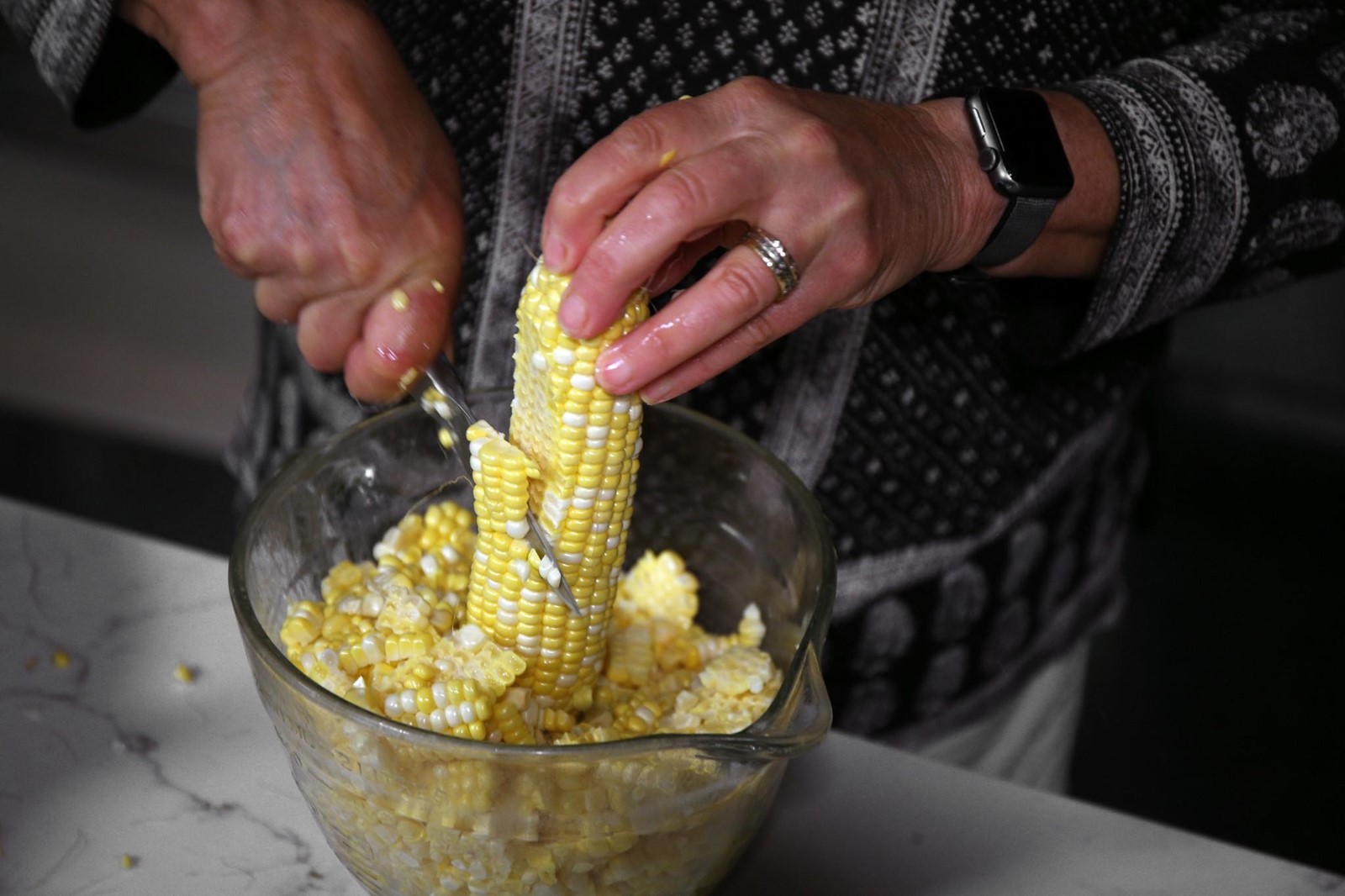
Still, perhaps you, being the cultured type, prefer not to eat with your hands. In that case, the first thing you’ll want to do is remove the kernels from the cob. It’s easy and messy:
1. Use your nonknife hand to stand a shucked ear on your cutting board or in a large bowl, like Lucy holding the football for Charlie Brown. Starting halfway up, cut down along the cob with a chef’s knife, releasing the kernels onto the cutting board. After each cut, rotate the cob toward you and repeat until you’ve gone all the way around. Flip the corn over and repeat.
2. If you want to be really cool, do this: Use the back of the knife to scrape down the newly naked cob. This squeezes out any remaining pulp and liquid — some wags call this the “corn milk.” Add it to whatever you’re making with the corn.
Now, let’s use that corn. Here are three good, general suggestions, all with the added bonus of being good band names:
First off, there’s corn stock. It’s like meat stock, without the gore. After removing the kernels, cover the cobs in water and simmer them for an hour-ish to extract the flavor. For deeper flavor, add aromatics like onion, carrot and celery, and herbs like parsley, thyme and bay leaf. Use this as a base for soups or sauces, or just season it with salt and drink it warm like the psychopath you are.
Or, make corn chowder: Crisp some bacon lardons and set them aside, then sweat diced aromatics in the bacon fat. Add your corn and corn stock (or water or chicken stock) to cover. Simmer until the corn is tender, then pulse it in a blender to make it smooth-ish and thick-ish. Season it with salt, finish it with cream and garnish with the reserved bacon. Yum.
Proceed as in numbers 2 or 3 above, sauteing your corn with or without aromatics. For something like maque choux (see accompanying recipe), just add heavy cream (the late, great New Orleans chef Paul Prudhomme used sweetened, condensed milk) and reduce it until it thickens.
Or you could sprinkle a couple tablespoons of flour over the whole lot, then stir it in until it looks like a big, gloppy nightmare, then add milk or half-and-half or cream, depending on your feelings about arteriosclerosis.
Personally, I prefer chicken stock, then finish it with a bit of cream. It’s still rich, but not nearly as heavy.
Maque choux with or without bacon
This popular side dish from the cuisine of Louisiana has as many interpretations as there are cooks. Bacon adds great flavor and texture, but it’s just as nice when it’s completely vegetarian. Adjust the amount of spices and cream to your liking. You can also turn it into a main dish to serve over rice with additional proteins like shrimp or andouille sausage.
Salt as needed
 PREVIOUS ARTICLE
