




By Ross Eric Gibson
Jose Rodriguez and Francisco Juarez were soldiers stationed at Mission San Gabriel in 1781. Juarez had a wife and infant son, and in 1782, his wife was five months pregnant when her husband died, leaving her to give birth alone, to a son she named Joaquin. The following month, a sympathetic Jose Rodriguez married her and adopted her two sons. He went on to father five children while stationed at five missions and two more in Santa Cruz.
Rodriguez retired to Villa de Branciforte in 1798. It was founded only the year before as the last Spanish townships in the mold of San Jose and Los Angeles, to be constructed for $23,405 from the viceroy. There were only 20 families at the villa, with each founding household to receive a $200 adobe house, livestock, land, tools, weapons and $430 over five years. Easy money!
But when the Rodriguez family arrived, all they found were drafty split-log, thatch-roofed huts, and among the founding families were convicts, most arrested for vagrancy, and offered settlement in Branciforte in exchange for ending their sentence. The settlement restricted travel except by permission, work was mandatory on the viceroy’s ranches. And all ranchers were to live in town, under the watchful eye of guards.
The settlement was governed by a comisionado, a yearlong military post commonly filled by a retired soldier. The government at first wouldn’t send the money to build Branciforte but was persuaded to send a payment of $15,000 in 1801. The settlers realized the power of elected representatives, so in 1802 they elected their own alcalde and town council, becoming the birthplace of democracy in Spanish California.
When it was learned Rodriguez knew how to read, write and calculate, Jose Rodriguez served as comisionado from 1804 to 1810, writing reports to the governor. By 1806, Branciforte had seven adobe homes. In spite of poor crop yields, the governor required Branciforte to supply San Jose soldiers with all the corn and beans they had. The government required cash donations to fund Spanish’s wars in Europe, then the government diverted Branciforte money entirely for this purpose, finally stopping all payments and Spanish supply ships into California starting 1811.
The five sons of Alejandro fulfilled their 10-year military service, which was a source of education and apprenticeship. Afterward they serviced in Branciforte government. The five brothers were (in birth-order): Sebastian and Alejandro, Rodrigo the tailor/rancher, Francisco de Sales, called “The Poet of Santa Cruz,” and Roman, the gentleman saloon keeper.
Land grants
In 1820, Jose Rodriguez went to Monterey for needed medical help and died at Mission San Carlos. Ten months later, on Aug. 24, 1821, Mexico declared its independence from Spain. From then on, land grants could be made to the public. So in 1821, Sebastian petitioned on behalf of himself and his four brothers for Rancho Corralitos. However, it was received during the change-over from Spanish to Mexican authority. By then, Mexico was ruled by Emperor Augustin Iturbide, who doled out favors to his cronies, and Rancho Corralitos was granted to Jose Amesti for service to the emperor.
Sebastian and Alejandro then looked to lands along the Pajaro River, named the Bolsa del Pajaro, bestowed in 1823 as a joint grant. Being unable to occupy the land during their military service, they leased it for 25 pesos a year to American Juan Cooper, a part of Watsonville now called Gonzales Street Hill. When Alejandro was discharged in 1829, he built his adobe house on Rancho Pajaro, where he resided with his family, and raised a crop. Sebastian retired from service in 1830, and settled on his ranch in 1832, first residing in the wood-frame house that Cooper had built, which in 1842 Sebastian replaced with an adobe house.
The reunion was a happy one, until one day Alejandro discovered his name wasn’t on the deed. Fearing a government error, Alejandro petitioned Gov. Jose Figueroa in July 1834 to return his name to the joint grant. The governor looked into the matter, but could find no evidence of a joint ownership, and dismissed the case. Sebastian then asked the governor the following month, to confirm Sebastian’s exclusive claim to the Bolsa del Pajaro, and Alejandro countered by filing a new petition for joint ownership.
In 1835, Alejandro was elected alcalde of Villa de Branciforte, giving him local jurisdiction over land-use matters. Alejandro’s eldest son, Fecundo, lived in Monterey, through whom Alejandro befriended Rafael Gonzales, a close friend of Gov. Figueroa. Gonzales had served first at the Custom House, then as the governor’s personal secretary, and alcalde of Monterey. But these ties to the governor yielded little, as Figueroa died in office in 1835. This plunged Monterey into political turmoil, leaving a string of governors serving in short duration, unsympathetic to Alejandro.
Rafael Gonzales was soon to be Alejandro’s brother-in-law. So Gonzales counseled the brothers to end their rivalry, as Alejandro wouldn’t have built his Bolsa del Pajaro adobe if it belonged to his brother. So the brothers agreed to end their rivalry, and on Sept. 30, 1836, they both went to Monterey to present a petition for joint ownership. As luck would have it, on-or-about the day Gov. Gutierrez was to decide the matter, Monterey was attacked by the military forces of Juan Bautista Alvarado in a coup d’etat, leading 170 Californios and 50 Americans under Isaac Graham, and Alvarado declared Alta California a free state. When Mexico threatened to send troops, Gov. Alvarado sought to appease Mexico by arresting 100 of his Americano and Californio supporters and shipping them south in chains. (Mexico released them all in 1837.)
Live Oak
Feeling vulnerable in Monterey due to by the growing unrest, Alejandro packed up his family, goods and livestock, and settled on the outskirts of Villa de Branciforte in December 1836. His brother Francisco de Sales Rodriguez had been granted Rancho Arroyo Del Rodeo in 1834, which had a riverside gulch that made a good roundup corral for the cattle. Just west of it was a scenic expanse of well-watered land. Alejandro named it Rancho Encinalitos del Rodeo, meaning the Little Live Oaks of the Rodeo, and built his adobe home in what is now Oakwood Cemetery on Paul Sweet Road (west of today’s Dominican Hospital). He planted a large orchard around his house, and 40 acres of wheat and barley, and raised herds of cattle and the finest horses.
This left Sebastian and his family alone at the Pajaro Ranch, worried as much by the political unrest, as by Spanish and European squatters starting in 1835, trying to settle on Pajaro Valley ranchland. Alejandro’s son Manuel Rodriguez served as alcalde of Villa de Branciforte in 1844, then in 1846, Alejandro’s neighbor Paul Sweet, left to fight in the Bear Flag Revolt, briefly making California an independent republic. Mexico then conveyed California to the U.S. in exchange for $15 million U.S. cash and a treaty, honoring all Spanish deeds and upholding both Spanish and American law.
Alejandro had a strong sense of right and wrong. Pedro Gomez was living on Alejandro’s ranch, but when Gomez murdered Mrs. Gomez, he was arrested and executed. By Spanish tradition, godparents would automatically adopt the orphans. We don’t know if the brothers were godfathers, but the eldest daughter was adopted by Roman to live at his School Street adobe, and the youngest daughter was adopted by Alejandro at his home on Paul Sweet Road.
Alejandro took great pride in the beauty of the horses he raised. So when he found his favorite horse with its mane and tail hair cut off, he found the culprit was a young boy named “C.” He was hauled before Judge Wm. Blackburn, who sentenced the lad to having all his hair cut off in front of the courthouse. Alejandro died unexpectedly in 1848 at the age of 57. Manuel became executor, only to find Alejandro had made no will, had no grant or deed for Rancho Encinalitos, and his Bolsa del Pajaro joint deed was under a cloud.
Gold Rush
Then in 1849, word of the gold discovery spread, and the world rushed in. During a Spud Rush of potato growers hoping to cash in on the boom in potato prices, hordes of Spanish, American and European squatters settled on local farms. One was John T. Porter, who built a shack at today’s Capitola Road and 7th Avenue, in order to claim 120 acres of Rodriguez’s land, since Rodriguez had no deed. It cost the family $3,000 to remove Porter from the property. But it gave them an idea.
To settle Alejandro’s messy estate, the family decided they would file a claim for Rancho Encinalitos (as if they were squatters), then divide it among Alejandro’s seven heirs, with the half-share in the Bolsa del Pajaro sold for cash. The high demand for local farmland had raised the price of real estate, and Fecundo was ready for a payday. His uncle, Sebastian, was not as enamored with the squatters. But among the Pajaro Valley farmers was a man named Judge John Watson, so Fecundo partnered with him for his knowledge of American law and real estate. The two got the heirs $4,000 in promissory notes for their shares. More successful was the division of Rancho Encinalitos, which Alejandro had forgotten to have granted due to his obsession with the Pajaro Ranch.
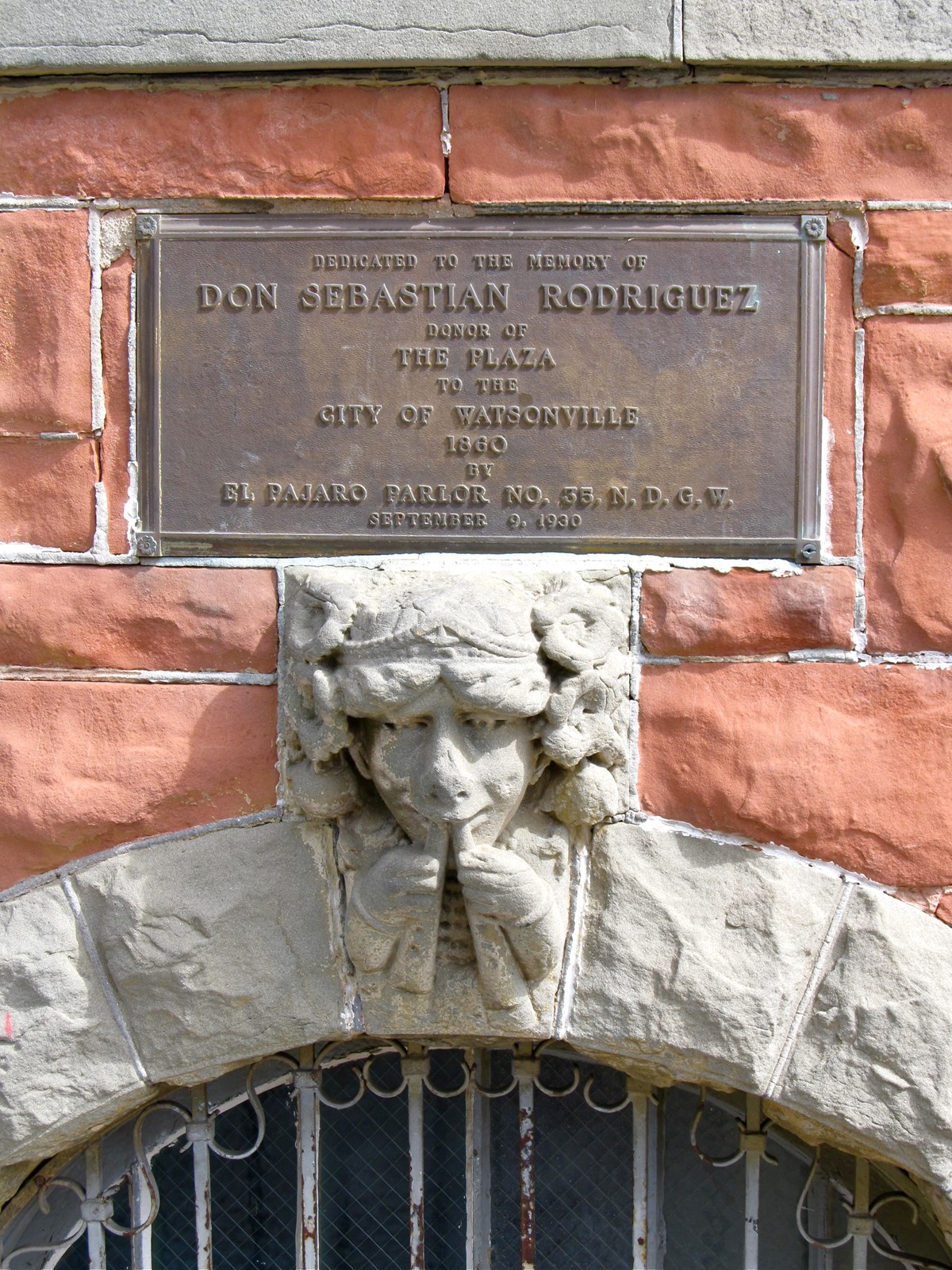
Alejandro’s half-share of Bolsa del Pajaro was taken to court in 1853, only to discover that Alvarado’s revolution in Monterey had stopped the petition from going through, so while the joint deed was there, it was neither approved nor rejected. But Sebastian’s individual claim was affirmed and was thus law. In 1855, Sebastian died, leaving Bolsa del Pajaro and Rancho Ballena to his sons, but all they inherited were lawsuits. In 1860, the heirs of Sebastian brought suit to evict the heirs of Alejandro from the property. In 1861, a final review concluded that Alejandro had been living at Rancho del Pajaro by permission of Sebastian, the property owner. In 1860, the heirs of Sebastian donated Watsonville Plaza to the city in memory of their father. Sebastian’s son Jose, lived in the family house for seven years, until his death in 1868, after which the rancho was sold at public auction, except for the 10 acres containing the adobe family home.
 PREVIOUS ARTICLE
