




RECCO, Italy>> Ask Fred Plotkin, the author of Italian cookbooks and restaurant guides, and he’ll say the most craveable food on the planet can be found in a seaside town on the sunny northwest coast of Italy.
Plotkin has eaten through all 20 regions of Italy to research restaurants, bakeries and gelato shops. (His book “Italy for the Gourmet Traveler” is a neoclassic.) But it’s a cheese-filled flatbread called focaccia col formaggio, the specialty of Recco,, that receives his highest praise.
“If I knew I was eating my last meal, this focaccia would be on the menu,” Plotkin said.
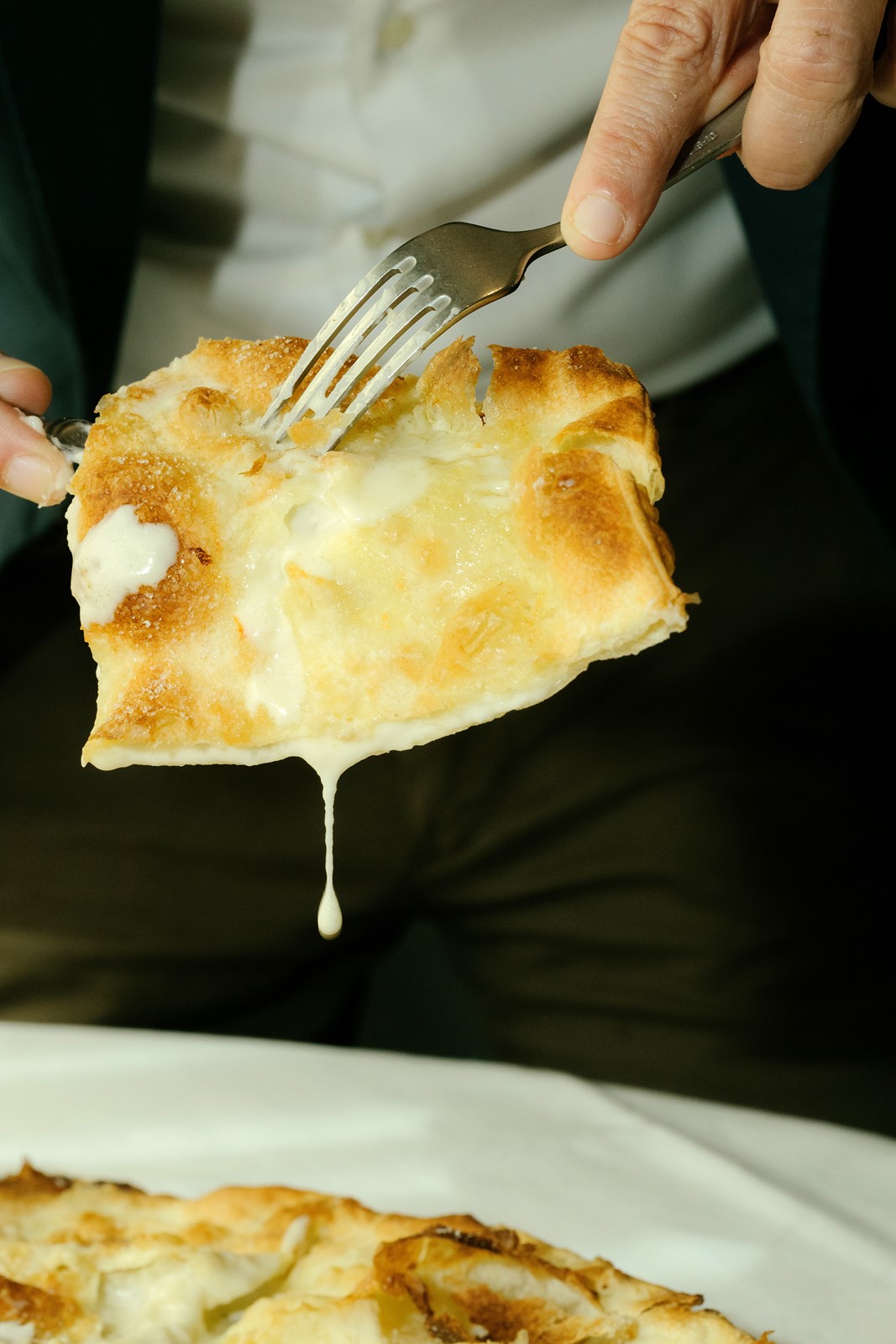
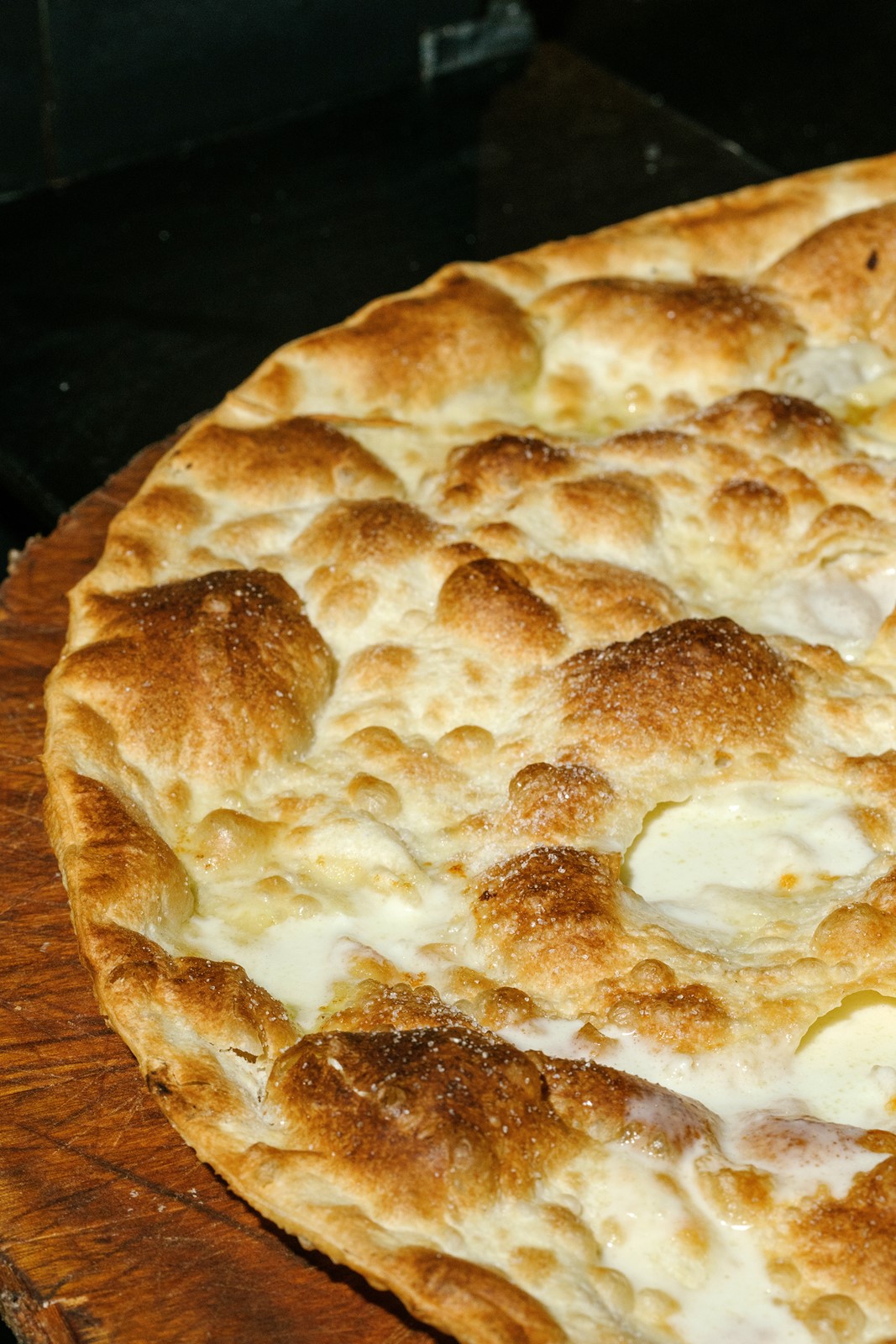
Picture focaccia col formaggio as an Italian quesadilla. Replace the tortillas with a thinner dough, then stretch it as wide as a manhole cover. Rather than something gooey in the center, this focaccia holds Crescenza cheese, which melts into a tangy cream. There’s no visual cue more validating than a fresh slice that drips milky cheese liquid.
If ever an Italian town was inextricably linked to one dish, it’s Recco to focaccia col formaggio, with three dozen restaurants and bakeries serving it in a town of 10,000 residents. Unlike more photogenic Ligurian destinations like Portofino and Cinque Terre, Recco is light on landmarks — much of it was heavily bombed in World War II. Locals decided to remake it as a gastronomic destination, showcasing its pesto, walnut sauce and an herb-stuffed ravioli called pansoti. Plotkin said Recco is now the best food town in Liguria.
Recco’s most marketable export is focaccia col formaggio, and a consortium was formed in 2005 to gain legal protection with the European Union. Only 11 restaurants and seven bakeries adhering to strict ingredient standards could label their product as “focaccia di Recco.” A quality controller pays members visits twice a year.
“The controller watches you make it, then tastes it,” said Lucio Bernini, who heads the Consortium Focaccia di Recco. “They take a piece of cheese and a quantity of olive oil to a laboratory. It’s serious.”
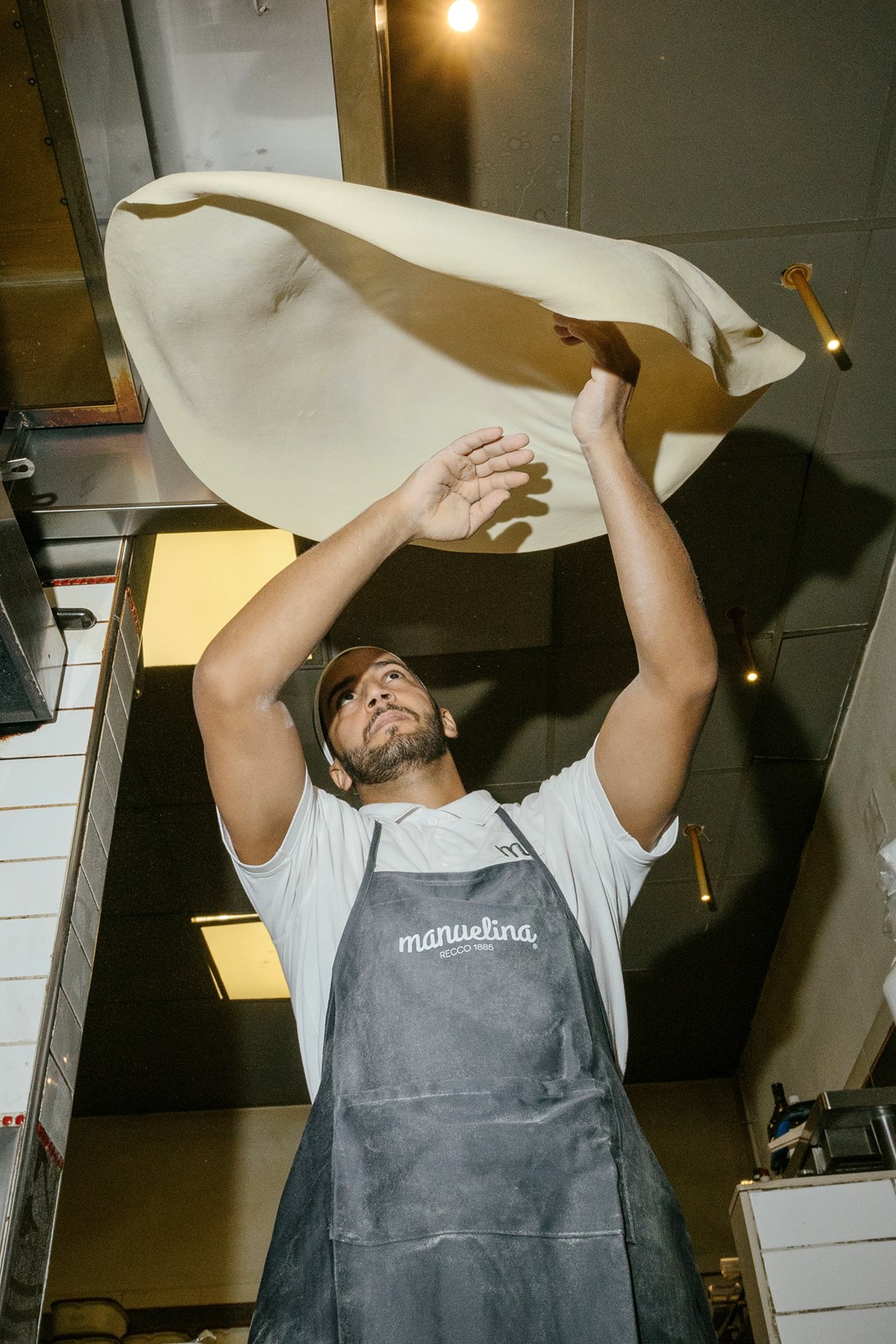
At bakeries like Panificio Moltedo dal 1874, locals sip bracingly strong espressos each morning alongside plates of focaccia col formaggio. On busy days, 100 focaccias emerge heaving from the oven, then are quickly dispatched to the front counter where they’re sliced into wedges and served. Nearby at Manuelina, Recco’s most famous restaurant, bakers twirl dough midair with balletic fluidity to ever thinner and impressively round sheets.
Whether the focaccia comes out golden and crackly, as they do in Manuelina, or tender-crisp like the ones at Moltedo, the common thread is a delicateness in the dough and a creaminess to the cheese.
For a dish requiring five ingredients, focaccia col formaggio isn’t difficult to replicate: Roll two doughs as thin as possible, add fresh cheese, bake at a high heat. The challenge comes in buying ingredients. Though fresh Crescenza is available in U.S. supermarkets, high-quality versions are hard to find outside Italy. The same goes for Ligurian olive oil, which has a sweet herbaceousness unique to the region.
Bakers here offered similar advice: Find the right cheese or make something similar by mixing a little buttermilk into Stracchino or Taleggio, then strive for a dough no more than a millimeter thick, so thin you could stand by a window and see sunlight through. A well-hydrated and well-rested dough will help achieve this. The result, as Carol Field wrote in “The Italian Baker,” is “as elegant of a dish as Italy offers.”
Focaccia col Formaggio (Ligurian Crisp Cheese Flatbread)
In Recco, a Mediterranean seaside town in the northwest of Italy, one crisp and cheesy snack is everywhere — at fine-dining restaurants and humble bakeries alike. Focaccia col formaggio might be simplistically described as a Ligurian quesadilla, but there’s a creaminess in the tangy cheese and delicateness in the crisp unleavened dough that drove Italian food authority Fred Plotkin to call it, “probably the most addictive food on the planet.” Crescenza cheese is ideal for this quick, simple and airy baked snack, but other soft, creamy, mild cow’s milk cheeses may be used in a pinch, like Stracchino or Taleggio (see Tip).
Yield: 4 to 6 servings
Total time: 1 hour, 10 minutes, plus 45 minutes’ resting
— Kevin Pang
Ingredients
1 1/2 cups/200 grams bread flour (preferably King Arthur; see Tip), plus more for kneading
1 1/2 teaspoons/6 grams fine salt
Scant 1/2 cup/100 grams room temperature water
2 tablespoons plus 2 teaspoons/25 grams extra-virgin olive oil, plus more for greasing the pan
8 ounces/227 grams Crescenza cheese (see Tip)
Directions
1. Add flour and 1 teaspoon salt to the bowl of a stand mixer fitted with a dough hook. On second-lowest speed, slowly incorporate the water followed by the oil, scraping down the sides as needed. If the dough separates into pieces, pause the mixer and use your hands to recombine the dough into a ball. Let the mixer run for 8 minutes total.
2. On a lightly floured surface, knead the dough for 20 seconds, then form into a smooth ball; it should feel tacky. Place the dough in a bowl, cover with a cloth or plastic wrap, and let sit at room temperature for 45 minutes.
3. Thoroughly coat the surface of a large rimmed baking sheet (at least 12- by 17-inches) with plenty of oil (at least 2 tablespoons), brushing evenly. (Be sure to use a sheet that’s rimmed, as some cheese may ooze out of the bread.) Heat oven to 500 degrees, setting rack to middle position.
4. Divide the dough ball in half. Place one half on a lightly floured work surface; leave the remaining dough in the bowl, covered. Using a rolling pin, roll out the dough as thinly as possible from the middle outward. You want to form a rectangle slightly smaller than the dimensions of the baking sheet. The dough should be very thin, like sheets of fresh lasagna (if standing next to a window, you should see sunlight through the dough). Gently drape the dough onto the oiled baking sheet, trimming off any edges that hang over.
5. Using your thumb and fingers, pinch off 16 to 20 small chunks of cheese (around the size of a large cherry tomato) and dollop on the dough, starting in the center and working your way towards the edge, leaving a 1 1/2-inch border. Sprinkle the remaining 1/2 teaspoon salt evenly over the cheese.
6. Lightly flour the work surface again, and roll out the remaining dough ball to roughly the same dimensions as the first. Drape this second sheet over the cheese-topped dough. Gently stretch out the top sheet to nearly align with the edges of the bottom sheet. Lift the lip of the bottom sheet and fold over the top sheet. Then use fingers to press down along the edge, firmly sealing the two layers of dough. Using a paring knife, make 6 evenly spaced slits (2 rows of 3) on the top layer.
7. Bake for 13 to 15 minutes, rotating the baking sheet halfway through, until the top is toasty, bubbly like pizza crust, and deep brown in spots. Let cool for 2 minutes. Carefully transfer focaccia to a wooden cutting board. Cut into 12 pieces and serve immediately.
Tips:
If you can’t find fresh Crescenza, substitute Stracchino or Taleggio. For those, Fred Plotkin suggests adding the fresh cheese to a bowl and incorporating 2 tablespoons of buttermilk to mimic Crescenza’s creaminess and tang. If using Taleggio, cut away and discard the rind first.
Bread flour is ideal for this recipe and while any type will work, the King Arthur brand contains a higher protein level than most flour commercially available. (It’s about 12.7% compared to 12% for many other brands.) Practically speaking, using King Arthur bread flour won’t yield a better tasting focaccia, but it’ll make the dough easier to work with (flour with higher protein levels absorbs more water). You can also use 00 flour. Just make sure to find one suitable for bread baking, and not, say, 00 flour for pastas.
 PREVIOUS ARTICLE
