




Orlando’s airport was as deserted as a shopping mall gone to seed when the pandemic collapsed air travel.
Amid that gloom, airport leaders worried their aging terminals A and B were becoming obsolete and perhaps due to be torn down or repurposed for other use.
At the same time, Terminal C was under construction with majestic architecture and dazzling traveler amenities that promised an exciting future, deepening the conviction that A and B’s days were numbered.
But those considerations are as forgotten now as Covid mask mandates.
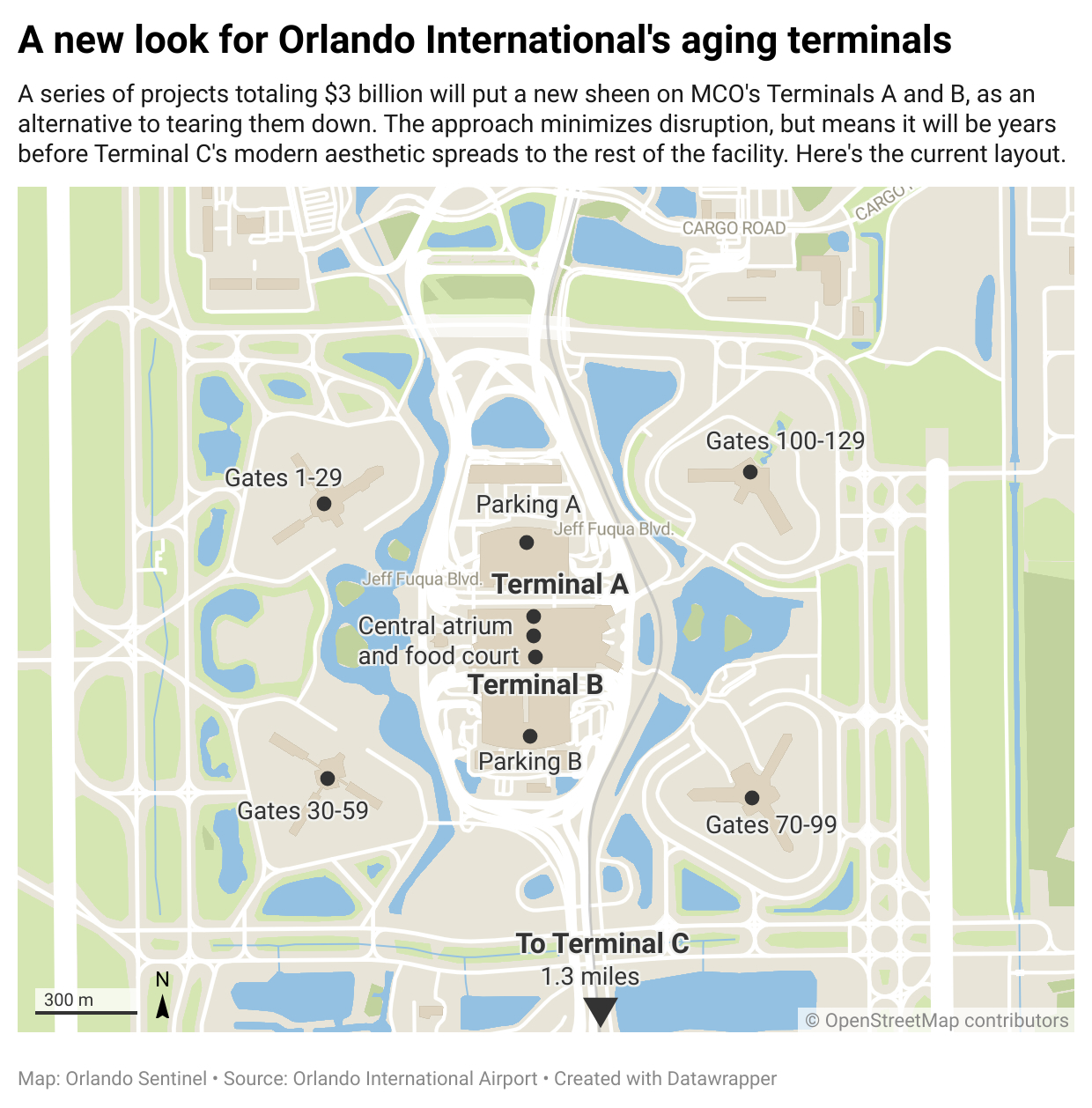
Without fanfare but with growing momentum, the airport’s authority is pursuing instead an enormous upgrade to the North Terminal Complex, extending the life of terminals A and B despite formidable limitations such as low ceilings, narrow corridors and traffic dysfunction.
The total cost, unannounced but calculated by the Orlando Sentinel: $1.7 billion.
Also underway is a $2 billion, airport-wide overhaul of rental car operations that will free up a tremendous amount of space in the North Terminal Complex.
The physical layout of the North Terminal Complex will remain largely as it is today. What passengers can look for in coming years, with an immense amount of detail still in the works, is a modernized interior, a new lineup of stores and restaurants, and more comfortable seating that is digitally equipped.
There will be far less carpet and more terrazzo for the ubiquitous rolling carry-ons, additional and better restrooms, and a dramatically new way of renting cars.
Some of the upgrade, including replacement of shuttle trains and baggage systems, will simply be about increasing reliability and preventing delays.
The investment, on the whole, will rival any ever at Orlando International Airport.
“We need to show some TLC,” said the airport authority chief executive officer, Kevin Thibault, of providing A and B with at least 10 to 15 years of additional life. “Terminal C can only do so much right now.”
The Greater Orlando Aviation Authority has not assembled a complete price tag for the multifaceted effort to boost the attractiveness, functionality and longevity of the North Terminal Complex.
The $1.7 billion in direct spending estimated by the Sentinel amounts to one of the largest investment initiatives ever at the airport. It surpasses the North Terminal Complex’s original cost of $1 billion adjusted for inflation, though it is eclipsed by the $3.1 billion spent initially on Terminal C in the new South Terminal Complex.
Ultimately, Thibault said, airport leaders realized that doing anything but continuing with terminals A and B would be too disruptive.
The robust recovery of air travel means that an aircraft is parked and ready by sunrise at each of the 93 gates of the North Terminal Complex.
They are in place for another daily crush of travelers, which added up to 58 million last year, when the airport ranked as the nation’s seventh busiest.
The North Terminal Complex remains the airport’s workhorse, still handling eight passengers for every one at Terminal C, and too much in demand to consider major demolition and reconstruction, Thibault said.
“We want to brighten it up, to change the look,” he said. “We have a lot of potential opportunity here but in the meantime it’s how do I maximize my current assets.”
Renovation starts next year with the “North Terminal Refresh Program” to “enhance the look and feel of terminals A and B.”
The current aesthetic traces back to the 1970s.
Orlando’s airport moved in 1962 to be a guest of McCoy Air Force Base, then bracing for the Cuban missile crisis. Weapons warehousing was transformed into a passenger terminal.
In 1965, Walt Disney announced a theme park for Orange County. In 1974, the air base closed and its land was transferred to Orlando. In 1978, construction began there on the North Terminal Complex, which opened in 1981.
By the early 2000s, the airport had completed its current configuration of a massive central hub containing terminals A and B and four outer hubs containing all gates.
For $235 million, the North Terminal Refresh Program will remodel floors, wall finishes, ceilings and lighting of the central hub’s three levels, the interiors of the oldest gates, and all bathrooms in the four outer hubs.
That’s a lot. For an idea of scale, ticket lobbies of terminals A and B are a quarter-mile long each.
Orlando’s airport has devoted itself to a premium expense of looking good for tourists, which account for about three-quarters of travelers.
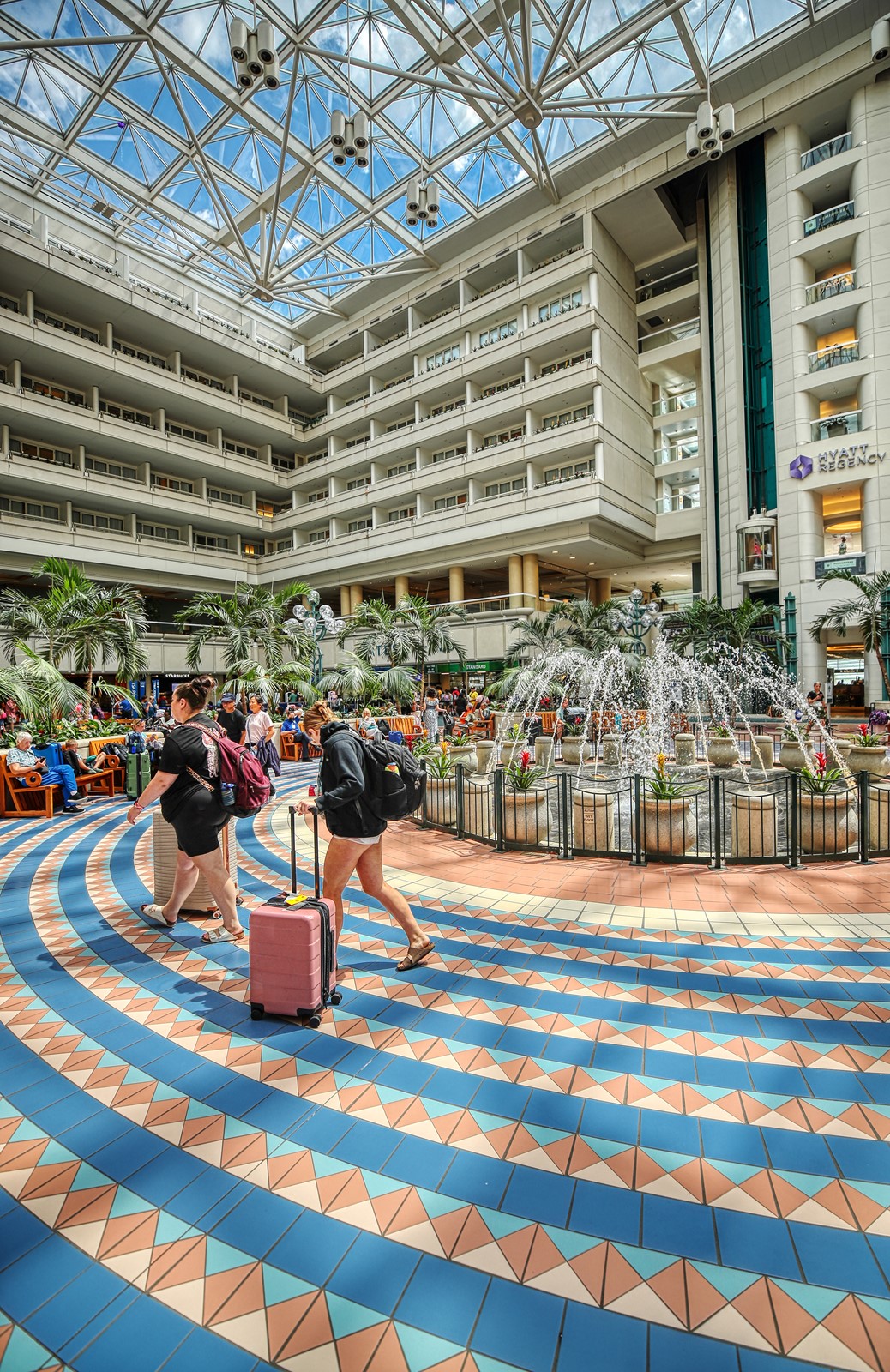
Celebrated features of the North Terminal Complex are the voluminous atrium and fountain within a Hyatt hotel, and people mover shuttle trains that lend to a sense of a scenic flight along elevated rails from the central hub to the outer hubs. Those features will remain.
Many passengers are fine with the North Terminal Complex as it is.
“Better than my airport – Midway,” said Helen Matiga of Chicago. A travel website, The Points Guy, ran a story in 2019 about Midway: “I Spent a Day at America’s Worst Airport.”
Brian Morrison of Fort Myers, waiting for family to arrive, was puzzled when told the airport was due for a costly overhaul. “It seems like a waste of money,’ he said.
But Kimberly Greene of the Washington, D.C., area, has flown with JetBlue at Terminal C. “What they’ve done there is nice,” she said, pausing at the A and B west security checkpoint. “They could use that feeling of more calm or less chaos here.”
A trio of airline ticket agents stressed two needs: get rid of aging carpet and, for everyone’s sake, put up more effective wayfinding signage. They said when travelers leave their counters, signs fall well short of providing confidence-inspiring directions to gates. Airport leaders hope to grant the agents’ wishes with the refresh.
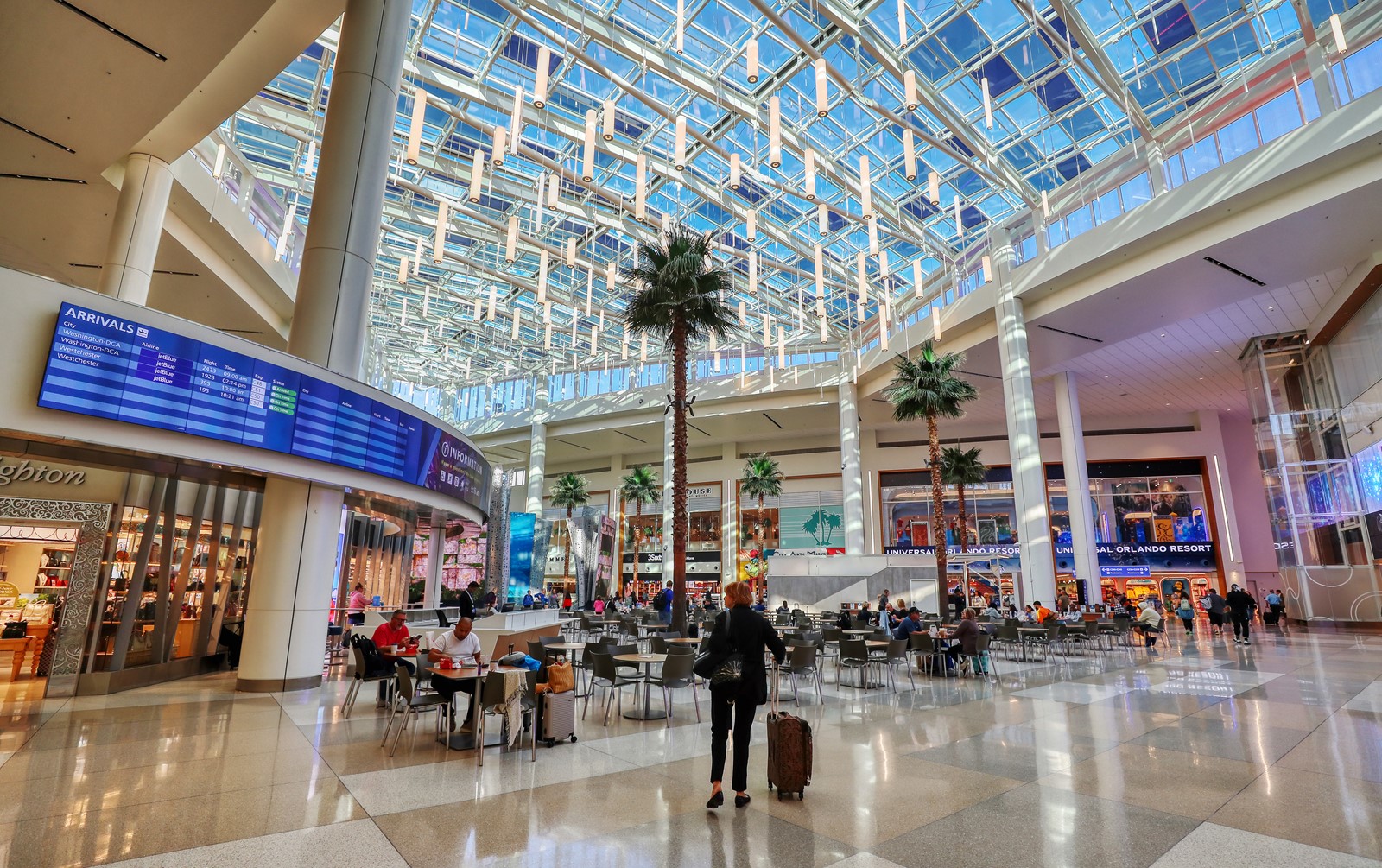
Perhaps the strongest statement on the obsolescence of terminals A and B comes from C, which rejected core features of the North Terminal Complex.
There are no shuttle trains or remote hubs at Terminal C. Passengers walk to gates – which has triggered some controversy because moving walkways intended for long corridors were lost to budget cuts. Terminals A and B share the atrium and a big food court, where passengers linger before going to security checkpoints and departure gates. Terminal C has its splashiest spaces, shopping and dining beyond its security checkpoint and nearer to gates.
Terminal C’s expansive views from windows are meant to help give passengers a sense of where they are and where to go.
In the window-limited A and B, passengers depend utterly on signs for direction.
Among the boldest elements of Terminal C was the placement of baggage claim on the top floor, which is enveloped with windows for a welcoming view of vacation skies.
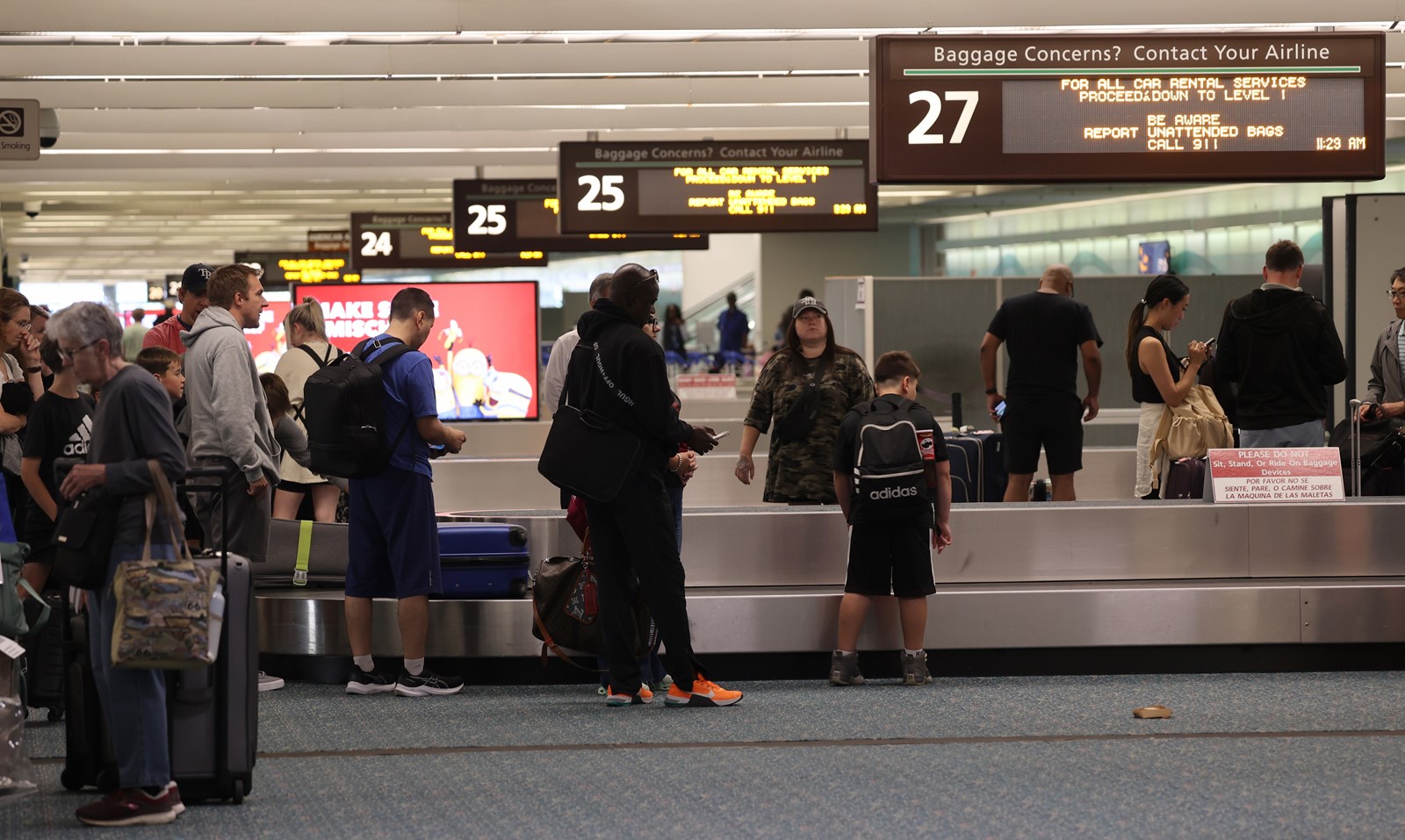
Passengers in terminals A and B retrieve bags from the second floor, which evokes basement claustrophobia.
The airport’s challenging task, its leaders say, is to put A and B more on par with C, even though some of their limitations — including tighter spaces that sufficed back in a day of smaller jetliners and fewer travelers — are here to stay.
“Let’s be honest, we’re constrained in some ways with what we’ve inherited,” said Tim Weisheyer, who was appointed chairman of the airport authority in April. “It was not built for the type of demand that’s placed on it now.”
Weisheyer, previously chairman of Osceola County’s school district, has real estate brokerages, a development company and a consulting firm. He considers himself as probably a “super user” and student of Orlando’s and other airports internationally.
Terminals A and B were conceived when design standards for homes, restaurants, buildings and airports were very different, Weisheyer said.
“What we’re setting ourselves up for is to make the right changes at the North Terminal in the interim to make sure that the experience isn’t stagnant in any way,” Weisheyer said.
The airport receives no tax revenue. Most of the coming upgrade costs will be financed through airport income from fees and rents paid by airlines and other businesses operating at the airport.
One of the biggest coming projects is a $652 million fix of the wear, tear and technological failings of baggage handling systems. Those improvements may evade the notice of passengers, although they will increase the efficiency and speed of the system.
“We’re appreciative of the approach the airport is taking to renovate terminals A and B, while upgrading the baggage handling systems,” said a spokesperson at Southwest Airlines, Orlando’s busiest carrier.
For $253 million, the airport authority will replace the half of the people mover shuttle trains that are the oldest and most worn out at the North Terminal Complex.
Spaces for store, restaurant and other concession spaces will be put out for competitive bids for a sweeping renewal of those businesses. Winners will cover their construction costs.
The airport authority declined to provide an estimate of those costs, but a longtime consultant thinks it could average about $1,000 per square foot for a potential of nearly $200 million.
The largest initiative at $2 billion will mirror what many other major airports have: a consolidated rental car center. It will mean that passengers at terminals A and B, where rental cars are now available, have to take a people mover shuttle train to the rental car center at the South Terminal Complex.
Determining the ultimate value of this project to the complex will play out with time and further decisions. But its completion will free up a staggering amount of interior and exterior space for other uses at the North Terminal Complex, including thousands of scarce parking spots.
Weisheyer said revamping the North Terminal Complex will occur amid complexities of continued development of Terminal C, planning for the future Terminal D and solving difficult road congestion and parking woes across the entire airport.
“It’s really taking a holistic approach,” Weisheyer said. “There’s no one, easy answer ever for these things.”
 PREVIOUS ARTICLE
