


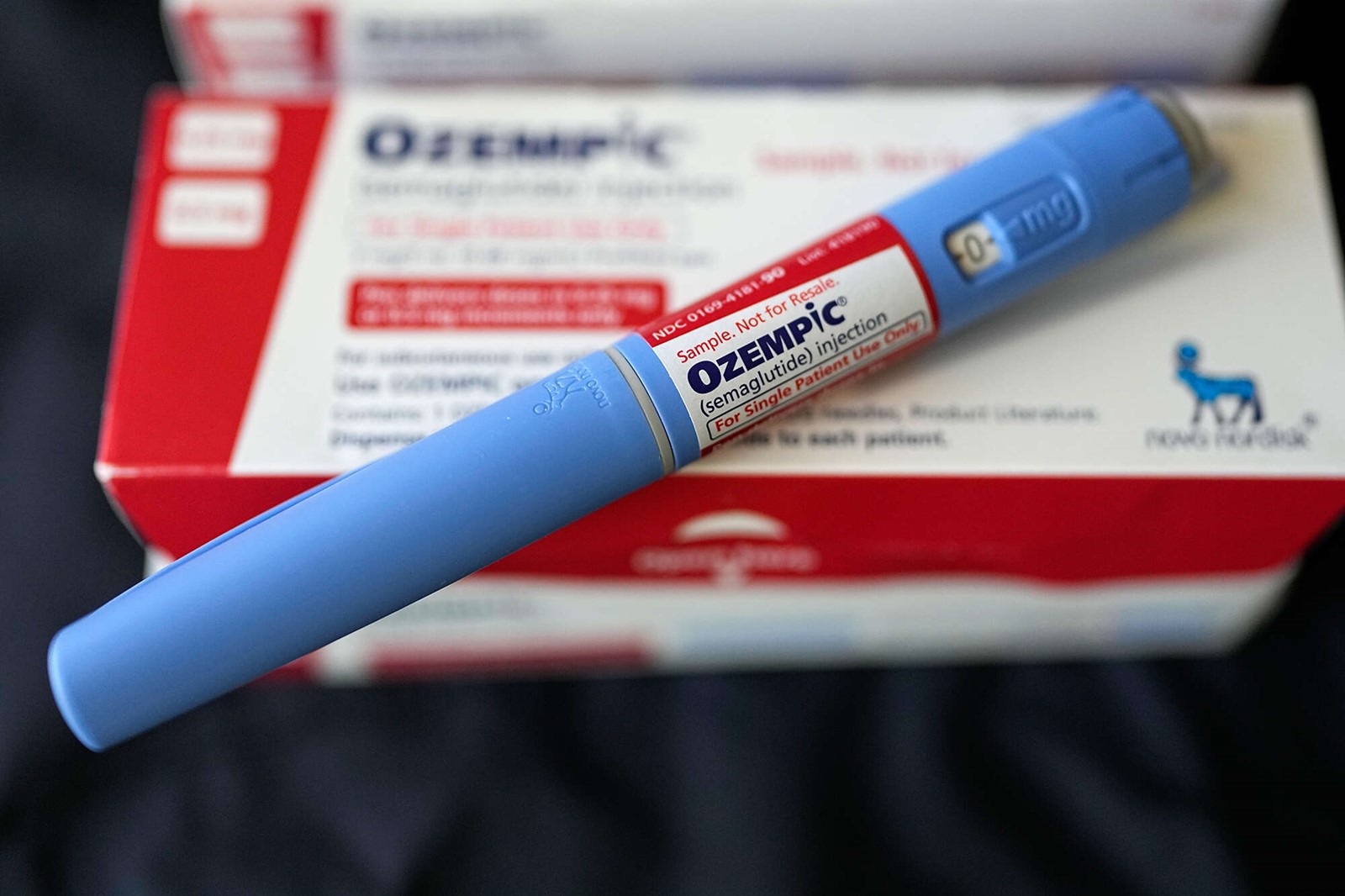


With the World Cup on, my family has been glued to the television more than usual this summer.
As a modern-day household relying on streaming services, advertisements are still sort of a novelty. During the Argentina vs. Algeria game, my girls started a running tally of all the ads they saw.
“One for Ozempic.”
“Another for Wegovy.”
“Ooooh! Foundayo! That’s a new one.”
Aside from Nike and Michelob, the majority of their tallies have been for semaglutide weight loss drugs, complete with messaging telling my very active, young girls that in just four weeks they can lose up to 20% of their weight and when they do, they will finally be happy.
So much for novelty.
Don’t get me wrong, I do understand these weight loss drugs have their place. Studies have found that semaglutide medications reduce the risk of major cardiovascular events, including heart attack and stroke, by 26% in adults who are overweight or obese.
And current studies are looking into whether semaglutide medications could be useful to treat other conditions, including polycystic ovary syndrome, addiction, Alzheimer’s disease, Parkinson’s disease and sleep apnea.
The semaglutide really does seem like a miracle drug.
But pushing it in the world of weight loss as a cure-all is dangerous. I know, I know. I am taking this stance as a 40-year-old woman who stands at 5’8” and 135 pounds. A doctor would never prescribe me a semaglutide — or any medication — for weight loss. So perhaps tackling this subject is considered taboo. I get that.
But I am also a woman whose very formidable, very awkward years coincided with the early 2000s — the height of skinny culture and toxic era of diet fads, low-rise fashion and rampant body-shaming in the media.
I was in middle and high school before social media was a thing — hard to believe there was such a time — and yet scrutiny of the female body was front and center. We saw it at the grocery store, where tabloids would fat-shame celebrities for having the audacity to gain weight. The lineup for primetime TV praised extreme thinness in “America’s Next Top Model” and sensationalized weight loss and diet obsession in “The Biggest Loser.” Both shows amplified disordered eating habits.
But then — for a few years, around the time my daughters were 4-years-old and younger — our culture went through a blissful period of body positivity. In 2012, the movement found its third wave since its inception in 1969. Women of all sizes took to Instagram, pushing for new acceptance and inclusion, with extreme success. Brands like Dove responded and challenged the skinny culture of the previous decade by pressing for equitable representation and unabashed self-love.
As someone focused more on raising babies and less on shedding her baby weight, the cultural shift was a welcome relief. Women my age were finally acknowledging the trauma of being brought up by “Almond Moms” and vowed to leave that child-rearing style in the past as we proudly slathered our homemade sourdough bread with butter.
But now it’s 2026. The female body of 2012 with its curves and “strong is healthy” mantra are long gone, traded for ribcages and buccal fat removal. Forget Almond Moms. We are in our Ozempic Mother era and honestly, it might be worse.
Because of social media, the degree of focus on extreme thinness is more acute than it was a quarter-century ago. As one of my friends said, “It’s like Kate Moss all over again, except now she lives in your pocket.”
Meta’s platforms — Facebook, Instagram and Threads — are rife with accounts praising celebrities for their emaciated looks. These photos elicit fights between individuals concerned about said celebrity and others who say with no irony that it’s rude to comment on people’s bodies. They’ll ask righteously: “Haven’t we learned anything?”
Indeed, haven’t we?
Social media influencers touting calorie deficit diets have replaced the Thin-spo and Pro-Ana websites and MySpace pages of the early 2000s. Endless accounts of highly toned women — many of them pushing AI-generated before-and-after photos — clog my feed explaining how to maintain a 1,200 calorie diet. But instead of this information being taboo and having to sneak onto those sites like I did 25 years ago during my own bouts of body dysmorphia, these accounts are right in front of me, every time I’m on social media.
Celebrity photos and influencer videos are only part of the cesspool. One in every five posts we see on social media is an advertisement.
Along with ads for semaglutide medications — of which at least 10 have been approved for use in the United States — women in particular are also targeted by the over-the-counter, “no prescription needed” cousins of GLP-1 drugs. A five-minute scroll on social media reveals dozens of semaglutide-adjacent pills for women who don’t qualify for the medications but are “tired of constantly thinking about food” or are looking for their “summer confidence,” which — of course — is just 15 pounds away.
I mean, who wouldn’t want to “feel more snatched without obsessing over food all day?”
Being 40, I’m usually able to walk away from my phone and the constant bombardment of “I’m not (insert negative thought here) enough” messaging that starts to play through my head with every semaglutide ad or calorie deficit diet influencer that comes across my feed. I have that willpower, mainly because my prefrontal cortex — the part of my brain responsible for impulse control — is fully developed.
But I think of some of the girls my 12-year-old goes to school with, many who are allowed unfettered access to the internet, and shudder. They are calling themselves fat, reporting what most would call disordered eating behaviors — withholding food throughout the day, “eating the entire cupboard” when they are hungry, then feeling ashamed about it.
It doesn’t have to be like this. We could actually shed the weight of the Ozempic Mother era. But it will take some work. There’s no magic pill or injection available.
Social media companies must enforce their own policies. More than five years ago, Instagram rolled out a policy allowing people to report certain weight loss products. If the post includes a price or incentive to buy it, Instagram will restrict users under 18 from seeing the post. The company will also remove a post if it contains a “miraculous” claim about a diet or weight loss product and is linked to a commercial offer.
But Meta is failing to enforce its policy — posts claiming you can lose 13 pounds in two months, promising to make you the “health GOAT,” as an example — are rampant.
The company’s policy also doesn’t go far enough. They need to completely restrict posts containing AI-generated material or miraculous claims about diets — particularly calorie deficit diets — even if they aren’t linked to commercial offers.
Pharmaceutical companies also need to be reined in and held accountable.
Just like advertising and promotions for tobacco, our government needs to regulate how pharmaceutical and supplement companies market these specific products. Sure, the Food and Drug Administration has established a few parameters: Ads must be truthful, balanced (equally presenting both risks and benefits), mention both brand and generic names, state at least one FDA-approved use and disclose the most significant risks.
But like the government did with cigarettes in the ’90s, it should ban promotion of these products by celebrities and athletes. The FDA should prohibit companies from offering free samples. Pharmaceutical companies should not be allowed to advertise these drugs during major sporting events. Semaglutide medications do not need to be part of the World Cup.
Unfortunately, I won’t hold my breath on our current administration divorcing itself from the purses of the pharmaceutical industry anytime soon. That leads me to the other prong of my solution: Us.
Comparison is the thief of joy. Online, unfollow and mute anyone and anything that makes you feel less than. In real life, focus your efforts on radical self-love by calling out harmful conversations in the workplace, among your friendships or at home. And internally, remember that your body — the only body you get — is pretty amazing and deserves to be treated as such.
Amie Windsor is the Opinion Editor for The Press Democrat.
 PREVIOUS ARTICLE
