




The Santa Rosa Symphony will open its 2025-2026 season the weekend of Oct. 11-13 with Beethoven’s Triple Concerto featuring two of the country’s most accomplished chamber musicians — cellist David Finckel and pianist Wu Han — as well as Leonard Bernstein’s beloved Symphonic Dances from “West Side Story.”
“It is a true privilege to welcome two of the most renowned chamber musicians of our time,” Santa Rosa Symphony music director Francesco Lecce-Chong said of Finckel and Wu Han. “They have been instrumental in shaping the chamber music scene across the U.S., from Lincoln Center to Music@Menlo.”
The celebratory concerts at the Green Music Center’s Weill Hall on the Sonoma State University campus will also include a nod to opera, Umberto Giordano’s lush Intermezzo from “Fedora,” as well as “A Short Piece for Orchestra,” a 1952 work by the pioneering African-American composer Julia Perry. The concerts will be conducted by Francesco Lecce-Chong, now entering his eighth season with the orchestra.
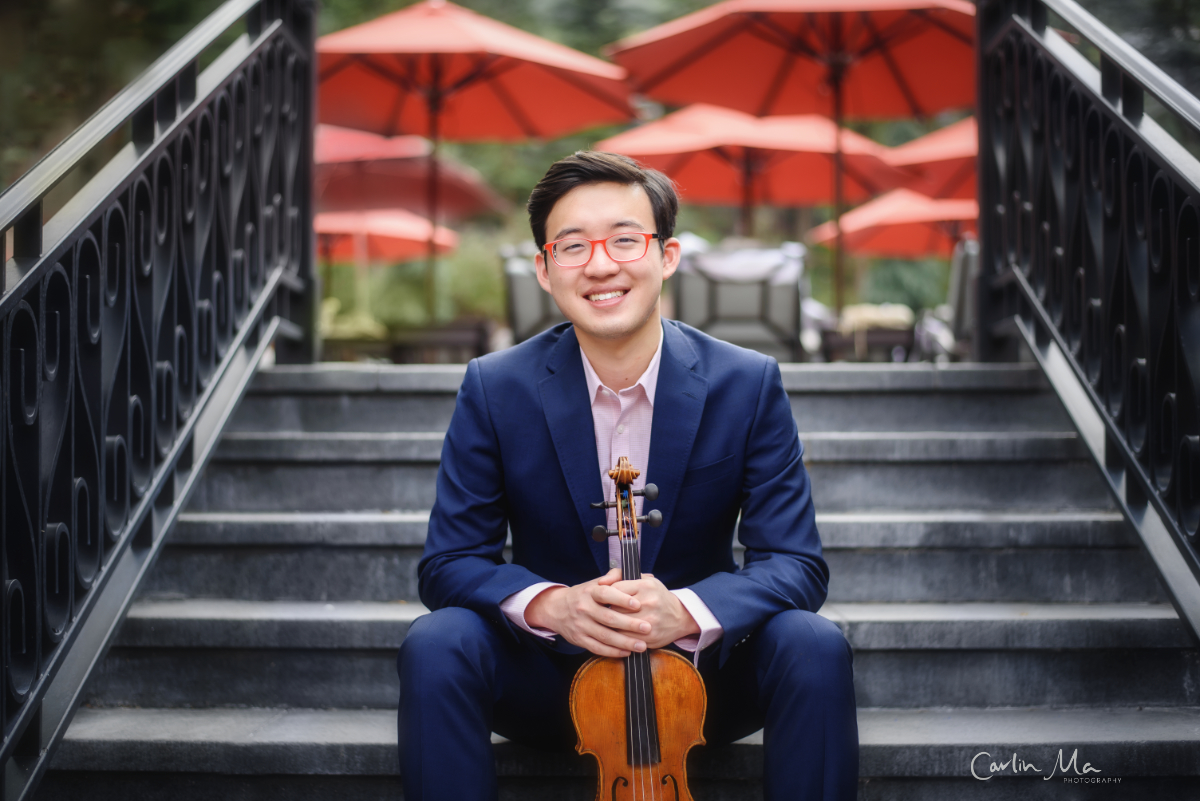
Finckel and Wu Han, who married in 1985 and serve as artistic directors of the Chamber Music Society of Lincoln Center (CMSLC), will perform the Beethoven Triple Concerto with violinist Julian Rhee, a rising star in his second year at the CMSLC’s Bowers Program, a prestigious, three-season residency for young artists in the early stages of major careers.
“This will be our debut with the Santa Rosa Symphony,” Wu Han said by phone from her New York City home. “This is also the first time for Julian (to perform the work), and we already had a three-day rehearsal … he’s a young prodigy, and I love his playing.”
A spectacular concerto
The Triple Concerto, a 37-minute masterpiece officially known as Beethoven’s Triple Concerto in C Major for Violin, Cello, Piano and Orchestra, was written in 1803 and 1804. It is the only concerto Beethoven wrote for more than one solo instrument.
“It’s completely unique in the classical music repertoire,” Finckel said. “There really isn’t anything else for orchestra and piano trio as soloists. Beethoven had this idea, and hardly anybody has tried it since. He did such a good job that nobody wanted to be compared.”
Beethoven wrote the Triple Concerto at the peak of his power, around the same time as his popular Piano Concertos Nos. 4 and 5, his famous “Waldstein” and “Appassionata” piano sonatas, his revision of the “Eroica” Symphony No. 3 and his sole opera, “Fidelio.”
“It’s written at the height of Beethoven’s most creative period, his heroic period, so it has a lot of grandeur and is really powerful,” Wu Han said. “This concerto is spectacular.”
The work is rich with musical partnerships, between the trio and the orchestra, the trio and the conductor and the conductor and the orchestra. The trio and the orchestra’s woodwinds work especially closely.
“It’s brilliantly written … it’s a real big party,” Finckel said. “What’s nice about this piece is you go to play it with a different orchestra, and you get to know them all. It’s very gratifying.”
The adrenaline-fueled work is also gratifying for the audience because a lot is going on, especially among the three trio musicians who must blend as a single voice.
“As three soloists, we have to stand in front of the orchestra but play as one,” Wu Han said. “It takes a tremendous amount of delicate balance as well as control.”
Among musicians, the cello part is regarded as one of the most difficult ever written. In addition, there’s a lot of intricate dialogue between the cello and violin, with the cello rocketing into its highest register while the violin plunges into its lowest range. Together, they often sound like one instrument.
“It is difficult … I don’t know what got into him (Beethoven),” Finckel said of the cello part. “It jumps around, and it goes really, really high. Higher than anybody ever went. But it’s great. It keeps you in shape, and I have to practice it a lot.”
The slow movement offers a glimpse at the sweet, more celestial side of Beethoven, whose music is more widely known for its power and earthiness.
“It’s a big song for the violin and cello,” Finckel said. “It’s like an aria.”
Meanwhile, the final movement — Rondo alla polacca — requires the soloists to perform with rollicking virtuosity, especially during a Polonaise dance that kicks up its rhythmic heels in the middle.
Relatively speaking, the piano part, written for Beethoven’s patron and pupil, Archduke Rudolph of Austria, makes more modest demands.
“It’s only hard in that you have to be super sensitive to the two string players,” Wu Han said. “Their part is tricky, and you need to give them the proper rhythm and support.”
A musical match
Wu Han and Finckel first met around 40 years ago at the Hartt School of Music in Connecticut, where the Emerson Quartet had just begun a residency.
Finckel played cello in the Emerson Quartet from 1979 to 2013, for a total of 34 seasons.
Wu Han studied piano and viola in her native Taiwan until the age of 12, then came to the U.S. to further her studies in 1981. Her teacher suggested she learn how to play chamber music. As a student at the Hartt School of Music, she won a competition and was awarded the opportunity to study with the Emerson Quartet.
“We had just started to do some teaching,” Finckel said. “We all fell in love with her … but me more than the others.”
Over the years, the musical power couple has carved out multifaceted careers and stepped up as leaders in almost every facet of chamber music, from performing to founding their own recording company (ArtistLed), from arts administration to teaching and developing innovative learning tools for musicians and audiences alike.
Although most of their musical mentors are gone now, the pair is passionate about passing on their predecessors’ legacy to the next generation.
Finckel is a professor of cello at the Juilliard School of Music and an artist-in-residence at Stony Brook University.
“We were lucky to be able to connect to many of the greatest musicians of the 20th century, to work with and play with them, teach with them and learn from them,” said Finckel, naming superstars such as violinist Isaac Stern, pianist Leon Fleisher and cellist Mstislav Rostropovich. “We tried to put ourselves as near as we could to the best and absorb it.”
Having picked up the rhythm and pulse of the older generation, the couple now share their mentors’ wisdom while molding the next generation of chamber music players who are training through the Chamber Music Society of Lincoln Center and Music@Menlo, a summer chamber music festival and institute in Atherton, which Wu Han and Finckel founded in 2003.
They recently announced they will step down as artistic directors of the festival after the summer of 2026.
“The mentorship is really super important,” Wu Han said. “Our mentors gave us a solid training and the ability to take pieces by Beethoven and Brahms apart to build a logical interpretation … Classical music is so great, and pieces like the Triple Concerto should be heard, performed and passed down.”
Symphony concertmaster steps down after 28 years
The Santa Rosa Symphony has announced that concertmaster Joseph Edelberg will step down at the close of the 2025-2026 season after serving as a cornerstone and steadfast anchor of the orchestra for nearly three decades.
“Joe truly embodies the spirit of this orchestra with his kindness, passion, and collaborative spirit,” said Lecce-Chong. “He has brought immense joy to the orchestra, the community and me over the years, and it’s a privilege to be both his colleague and friend.”
Edelberg, who has shaped the orchestra’s sound and spirit since he was appointed concertmaster in 1997, has performed as a soloist in works ranging from Bach and Barber to Mozart and Ellen Taaffe Zwilich.
He decided to step away so that the symphony could find a replacement in time for the 2027-2028 centennial season. “It’s been a huge gift to me to be concertmaster of this orchestra,” Edelberg said, reflecting on his career. “Having a leadership position in the Santa Rosa Symphony has given me the opportunity to develop my musical values beyond my own playing, working with a whole violin section. I feel like I learned a lot.”
 PREVIOUS ARTICLE
