


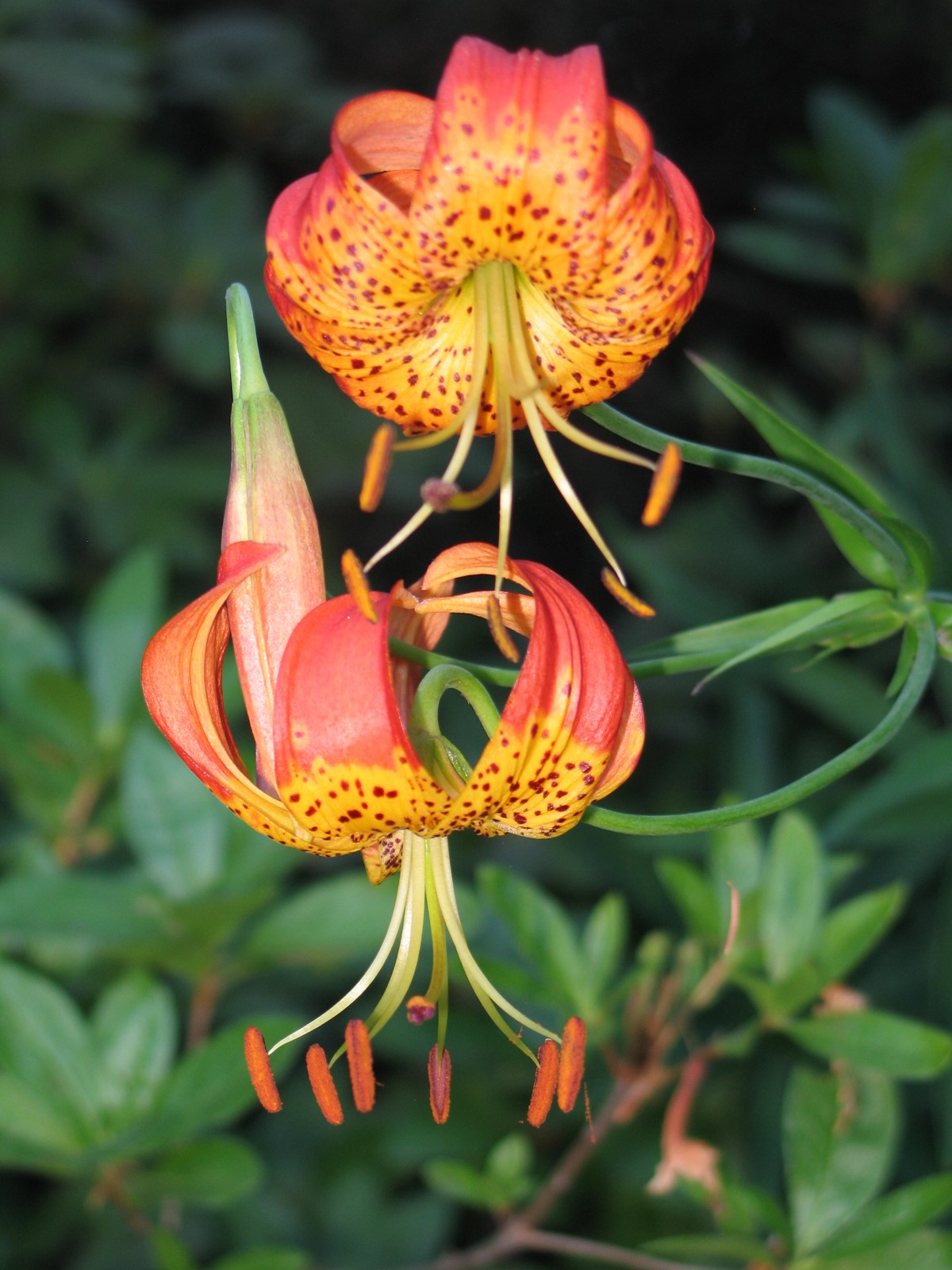
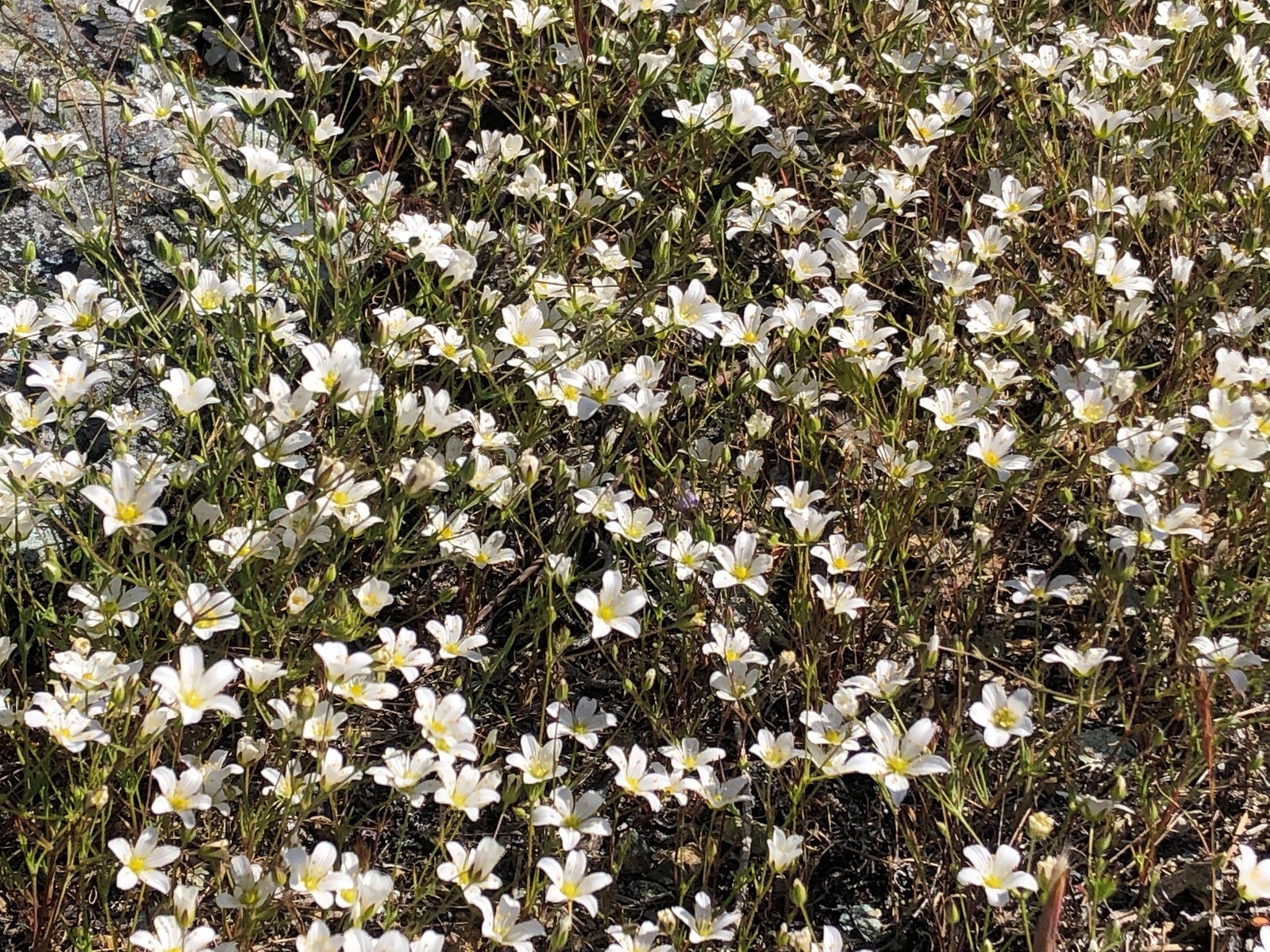


On Mount Tamalpais, as in life, there’s the big picture and then there are the small details.
Both perspectives are important to Corte Madera author Robert Steers, whose book, “Plants of Mount Tamalpais: Including Muir Woods,” was recently released.
There’s the rugged Mt. Tam, of course beloved for its majestic stature, trails, abundance of nature and wide-open views, but there’s also the often-fragile plant life that can be so easily overlooked when taking in all that is Mt. Tam.
These small details are the subject of Steers’ field guide that covers the wide variety of major plants — from trees and shrubs to ferns, vines, wildflowers, grasses, rushes and sedges — that one can find at any point of Mt. Tam.
Steers, a former vegetation ecologist, hopes his book will encourage people to slow down and learn about the flora they may pass by on their way up or down Marin’s biggest mountain.
“California has some of the highest plant diversity in the world and Marin County, and Mount Tamalpais in particular, have outstanding examples of this plant diversity,” says Steers, who builds hard- and software for the networking industry in his career as an engineering program manager. “Mt. Tam is a real treasure.”
Keeping that treasure protected for the future was an impetus for Steers to document the plants now.
More than 600 photographs of individual plant species, which took him more than a decade to shoot, supplement the detailed descriptions of each species, including their scientific and common names, flowering periods and the habitats in which they can be found.
These species and their habitats can vary greatly, he points out, depending upon what part of Mt. Tam you visit.
“For example, the coastal slopes, riparian canyons, serpentine rock crops and interior hills all have very different plant species,” says Steers, who moonlights as a botanical consultant, conducting rare plant surveys for local land agencies.
Many plant species “are represented by just a few known locations on the mountain,” which makes knowing what to look for and how to identify it even more fascinating.
It’s also even that much more important to encourage visitors to appreciate the plants peacefully in place rather than disturbing them in any way.
It’s a different story when nature deals the mountain’s flora a deadly blow, such as sudden oak death.
It has killed trees and altered some of Mt. Tam’s forests. “We are still learning how this disease will progress and influence the forests here.”
He hopes, that with the help of his book, learning about Mt. Tam’s plants — and, in some cases, their fragility — will lead to more people caring about them.
Among his favorites to spot on Mt. Tam are:
• Madrone. This is a tree with smooth, red bark that peels off the trunks with large clusters of white, urn-shaped flowers in the spring, he says.
“There are many tree species on Mt. Tam but this is an easy one to start with,” he says. “Get to know madrone.”
• Yellow mariposa lily is a species of Calochortus with bright yellow petals accented with maroon and orange streaks.
“Take a look inside the flower and see the hairs at the base of the petals,” he says. “Perhaps you’ll notice insects climbing inside and struggling to move through the hairs.
“This is a gorgeous wildflower that is fairly common in grasslands but you’ll appreciate it every single time you see it, guaranteed.”
• Rattlesnake grass is a non-native easily identified by its drooping spikelets that resemble the rattle found on the tip of a rattlesnake’s tail.
“It’s important to remember that exotic (or non-native) species have the potential to transform the habitats on Mt. Tam in a negative way,” he says.
And while Mount Tamalpais “still has many healthy, intact plant communities that are relatively uninvaded by exotic plant species, there is a lot of work that goes into managing weeds on the mountain.”
He urges people to learn which species to avoid growing in Marin and to volunteer with a group to help control weeds on Mt. Tam.
“It’s a great way to contribute to the health of the mountain,” he says.
“Plants of Mount Tamalpais: Including Muir Woods” is published by Backcountry Press. It’s available for $24.95 on backcountrypress.com and Amazon. Steers will discuss his book at 1 p.m. April 6 at Book Passage in Corte Madera.
Show off
If you have a beautiful or interesting Marin garden or a newly designed Marin home, I’d love to know about it.
Please send an email describing either one (or both), what you love most about it and a photograph or two. I will post the best ones in upcoming columns. Your name will be published and you must be over 18 years old and a Marin resident.
PJ Bremier writes on home, garden, design and entertaining topics every Saturday. She may be contacted at P.O. Box 412, Kentfield 94914, or at pj@pjbremier.com.
 PREVIOUS ARTICLE
