


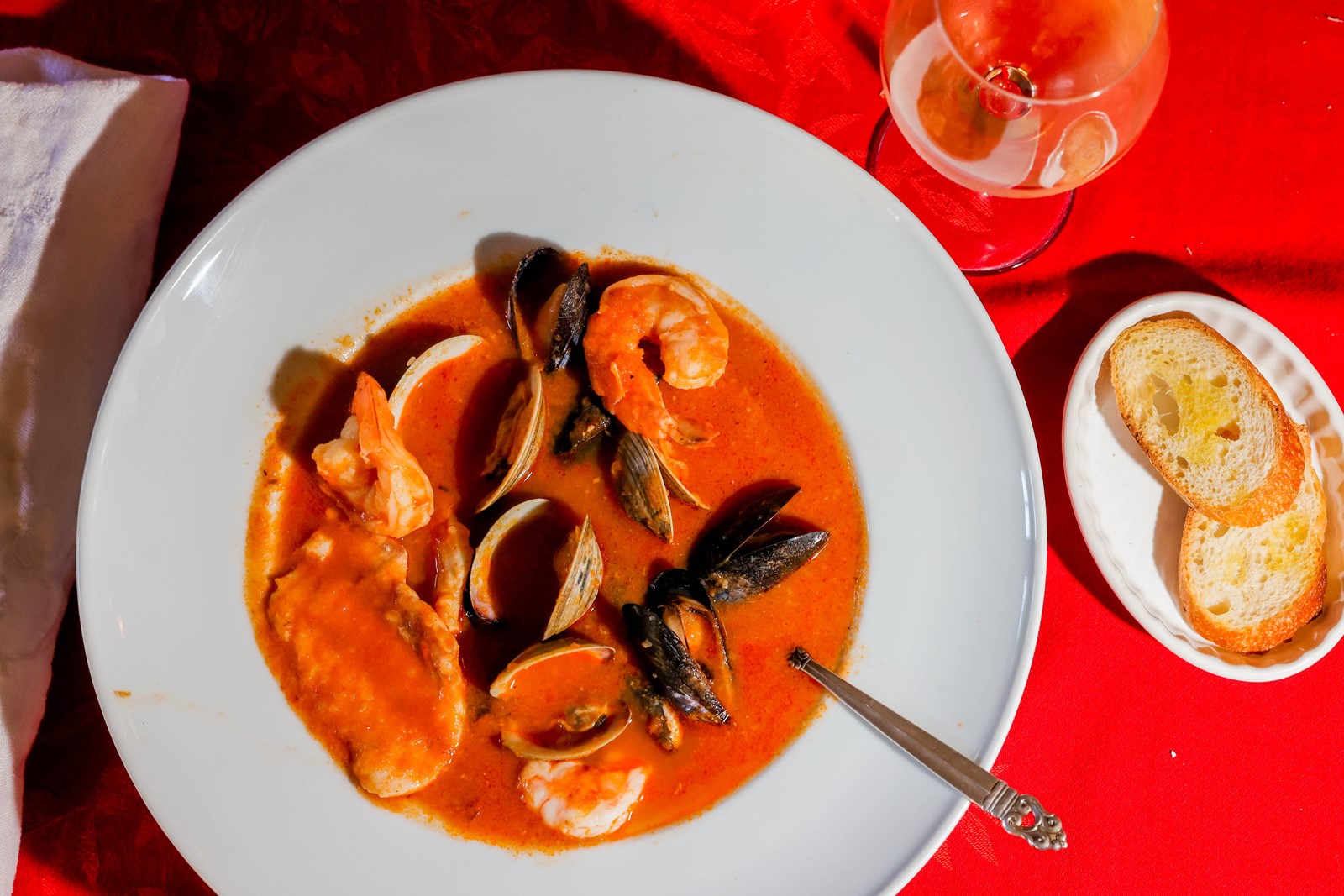


Bouillabaisse is the iconic fish stew of Marseilles, France’s legendary port city and home to fishermen for centuries.
The origins of the stew are humble, thought to have first been made by fishermen with the unsold leftovers from the day’s catch, seasoned with wild herbs, cooked in kettles of sea water over wood fires.
The origins of the stew are humble: It’s thought the stew evolved to an unctuous base made of rockfish, herbs, potatoes and tomatoes combined with fish stock, ground with a food mill and strained. To my thinking, this is the best part of the dish. It is complex and deeply flavored without being overwhelming. In the traditional way, this base, essentially soupe de poisson, is served as a first course with grilled bread and rouille, a spicy garlic-and-red pepper version of aioli.
The fish and shellfish are poached in the remaining base, then served as a second course, with more soup ladled over, additional toasts and rouille, and a bowl of boiled potatoes alongside.
And that is exactly how I was taught to make and to serve bouillabaisse by a fourth-generation Marseillaise. He invited me to his house, along with my young family, where he proceeded to take me, step by step, through the process, starting with making fish stock with the heads and carcasses of the fish that he had purchased at the early morning fish market.
Next, we laid out the fish on branches of wild fennel, doused them with olive oil and a sprinkle of saffron. The soupe de poisson and rouille were duly prepared, and one by one, the fish and the eel were added, and finally, the shellfish. The potatoes, he told me, were really an addition from the Toulon version, but he thought they were a good idea, he said, as he set down a bottle of white wine from neighboring Cassis.
Over the years, bouillabaisse has taken shape in many different forms. Today, it is frequently served as a single course, with the soupe de poisson being replaced by an enriched tomato broth. Sometimes lobster and crab might be added, the eel almost always absent. Even in Marseille, it is rare to find the stew made with the so-called essential fish, small crabs and moray eel.
That is why, on a recent visit to Marseille, the terminus of the newly designated Valley of Gastronomy that runs from Burgundy to the Mediterranean, I was thrilled to find Chez Madie les Galinettes. Here, the bouillabaisse is made and served in the same traditional way I was taught by my Marseillaise friend. The restaurant, situated on the long side of the Vieux Port, is unpretentious, like its bouillabaisse, and I was even able to order a bottle of Cassis Blanc.
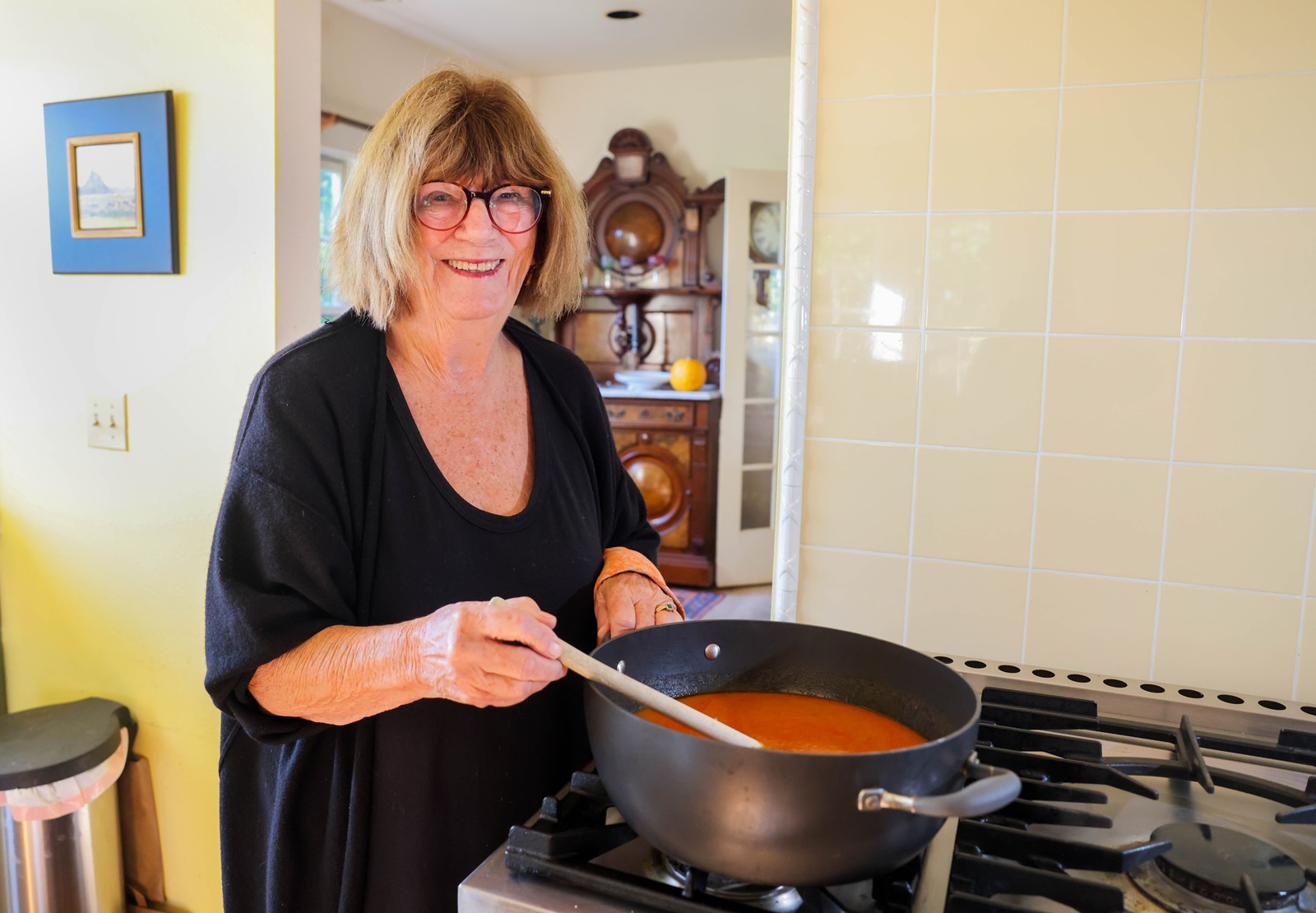
Below is my recipe for Bouillabaisse the Marseilles way, just as I was taught to make it, except I use West Coast fish and shellfish. Regardless of what purists might say, I think using what is at hand is something the Marseilles fishermen of yore would have approved. As for the fennel, it grows wild throughout Northern California. Right now, it is flowering and its yellow flowerheads are easy to spot, along with the fern-like foliage. However, cultivated fennel will work just as well.
 PREVIOUS ARTICLE
