


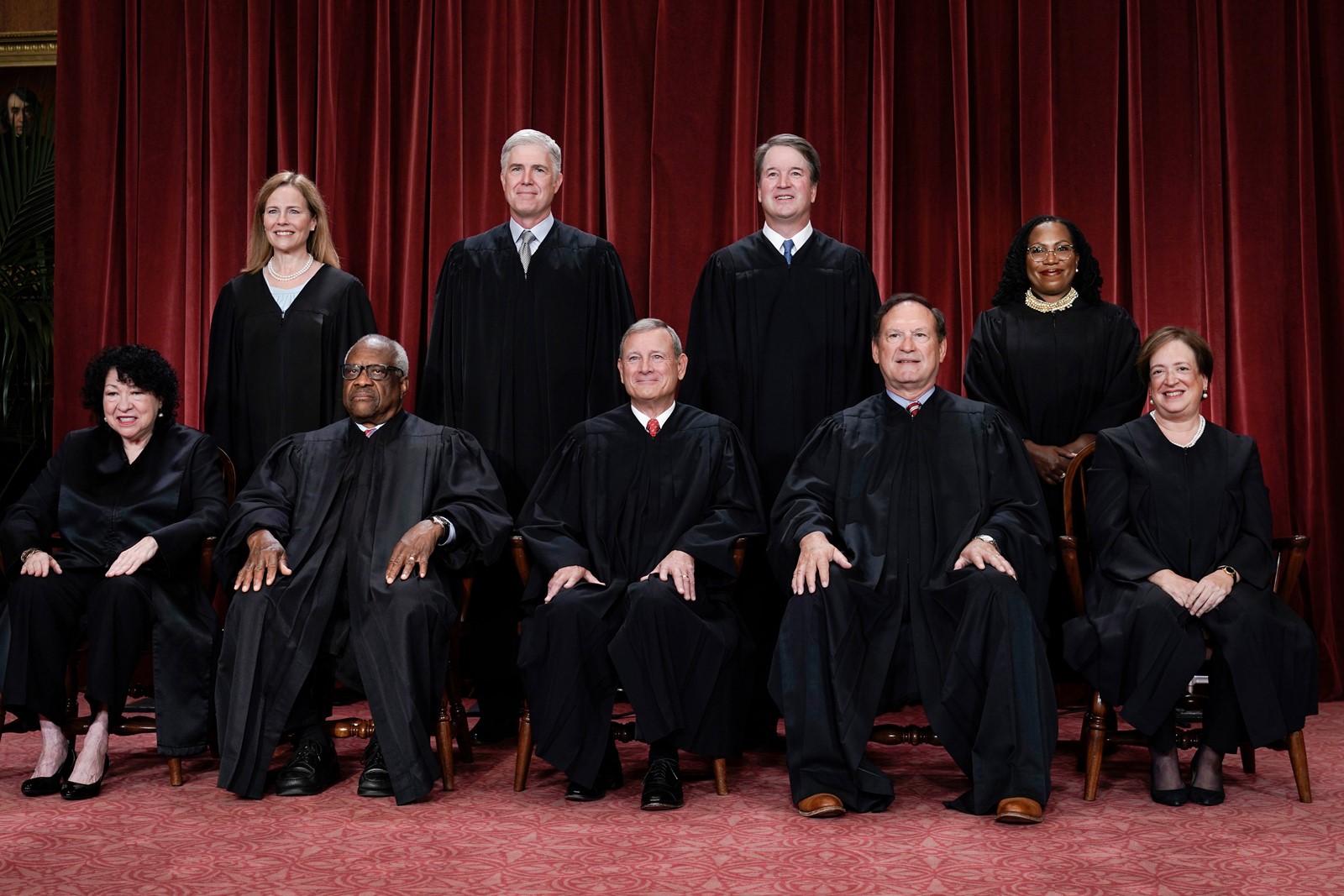


WASHINGTON — A monumental Supreme Court term begins Monday with major tests of presidential power on the agenda along with pivotal cases on voting and the rights of LGBTQ people.
The court’s conservative majority has so far been receptive, at least in preliminary rulings, to many of President Donald Trump’s aggressive assertions of authority. Liberal Justice Ketanji Brown Jackson invoked the Calvin and Hobbes comic strip after one such decision allowing the cut of $783 million in research funding.
“This is Calvinball jurisprudence with a twist,” Jackson wrote. “Calvinball has only one rule: There are no fixed rules. We seem to have two: that one, and this administration always wins.”
The conservative justices could be more skeptical when they conduct an in-depth examination of some Trump policies, including the president’s imposition of tariffs and his desired restrictions on birthright citizenship.
If the same conservative-liberal split that has marked so many of Trump’s emergency appeals endures, “we are in for one of the most polarizing terms yet,” said Irv Gornstein, executive director of the Supreme Court Institute at Georgetown University’s law school.
The justices will pass judgment in the next 10 months on some of Trump’s most controversial efforts.
3 major cases on presidential power are on the docket
The justices are hearing a pivotal case for Trump’s economic agenda in early November as they consider the legality of many of his sweeping tariffs. Two lower courts have found the Republican president does not have the power to unilaterally impose wide-ranging tariffs under an emergency powers law.
The lawsuit filed by states and small businesses argues Trump cannot usurp Congress’s taxation powers by declaring national emergencies and using tariffs to address them.
The administration, though, says the law does give the president the power to regulate importation, and that includes tariffs. Four dissenting judges on a federal appeals court in Washington bought that argument, mapping out a possible legal path at the high court.
In December, the justices will take up Trump’s power to fire independent agency members at will, a case that probably will lead the court to overturn, or drastically narrow, a 90-year-old decision. It required a cause, like neglect of duty, before a president could remove the Senate-confirmed officials from their jobs.
The outcome appears to be in little doubt because the conservatives have allowed the firings to take effect while the case plays out, even after lower-court judges found the firings illegal. The three liberal justices have dissented each time.
Another case that has arrived at the court but has yet to be considered involves Trump’s executive order denying birthright citizenship to children born in the United States to parents who are in the country illegally or temporarily.
The administration has appealed lower-court rulings blocking the order as unconstitutional, or likely so, flouting more than 125 years of general understanding and an 1898 Supreme Court ruling. The case could be argued in the late winter or early spring.
 PREVIOUS ARTICLE
