


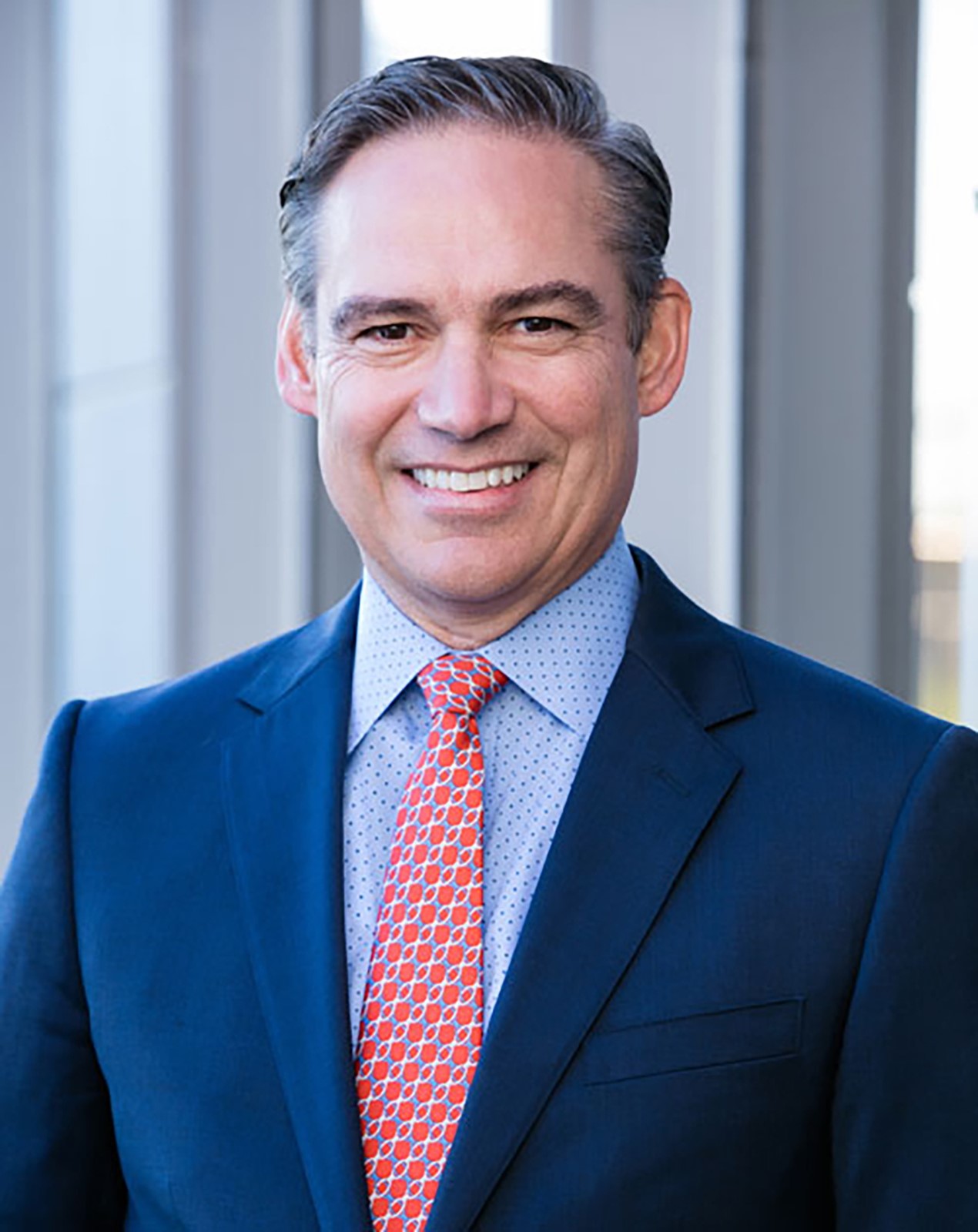


Boeing named an aerospace industry veteran with a background in mechanical engineering as its next chief executive Wednesday, looking to open a new chapter at a company rocked by legal, regulatory and production problems and mounting financial repercussions.
Robert “Kelly” Ortberg, a former CEO at aerospace manufacturer Rockwell Collins, will succeed David Calhoun as CEO and president effective Aug. 8, the company said. Calhoun said in March that he would retire at the end of the year, and analysts generally praised the quicker transition.
“There is much work to be done, and I’m looking forward to getting started,” Ortberg said in a statement issued by Boeing.
Boeing announced its new CEO as it reported a loss of more than $1.4 billion on falling revenue during the second quarter. The loss was wider and the company’s revenue lower than Wall Street’s dismal expectations, as both Boeing’s commercial-airplanes business and defense unit lost money.
The disappointing results came at a tumultuous time for Boeing, which is the subject of multiple investigations into its safety culture and manufacturing quality.
The American aerospace giant agreed to plead guilty this month to a federal fraud charge in connection with its 737 Max jetliner and two crashes that killed 346 people. The Federal Aviation Administration increased its oversight of the company and limited the number of planes it could produce after a panel blew off an Alaska Airlines Max flying at an altitude of 16,000 feet. No one was seriously hurt, but the frightening incident and subsequent scrutiny have damaged Boeing’s reputation.
Boeing Chairman Steven Mollenkopf said Ortberg was chosen after a “thorough and extensive search process” and “has the right skills and experience to lead Boeing in its next chapter.” Ortberg has earned a reputation for running complex engineering and manufacturing companies, Mollenkopf said.
Calhoun, who said he wasn’t involved in the hiring decision, is expected to serve as a special adviser to Boeing’s board of directors until next March. He suggested that Ortberg would support Boeing’s current executives instead of bringing in his own team.
“I don’t think he’s coming in with a notion to want to change a lot of folks,” Calhoun said on a call with analysts. “He knows full well we’re in recovery mode, and he knows full well that we’ve got to complete the recovery mode and we’ve got to get this thing stable and move forward.”
Ortberg plans to be based in Seattle, according to a person familiar with the decision who was not authorized to discuss the situation publicly. That would put him in closer contact with Boeing factories that produce several of its planes, notably the 737 Max.
Boeing was founded in Seattle but moved to Chicago in 2001 and then, to be closer to government officials and regulators, the headquarters moved to the Virginia suburbs of Washington, D.C., in 2022.
Ortberg emerged as a leading candidate only recently. Others who were reportedly considered for the job included Patrick Shanahan, a former Boeing executive and now CEO of its most important supplier, Spirit AeroSystems, and another longtime Boeing executive, Stephanie Pope, who recently took over the commercial airplanes division.
Ortberg led Rockwell Collins from 2013 to 2018. The company, which developed electronics and other equipment for commercial and military planes, then merged with United Technologies and wound up as part of RTX, formerly known as Raytheon. He retired from RTX in 2021.
Richard Aboulafia, a longtime aerospace analyst and consultant and recently a harsh critic of the company, said the hire is great news for Boeing.
“He is a deeply respected leader in the aerospace industry, and brings more hope for a better future than the company has enjoyed in decades,” Aboulafia said.
 PREVIOUS ARTICLE
