


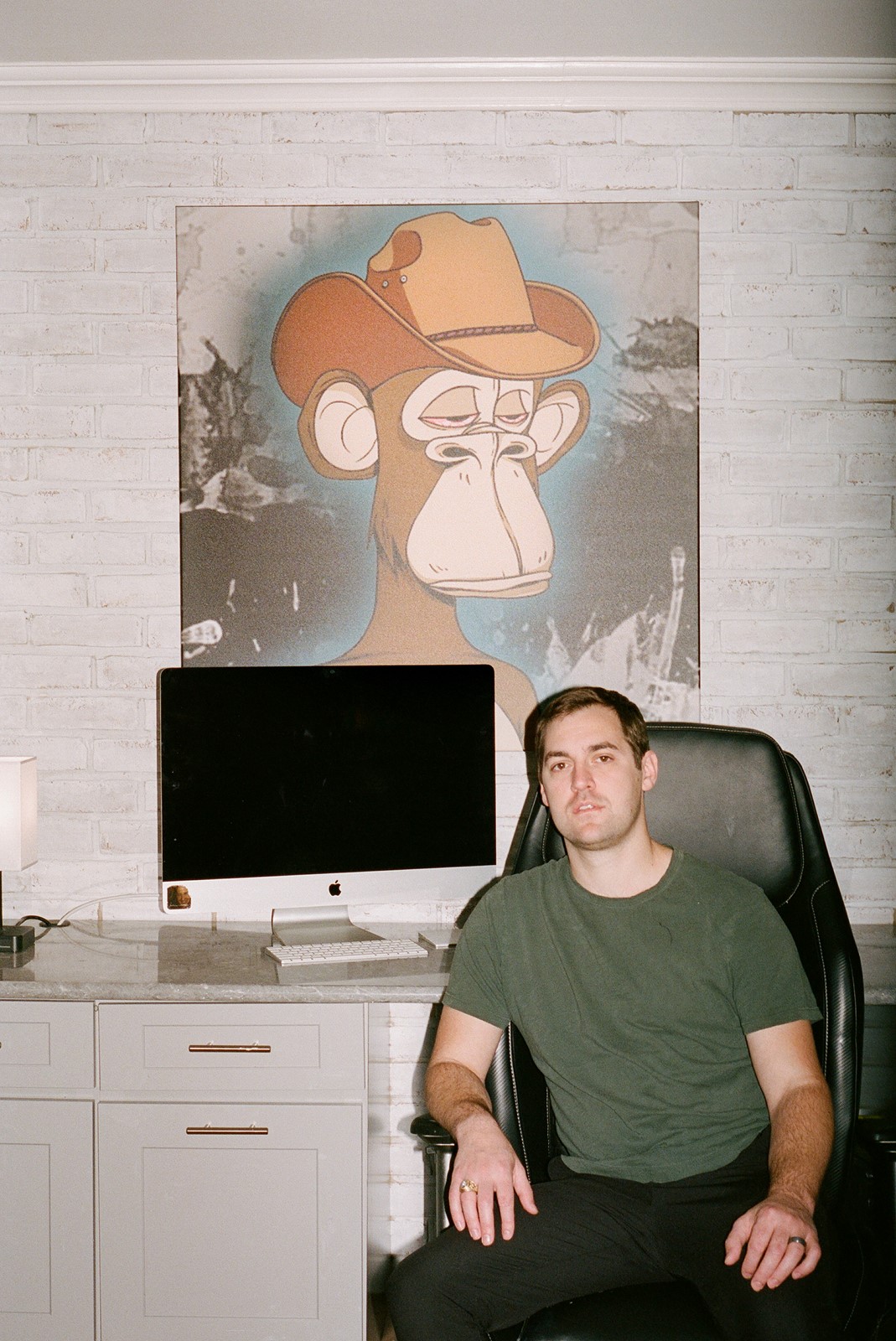


Chris Chapman used to own one of the most valuable commodities in the crypto world: a unique digital image of a spiky-haired ape dressed in a spacesuit.
Chapman, 35, bought the non-fungible token, or NFT, last year, as a hyped series of digital collectibles called the Bored Ape Yacht Club became a phenomenon.
In December, he listed his Bored Ape for sale on OpenSea, the largest NFT marketplace, setting the price at about $1 million. Two months later, as he got ready to take his daughters to the zoo, OpenSea sent him a notification: The ape had been sold for roughly $300,000.
A crypto scammer exploited a flaw in OpenSea’s system to buy the ape for less than its worth, said Chapman, who runs a construction business in Texas.
Last month, OpenSea offered him $30,000 in compensation, he said, which he turned down in hopes of negotiating a larger payout.
The company has made “a lot of stupid, dumb mistakes,” Chapman, 35, said. “They don’t really know what they’re doing.”
Chapman is one of many crypto enthusiasts who have raised questions about OpenSea, an eBay-like site where people can browse millions of NFTs, buy the images and put their own up for sale.
In the last 18 months, OpenSea has become the dominant NFT marketplace and one of the highest-profile crypto startups. The company has raised over $400 million from investors, valuing it at $13.3 billion, and recruited executives from tech giants like Meta and Lyft.
But as OpenSea has grown, it has struggled to prevent theft and fraud. The glitch that cost Chapman his ape has led to months of recriminations, forcing the startup to make more than $6 million in payouts to NFT traders.
Customers also complain that OpenSea is slow to block the sale of NFTs that were seized by hackers, who can turn a quick profit by flipping the stolen goods. And plagiarized art has proliferated on the site, outraging artists who once viewed NFTs as a financial lifeline. The company is facing at least four lawsuits from traders, and one of its former executives was indicted this month on charges related to insider trading involving NFTs.
The company’s clashes with users illustrate some of the central tensions of Web3, a utopian vision of a more democratic internet controlled by regular people rather than giant tech companies. Like many crypto platforms, OpenSea does not collect the names of most of its customers and advertises itself as a “self-serve” gateway to a loosely regulated market.
But users want the company to act more like a traditional business by compensating fraud victims and cracking down on theft.
In three interviews, OpenSea executives acknowledged the scale of the problems and said the company was taking steps to improve safety.
OpenSea, based in New York, has hired more customer service staff, with the aim of responding to complaints within 24 hours. The company freezes listings of stolen NFTs and has a new screening process to prevent plagiarized content from circulating on the platform.
“Like every tech company, there’s a period where you’re catching up,” said Devin Finzer, 31, OpenSea’s CEO. “You’re trying to do everything you can to accommodate the brand-new users that are coming into the space.”
Because OpenSea collects a 2.5% fee from each NFT sale, some argue the company has an incentive not to clamp down on the sale of stolen goods.
OpenSea has also seen a surge of plagiarism, as sellers convert traditional artwork into NFTs and then list the images for sale without compensating the original creator.
OpenSea offers a tool that lets people create NFTs with a few clicks, converting regular images into unique items whose authenticity is recorded on a public ledger called a blockchain. In January, the company said it would limit the number of NFTs that users could make with the tool.
But after a backlash from NFT fans, OpenSea reversed course and said it would eliminate the cap, even though many of the new creations had turned out to be “plagiarized works, fake collections and spam.”
“It dilutes the market for my work,” said Aja Trier, a Texas artist whose work has been copied and sold on OpenSea.
 PREVIOUS ARTICLE
