




It’s known as one of the largest ship graveyards and most dangerous sailing passages in the world, where powerful ocean currents combine with furious winds to produce monstrous waves that can swallow a vessel without a trace.
Over the centuries an estimated 800 ships have been destroyed and more than 10,000 sailors died trying to round Cape Horn at the tip of South America. Accomplished mariners from Sir Francis Drake, to Capt. James Cook, to William Bligh of mutiny on the Bounty fame have challenged the passage “at the end of the world,” with stories to tell of the hellish conditions.
But some days you get lucky. The wind dies down, the sun comes out however briefly, and there are patches of blue sky, like the weather we encountered aboard a cruise ship on a trip in mid-February around The Horn.
Rather than being knocked about the cabin like sailors of old who’d suffer broken ribs and separated shoulders in the crashing waves, we were enjoying a tranquil breakfast in our veranda stateroom while rounding Cape Horn.
It was somber to contemplate all the lives and ships lost in such notorious waters, at the same time we were being pampered with room-service-provided oatmeal, omelet, coffee and blueberry muffin.
“Enjoy your snacks and drinks as we sail by in comfort,” came the dulcet voice of onboard naturalist Robin Petch interspersed with a Chopin piano lullaby over the ship’s intercom.
Sailing around Cape Horn has been on my wish list for years, knowing that the South American austral summer is not nearly as perilous a time to venture there and many ships do it routinely, if extra cautiously.
So, when a spot came open at the last minute on the Viking Jupiter, my wife booked us on the 17-day cruise from Buenos Aires, Argentina, to Valparaiso, Chile, via Cape Horn.
I overcame my reluctance to take a cruise on a big ship, where you are crammed in with thousands of fellow passengers. This was a relatively smaller vessel with 900 passengers and an exciting itinerary. It also was our first Viking voyage. I soon discovered the cruise line has fiercely loyal return customers, who appreciate the superior food, service, entertainment and guest lectures. Nothing against kids, but no under 18 is allowed. And there also is no onboard casino, making for a more peaceful ambiance.
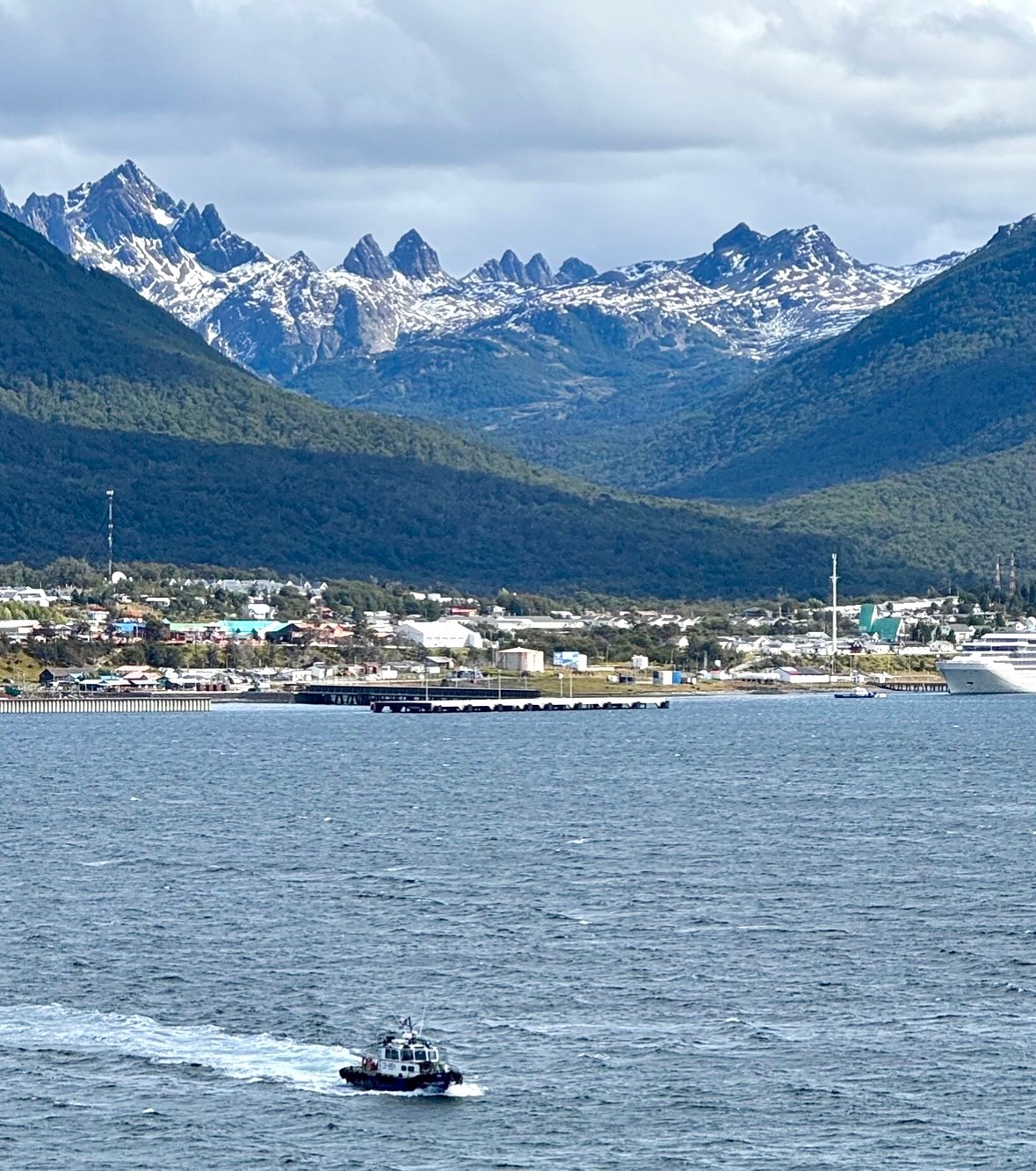
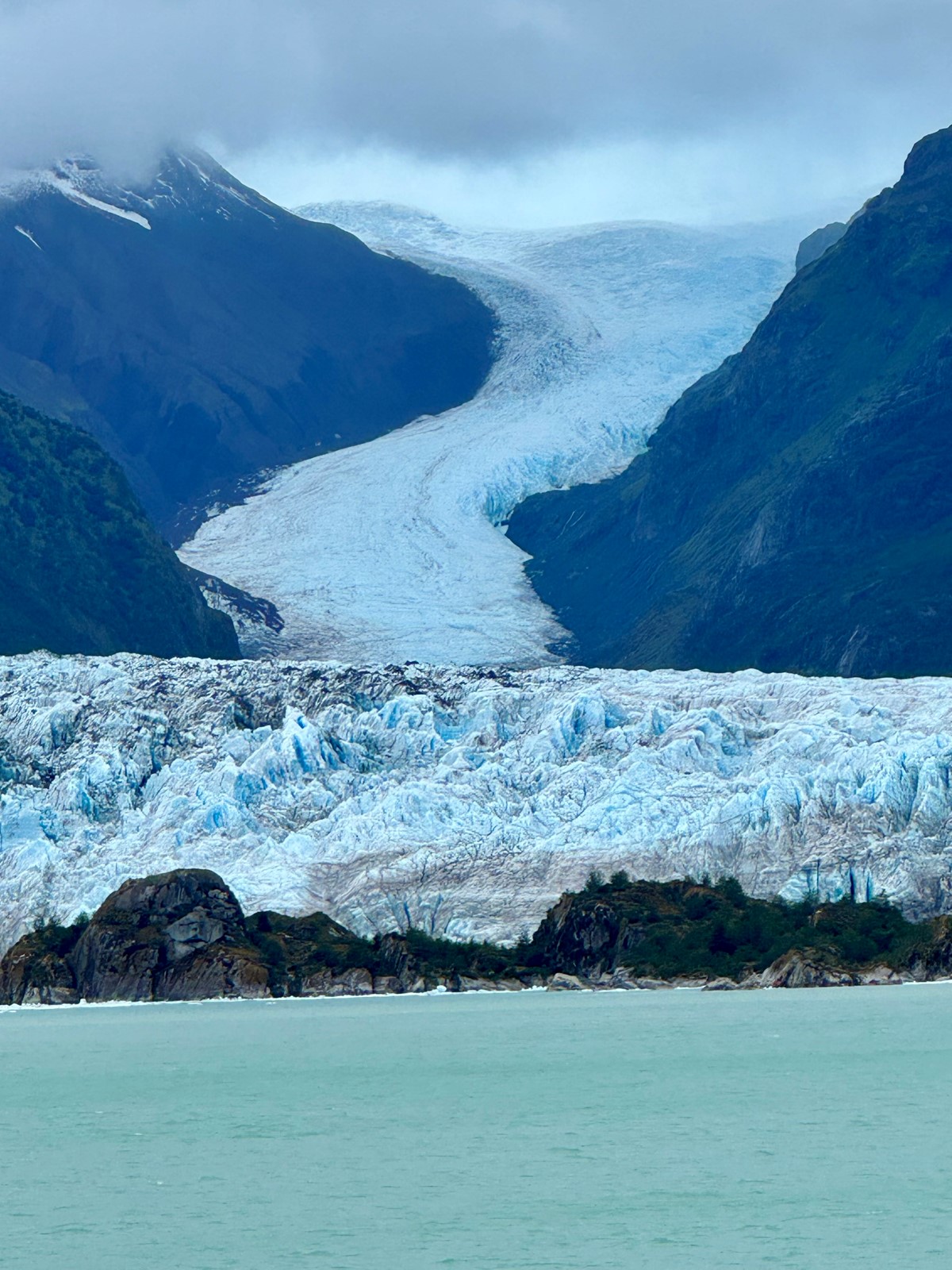
Our cruise included stops in Montevideo, Uruguay, the Falkland Islands and cruising Chilean fjords, past mesmerizing “Glacier Alley,” and its massive ice sheets. We also pulled into Ushuaia, Argentina, billed as the southernmost city in the world, in a dramatic setting between the Beagle Channel and the snow-capped Andes.
Ushuaia serves as a departure point for Antarctic explorers as well as a stop for cruise ships headed to that icy continent.
The city of 85,000 inhabitants is the capital and gateway to Tierra del Fuego, or the “Land of Fire” named by explorer Ferdinand Magellan more than five centuries ago for the constant flames burned by the indigenous Yamana to keep warm.
Ushuaia’s remoteness, especially in the 19th and early 20th centuries made it an ideal location for a penal colony.
We opted to ride a narrow-gauge steam train that was built by convict labor for lumber operations, but these days serves tourists for a pleasant ride through beech forests and crisscrossing rivers.
We chose it over other shore excursion options that included horseback riding, observing sea lions and penguins, hiking with Siberian Huskies, a nature reserve trek, and bird watching.
Perilous seas
But back to rounding The Horn, the underlying motive for our trip. A friend of mine, Santa Rosa attorney Jonathan Steele, took a similar Princess cruise with his wife and two kids but had a much wilder ride.
Recently he recalled how the beautiful weather began to change drastically as the ship approached the landmark cape. Ocean swells increased, the rain began whipping their balcony and waves became canyons of water as the ship vibrated and shuddered trying to ride the seas.
“It was unbelievable how rough it was,” Steele said. “All hell was breaking loose.”
The 900-foot ship was like a cork, he said, and began listing at a 45-degree angle in the rough water.
It took a while for the ship to right itself, and damage was extensive, especially in the gift shop where Steele remembers seeing mounds of shattered, expensive Swarovski crystal in piles on the floor.
He described the experience as exhilarating, but also unnerving. It felt like an episode from “The Twilight Zone.”
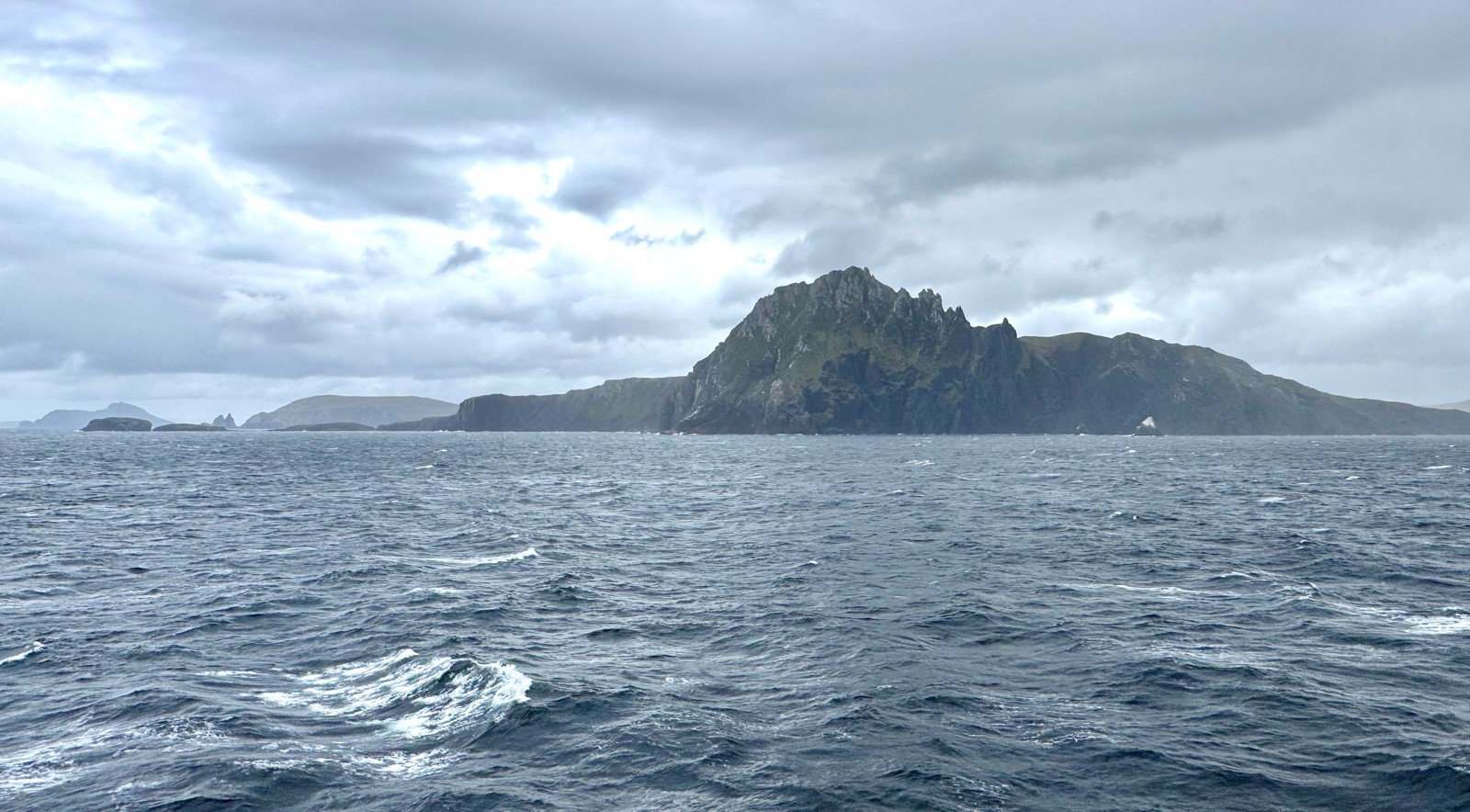
His account is more in keeping with the fearsome reputation of the ocean’s rage around Cape Horn, which is actually a rocky, barren island with a 1,300-foot peak in an archipelago at the end of South America, where the Pacific and Atlantic oceans meet.
Cape Horn marks the northern boundary of the Drake Passage, a 600-mile-wide stretch between South America and Antarctica characterized by frequent hurricane-force winds, colossal waves and the threat of icebergs.
The ferocity stems from the strongest ocean current on earth. It flows counterclockwise around Antarctica, unimpeded by any land mass until it gets funneled through Drake’s Passage. Near Cape Horn the ocean floor rises up, creating waves of unnatural steepness, sometimes 60 feet high, or more.
Winds that have gathered strength for thousands of miles add to the violent convergence, with speeds regularly exceeding 70 knots (more than 80 miles per hour). For centuries, successfully rounding The Horn was a rite of passage for sailors and a critical point on global trade routes, especially before the opening of the Panama Canal in 1914 altered shipping patterns.
Early explorers
Sir Francis Drake in his circumnavigation of the globe passed through the Strait of Magellan, to the north of Cape Horn in September 1578. Before he could continue, his ships encountered a storm that blew them well to the south of Tierra Del Fuego.
Drake’s chaplain on the Golden Hinde, Frances Fletcher, spoke of briefly sighting Cape Horn and “the most mad, mad seas” and dangerous rocks. “The winds were such as if the bowels of the earth had set all at liberty, or as if the clouds under heaven had been called together to lay their force upon that one place.”
Then, there’s the saga of the HMS Wager, documented by David Grann in the recent bestseller “The Wager, a Tale of Shipwreck, Mutiny and Murder.” The ship separated from its naval squadron in 1741 while rounding Cape Horn and wrecked on the rocks of a barren island off the coast of Chile. When the ship left England about 250 men were aboard. Only 39 returned.
On his first global circumnavigation, the great English explorer Captain James Cook battled fierce storms and towering seas for weeks, exhausting his crew and damaging his ship before finally rounding Cape Horn in January 1769.
Two decades later, Captain William Bligh, who famously was the victim of a mutiny on his ship the Bounty, tried unsuccessfully in early 1788 to round the Horn on his voyage from England to Tahiti. His mission was to cultivate breadfruit in Polynesia and transplant it to Jamaica, to use as a cheap food for the enslaved plantation workers.
His log speaks of mountainous seas as he tried to sail around Cape Horn, waves breaking over the ship, sleet, hail, snow and frozen sails. Bligh’s log, which is available online, is a litany of the severe weather he encountered daily: fog, lightning, violent gales and more.
“Few ships could have gone through it as we have done, but I cannot expect my men and officers to bear it much longer,” he wrote.
Defeated after 30 days, he decided to reverse course, sail across the Atlantic and around Africa’s Cape of Good Hope. It added 7000 miles to his journey to Tahiti and delayed his voyage there by roughly 10 months.
Another example of the Cape’s deadly menace involved the Spanish ship San Telmo which set sail for Peru in 1819, attempting to crush an anti-colonial movement there. It was last seen in Drake’s Passage before disappearing in severe weather. All 644 men aboard were lost.
Even the famed naturalist Charles Darwin aboard the HMS Beagle in 1832 had a close call with Cape Horn, “this notorious promontory,” veiled in mist. “Great black clouds were rolling across the heavens, and squalls of rain, with hail, swept by us with such extreme violence,” he wrote.
His ship was lucky to make it to a little harbor not far away and anchor in smooth water, an especially welcome gift on Christmas Eve.
The age of sail was particularly dangerous for vessels trying to avoid being blown off course or into the rocks. But even nowadays, Cape Horn can still deal a fatal blow to a modern ship. In November 2022, the Viking Polaris cruise ship was just southeast of the Cape when it was hit by an approximate 50-foot- high, rogue wave. It shattered the windows of seven rooms, injured eight people and took the life of a 62-year-old woman.
Onboard the Viking Jupiter we had a clear view circling Horn Island until rain and mist began to obscure the lonely lighthouse and the monument of an albatross in flight dedicated to lost sailors.
A Chilean poet’s words are etched into the marker: “I am the albatross that waits for you at the end of the world. I am the forgotten soul of the sailors lost … but die, they did not on the fierce waves, for today towards eternity in my wings they soar.”
You can reach Clark Mason at clarkmas@sbcglobal.net.
 PREVIOUS ARTICLE
