


Hiring surge lifts economy — and Trump’s re-election chances in 2020
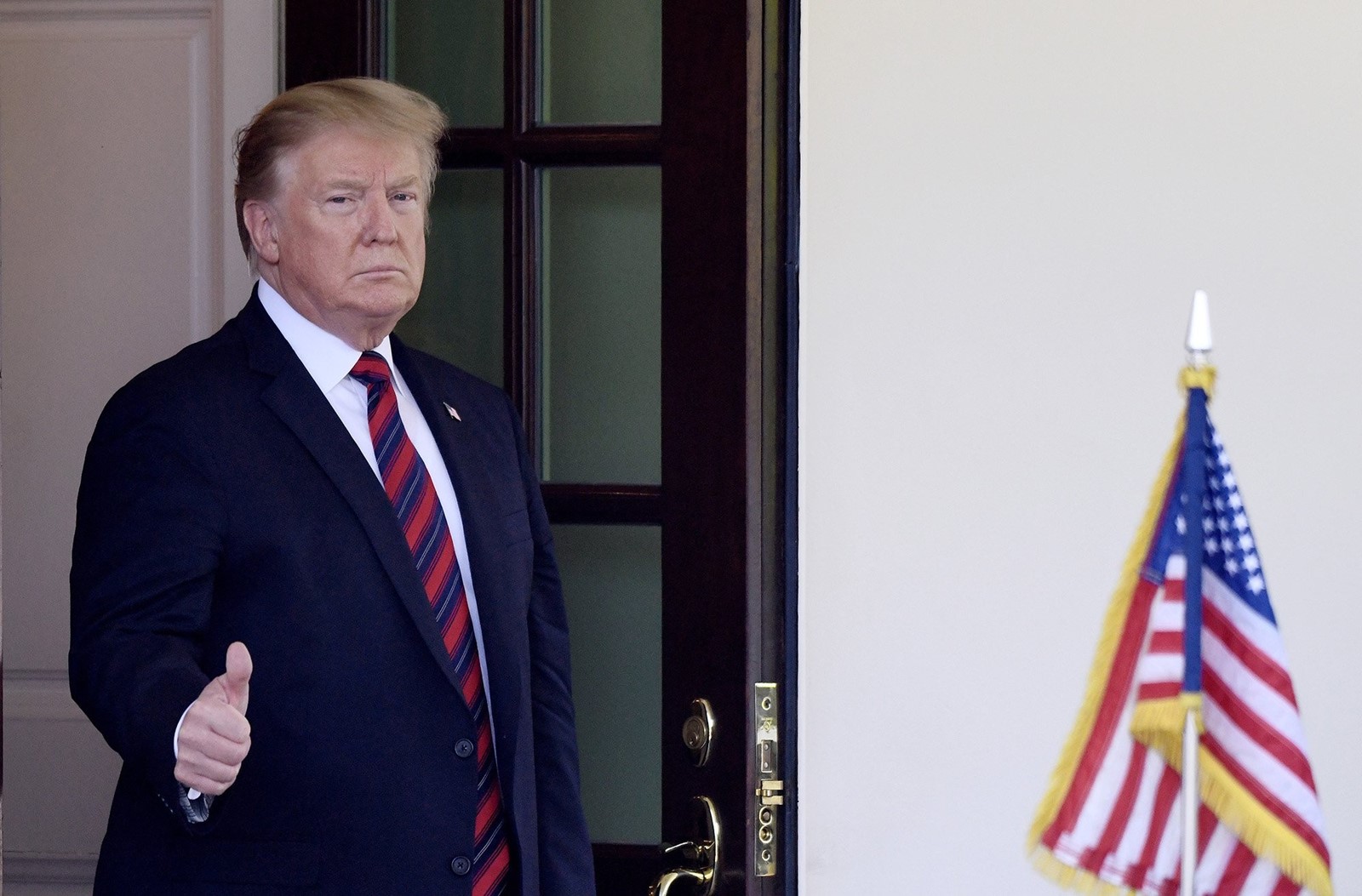


“I’ll be running on the economy,” President Donald Trump declared Friday.
The day’s new round of sunny employment figures offered fresh evidence of a strong national economy — and a big political advantage for Trump just as the 2020 presidential campaign begins to intensify. Stocks are at or near record levels, too.
Democrats pointed to regional disparities in the new government report. And overall income inequality hasn’t narrowed.
But the Democrats who are fighting to deny the Republican president a second term are beginning to acknowledge the weight of their challenge: Since World War II, no incumbent president has ever lost re-election in a growing economy.
Even Trump’s critics are forced to admit the state of the economy could help him at the ballot box.
“Relative to all the other terrible aspects of Trump’s record, the economy is more of an asset to him,” said Geoff Garin, a veteran pollster whose clients include Priorities USA, the most powerful super PAC in Democratic politics.
It was a day of celebration for Trump and his allies, who have been well aware of recent warnings that the economy might slow this year.
The president’s chief economic adviser, Larry Kudlow, said the United States has entered “a very strong and durable prosperity cycle.” He gave all the credit to his boss: “He is president of the whole economy.”
By most measures, the U.S. economy is in solid shape. It is expanding at a roughly 3% pace, businesses are posting more jobs than there are unemployed workers and wage growth, long the economy’s weak spot, has picked up.
All these trends are helping lift a broader swath of the population than in the first five years or so after the Great Recession.
Low-income workers are actually seeing healthy wage gains — larger than everyone else’s. In March, the poorest one-quarter of workers were earning 4.4% more than a year earlier, according to data compiled by the Federal Reserve Bank of Atlanta. The richest one-quarter were up 3%.
Lower-income workers had started to outpace their higher-paid counterparts in 2015, so it’s not a Trump phenomenon. And part of the increase has occurred because of minimum wage hikes by more than two-dozen states.
The news isn’t good for everyone.
Overall income inequality hasn’t narrowed. The richest 5 percent of Americans earned 3.4 times a median worker’s pay in 2018, according to the left-leaning Economic Policy Institute. That’s up from 3.3 times as much in 2016.
In Carlisle, Pennsylvania, in a region Trump carried three years ago, county archivist Barbara Bartos said the president’s policies have helped a lot of people although she’s seen little economic benefit personally.
“I think he should get credit where credit is due,” said Bartos, a 69-year-old registered Democrat who backed Hillary Clinton. “And I think that he helped a lot of people but left a lot of people out.”
Amid the largely positive news for Trump, friends and foes alike question whether he can stay focused on the economy as the 2020 contest plays out. Blessed with similarly positive news in the past, he has veered into more controversial topics like immigration, the Russia investigation and personal attacks against his rivals.
Democrats, in fact, are counting on him to change the subject.
“The economic indicators would normally be incredibly positive for an incumbent president,” said Jefrey Pollock, the pollster for Democratic New York Sen. Kirsten Gillibrand’s presidential campaign. However, Pollock said, “He can’t shut his mouth.”
At this point, 18 months before Election Day, Trump’s political standing is far weaker than the economic numbers would suggest.
The latest CNN poll finds 43% of Americans approve of the way he is handling his job as president. That’s even as 56% say they approve of his handling of the economy, marking a high for the president since he took office.
He receives lower marks for other issues, including health care, immigration and foreign policy.
Ray Fair, a Yale University economist who uses economic data to model election outcomes, says that the state of the economy in the first three quarters of an election year matters more than the rest of a president’s term. His model points to a Trump victory in 2020, should the economy continue along its current path.
However, “This doesn’t take into account the personalities,” Fair said. “Trump is an unusual person.”
 PREVIOUS ARTICLE
