


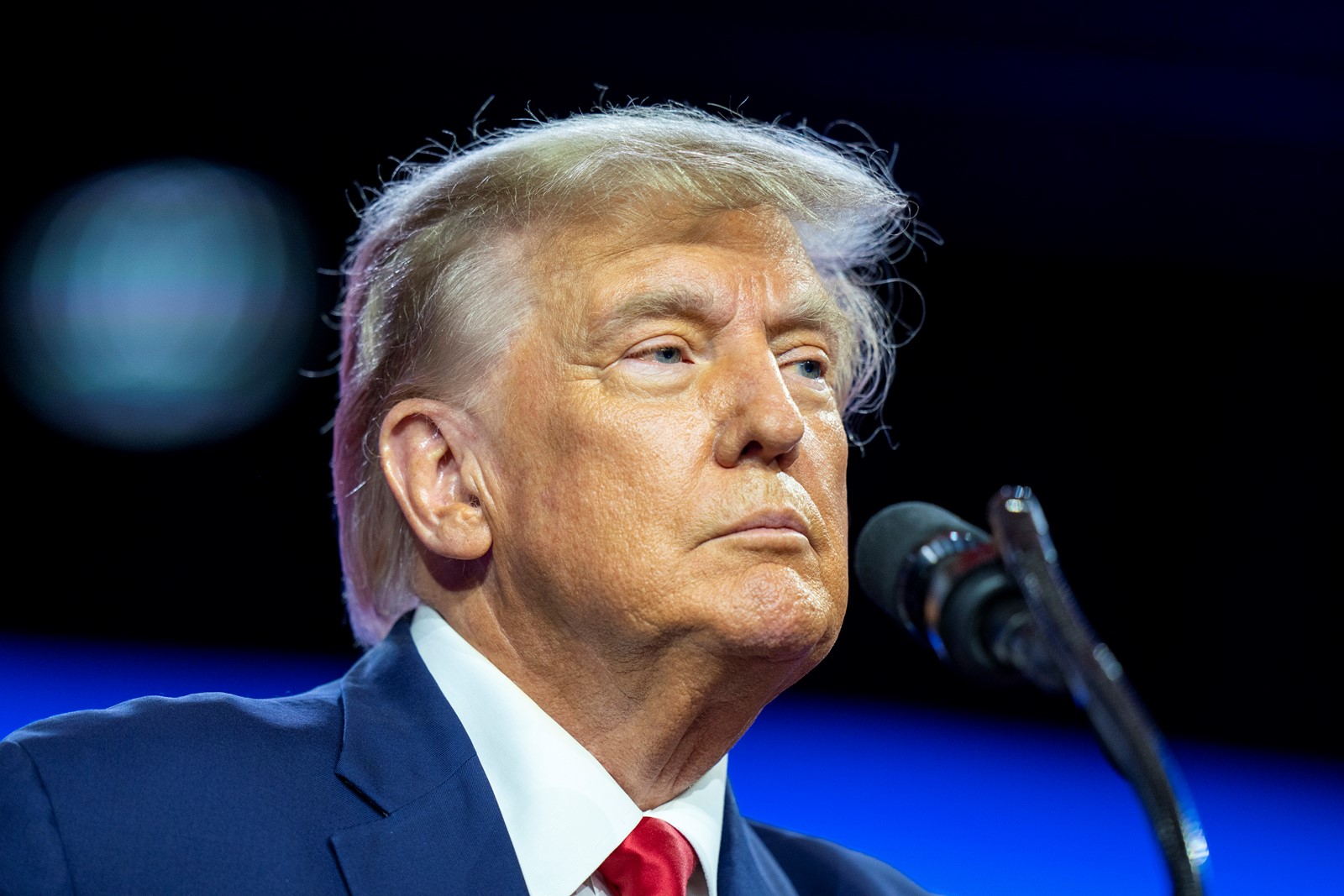


NEW YORK >> The Manhattan district attorney’s office recently signaled to Donald Trump’s lawyers that he could face criminal charges for his role in the payment of hush money to a porn star, the strongest indication yet that prosecutors are nearing an indictment of the former president, according to four people with knowledge of the matter.
The prosecutors offered Trump the chance to testify next week before the grand jury that has been hearing evidence in the potential case, the people said. Such offers almost always indicate an indictment is close; it would be unusual for District Attorney Alvin Bragg to notify a potential defendant without ultimately seeking charges against him.
In New York, potential defendants have the right to answer questions in the grand jury before they are indicted, but they rarely testify, and Trump is likely to decline the offer. His lawyers could also meet privately with prosecutors in hopes of fending off criminal charges.
Any case would mark the first indictment of a former U.S. president, and could upend the 2024 presidential race. It would also elevate Bragg to the national stage, although not without risk.
Trump has faced an array of criminal investigations and special counsel inquiries over the years but has never been charged with a crime, underscoring the gravity of Bragg’s inquiry.
The Manhattan inquiry, which has spanned nearly five years, centers on a $130,000 payment to porn star Stormy Daniels in the final days of the 2016 presidential campaign. The payment was made by Michael Cohen, Trump’s former fixer, who was later reimbursed by Trump from the White House. Cohen is expected to testify in front of the grand jury but has not yet done so.
The district attorney’s office has already questioned at least six other people before the grand jury, according to several other people with knowledge of the inquiry.
Bragg’s prosecutors have not finished the grand jury presentation, and he could still decide against seeking an indictment.
Trump has previously said that the prosecutors are engaged in a “witch hunt” against him that began before he became president. A spokesperson for the district attorney’s office declined to comment.
Even if Trump is indicted, convicting him or sending him to prison will be challenging. The case against the former president hinges on an untested and therefore risky legal theory involving a complex interplay of laws, all amounting to a low-level felony. If Trump were ultimately convicted, he would face a maximum sentence of four years, although prison time would not be mandatory.
 PREVIOUS ARTICLE

