




Nearly half of U.S. teens have been bullied or harassed online, according to a 2022 Pew Research Center report.
A new Illinois laws aims to curb this behavior by mandating school officials notify parents within 24 hours upon learning their child gas been bullied or is bullying.
How effective the faster reporting measure will be at stopping what is often described as impulsive, hurtful and, yes, pervasive behavior remains to be seen.
Meanwhile, school officials continue to ramp up efforts to promote empathy, increase supervision for those who feel threatened and make parents aware of the dangers that lurk when technology is not monitored. Phones and devices can be useful tools but they can also be gateways to cybercrime, cyberaddiction, cyberbullying and cyber-induced mental illness.
October is National Bullying Prevention Month and many schools, such as those in Oak Lawn-Hometown District 123, plan activities and assemblies to address the issue.
Superintendent Paul Enderle said bullying and harassment are “100% a problem. It is definitely something that accelerates between the ages of 11 and 14 and social media (and the anonymity it can provide) has been a significant inciter.”
At this age level, he said, kids struggle with impulsivity, which can lead to them becoming a victim or a perpetrator.
“The vast majority of our kids have cell phones by the time they’re in third and fourth grade. And they have access to the internet, so they start experimenting on these social media sites,” he said.
School officials try to get ahead of the problem, Enderle said, with educational curriculum and assemblies for both parents and children as early as third grade and by striving for immediate intervention when an incident is reported.
The district has partnered with retired Naperville police detective Rich Wistocki, president of Be Sure Cyber Training (www.besureconsulting.com).
Wistocki said the Illinois School Code’s new antibullying law is strong, with mandated action and consequences, but he would like to see it taken a step further. “It needs to become criminal code too,” he said.
Criminalizing harassment and better preparing school resource officers on how to report this kind of behavior, he said, would not only better serve victims, it would work as a deterrent.
Meanwhile, Wistocki said, a kid’s best defense is often their parents but too many adults suffer from “NMK — Not My Kid” syndrome. Not being proactive about a kid’s phone use, he said, can enable that child to bully another, suffer at the hands of a bully, or become a victim of the nightmarish web of “sexploitation.”
Because social network gaming platforms have built-in programs that look for and report grooming or child pornography chats to the National Center for Missing and Exploited Children, Wistocki said, “predators are desperate to get kids onto private platforms.”
They start by befriending them on public games and apps, Wistocki said. Kids, thinking the other player is the same age, take the bait when they are encouraged to go to a chatroom, he said.
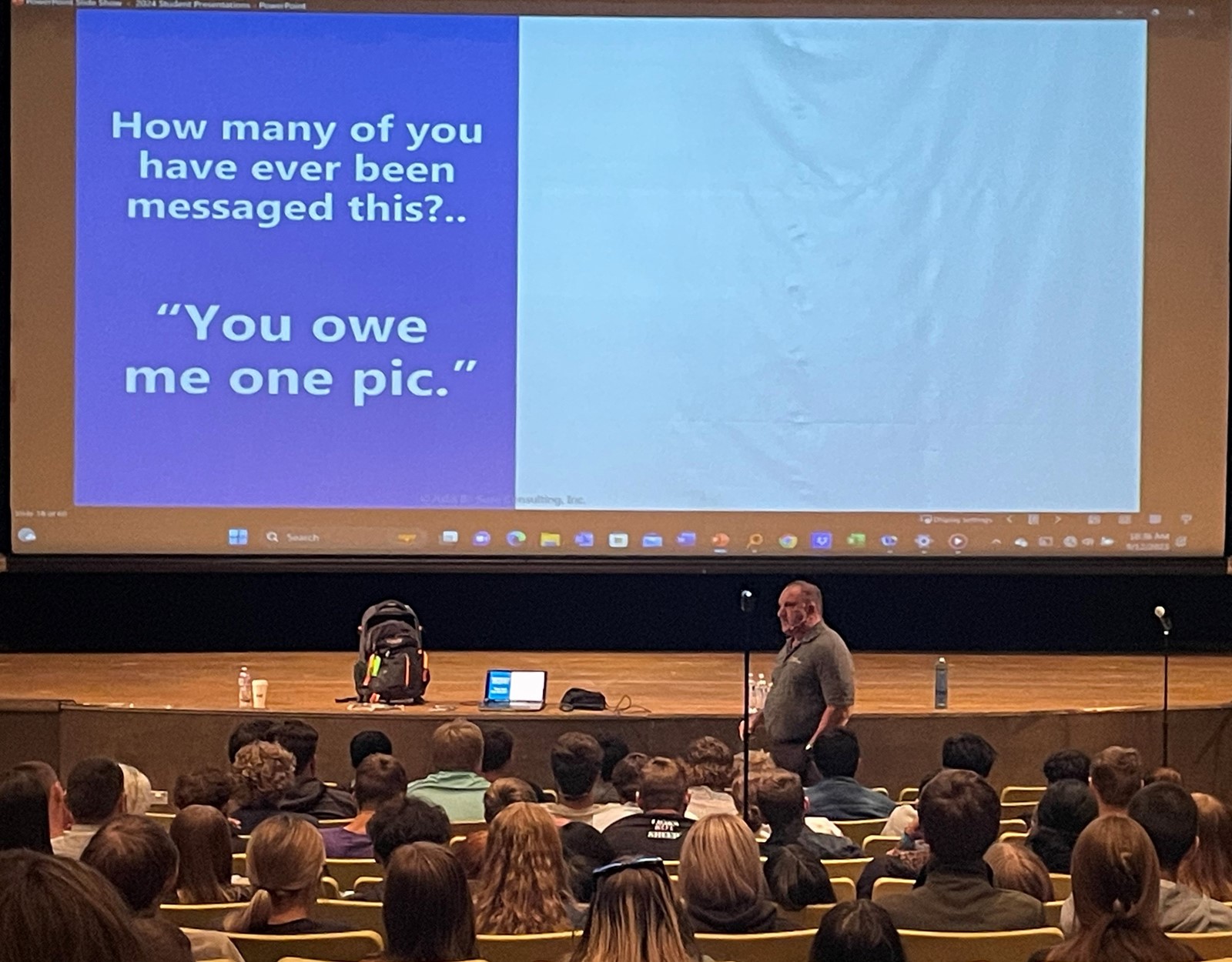
On private messaging sites, kids can be duped, lured or shamed into sharing personal information and very private photos of themselves, he said. Then, Wistocki said, the real intent — “sextortion” — is revealed. Kids are told, “I sent you a picture of me. Now you owe me a photo,” he said.
The blackmailer may ask for Apple gift cards or weekly videos of their victim, he said, under the threat that the predator will share the lurid data they already have with the victim’s friends or even the public.
A momentary lapse in judgment can cause escalating stress, depression, even culminating in suicide when a victim can’t imagine a way out, he said.
Wistocki works with more than 300,000 school kids across Illinois, including in Chicago, Lockport and Streator. At each presentation, he asks how many have been sent a text message and then told “you owe me?”
“I’ll get 20 kids raising their hands,” he said.
“I was in Southern Illinois last week. I had 16 kids come up to me, telling me they were victimized and had never told anybody,” he said.
Another presentation in Westchester led to the arrest of a 45-year-old suburban man who duped, lured and then sexually assaulted a 13-year-old.
“I tell kids, ‘No one has the right to make you feel bad about yourself online,’ ” he said.
“And I tell parents, ‘You’re not only responsible for your kids’ food, housing, clothing and education, you are responsible for their technology as well. Until your kid is 18, there’s no such thing as privacy. You have the right and the responsibility to go into that device any time you please,’ ” he said.
Parents need to have appropriate technology talks with their kids.
“Their talk typically goes something like this: ‘If you do anything bad with that phone, if you cyberbully anybody, if you give anybody personal information or bad pictures, you’re going be grounded, we’re gonna take your phone away.’ ”
Kids, he added, should not be made to feel more afraid of their parents than of the predators.
He recommends parents watch the YouTube video, “Childhood 2.0: A Documentary About Growing up in the Digital Age.”
And, he offers the following tips for keeping kids safe:
Don’t let kids charge their devices in their room at night.
Put access limitations such as the BARK app on kids’ devices
Check your child’s date of birth on their devices to make sure it is accurate.
Know the first and last names of your child’s online friends, and where they live and go to school.
Advise your child, before sending any picture or video, to use the “3 P” test: “Would you send this to a parent, priest or principal?”
Know the code or password that unlocks your child’s device.
Try to understand the games and apps your child uses.
Donna Vickroy is an award-winning reporter, editor and columnist who worked for the Daily Southtown for 38 years.
donnavickroy4@gmail.com
 PREVIOUS ARTICLE
