




Marine biologists have been struggling to save Florida’s corals as climate change and pollution have decimated reefs in recent decades.
One solution just might come from a rough coral neighborhood in Central America. Researchers at the University of Miami and the Florida Aquarium have successfully bred extremely hardy elkhorn corals from Honduras with critically endangered local elkhorns.
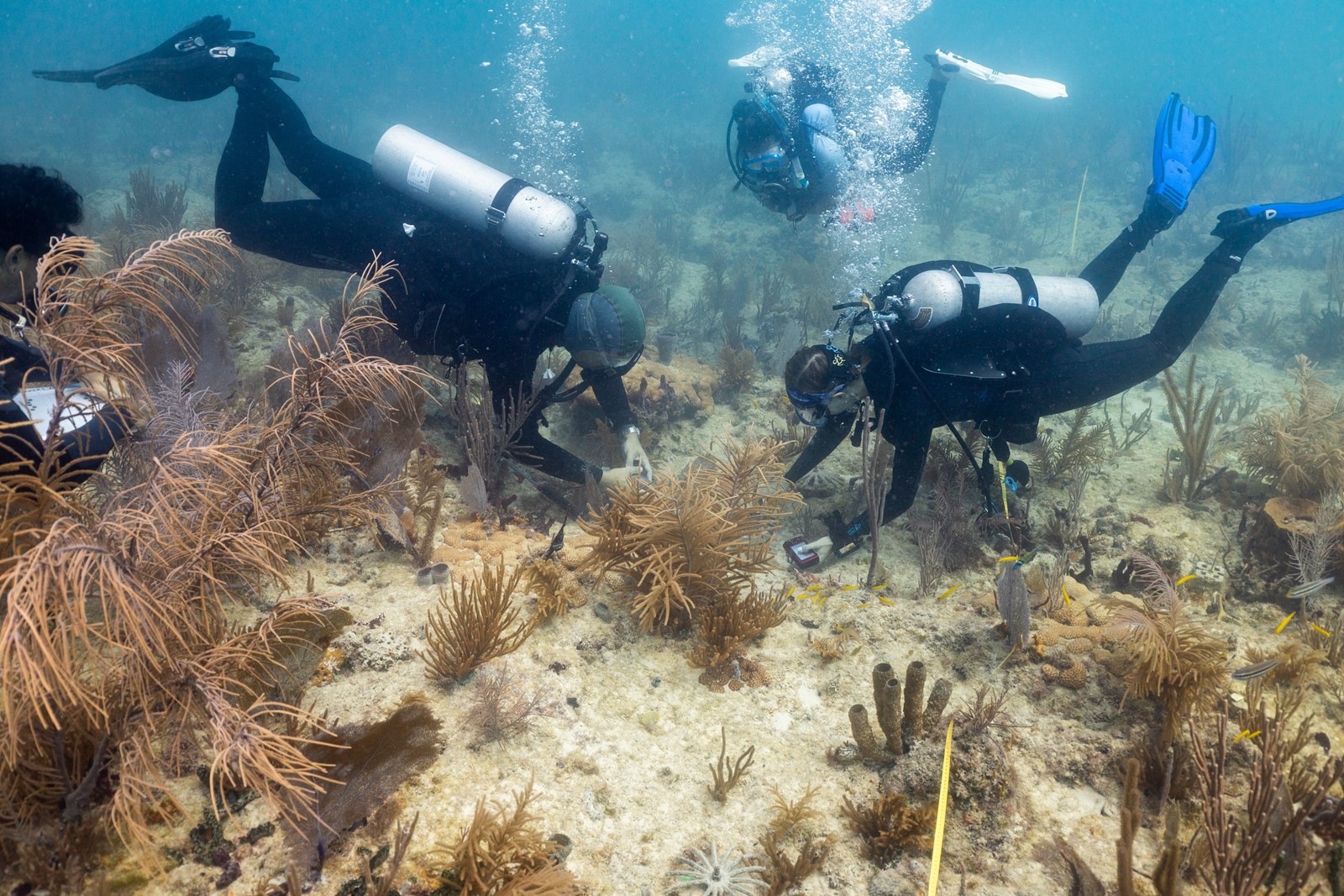
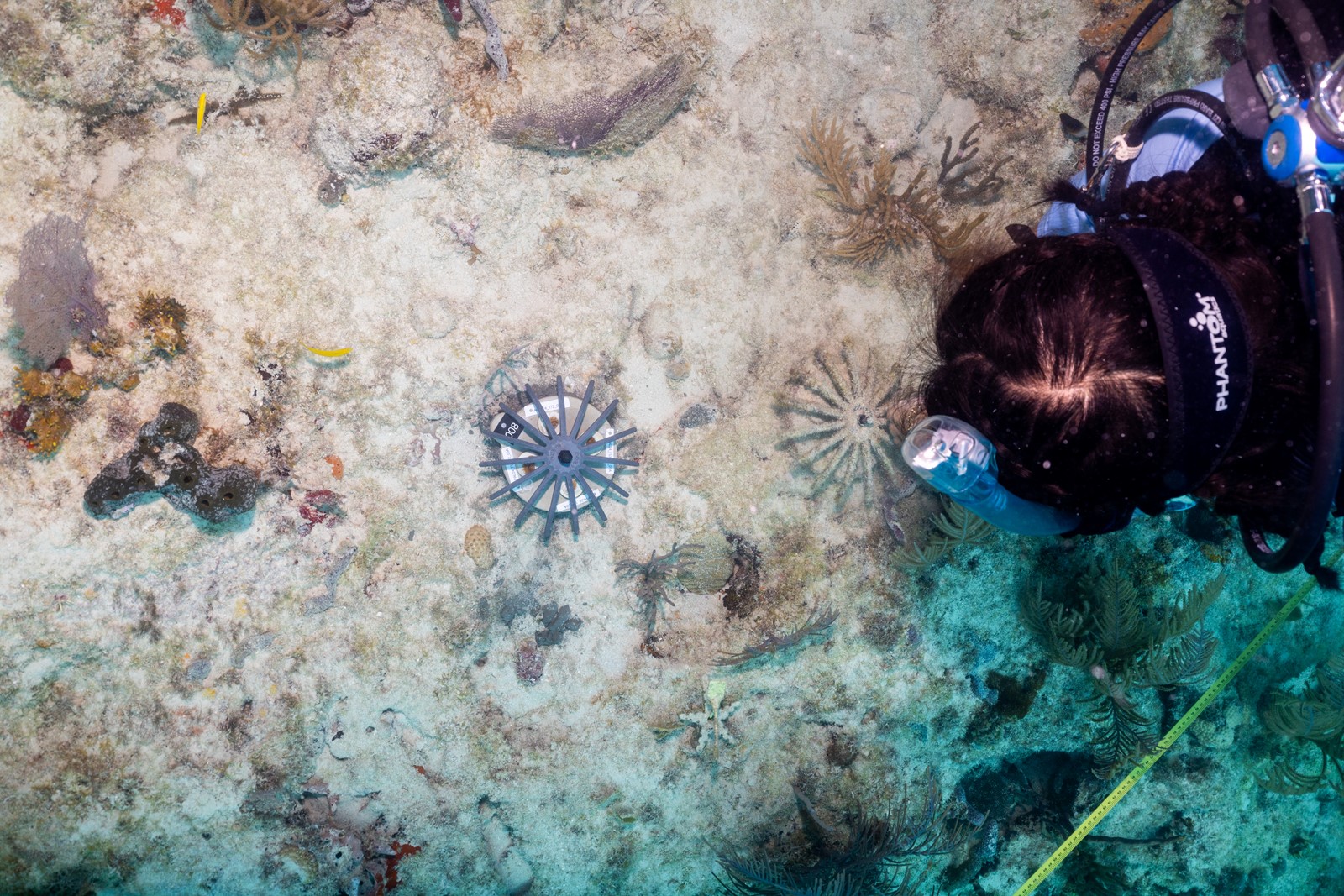
Marine biologists recently planted the “Flonduran” hybrids on reefs near Key Biscayne to see if the genetically mixed variant can survive here and pass on their genes. If so, they researchers hope they will make Florida’s reefs more genetically diverse and resistant to climate change and pollution.
The Honduran elkhorns are from Tela Bay, where they thrive despite harsh conditions that would kill Florida elkhorns. The water in the bay is 3.6 F warmer than Florida’s, there’s low visibility and the bay has been inundated with agricultural fertilizer runoff for a century, said lead researcher Andrew Baker, professor of marine biology and ecology at the University of Miami Rosenstiel School and director of the Coral Reef Futures Lab.
When Baker dove in Tela Bay to collect rugged elkhorn samples, he was blown away by what he saw. “The reefs of Tela Bay are phenomenal. There are huge stands of elkhorn coral that are hundreds of meters long, several meters thick. … It was like seeing Florida reefs from photos in the 1970s and ‘80s when we had big stands of elkhorn on the top of our reef crests down in the Keys.”
Baker said elkhorn on the Florida Reef have been progressively wiped out over the last 50 years by a combination of disease, poor water quality, coral bleaching and climate change.
“The nail in the coffin was the 2023 marine heat wave bleaching event that took out over 95% of the remaining elkhorns that were there,” he said. “They’re almost non-existent (on the Florida Reef).”
The greatest threat to elkhorn coral is ocean warming, according to the National Oceanic and Atmospheric Administration. High water temperatures cause the corals to release the algae that live in their tissue and provide them food. This coral bleaching often causes the coral to die.
Careful process
The effort Tuesday was the first time internationally crossbred coral have been permitted to be outplanted anywhere in the world. Introducing coral from other parts of the world can be highly dangerous to local reefs — coral from the Pacific or even the eastern Caribbean could carry parasites and diseases that Florida corals are vulnerable to.
There’s also the risk that the new genes are unsuitable for Florida waters, and any interbreeding would weaken local stock.
But Honduran coral and Florida coral are actually part of the same population, all connected by ocean current. Honduran coral live on the Mesoamerican Barrier Reef System, which runs along the coasts of Honduras, Belize and Mexico’s Yucatan. Honduras is upstream, so to speak, and ocean currents in the Gulf spreads genetics downstream to Florida.
“Florida elkhorn corals actually receive a small amount of immigrants from the Mesoamerican Reef every year,” said Baker. “The problem is, that’s not happening quickly enough to compensate for the speed with which we’re losing corals on the Florida Reef Tract.
“So we’re accelerating that process.”
According to the U.S. Fish & Wildlife Service, elkhorn coral, with its large, splayed branch structure, is fast growing and has, over the last 10,000 years, been “one of the three most important Caribbean corals contributing to reef growth and development and providing essential fish habitat.”
“I think they’re one of the most important coral species on the tract, even though we’ve lost almost all of them,” said Baker. “They actually thrive in high wave energy environments and break waves. You can see the coral as waves break over them.”
High coral hopes
Baker said that over time he hopes to see that the Flonduran corals, which were spawned and reared at the Florida Aquarium by coral breeding expert Keri O’Neil, and outplanted by Baker and his team, reproduce and pass on their heat- and pollution-tolerant genes. “We would hope that Flonduran elkhorns survive better than the Florida ones. … The idea is that they would breed with themselves and the local population to produce new babies that also have thermal tolerance in them,” said Baker.
Florida’s Coral Reef is the third-largest barrier reef system in the world and the only living coral barrier reef in the continental U.S. It stretches from the Dry Tortugas to St. Lucie Inlet.
A recent study found that 70% of Florida’s coral reefs are experiencing a net loss of reef habitat.
The reef is home to 45 species of stony corals, according to the Florida Department of Environmental Protection, and 6,000 species of marine line total. Lobsters, grouper, snapper, snook and myriad other marine animals use the reef as habitat.
Baker said that elkhorn, in particular, are important because they grow quickly and live near the surface, at the crest of the reef, where they disrupt and diffuse wave energy, acting as protection for coastal communities. “Elkhorns would be incredibly valuable if we could bring them back.”
Bill Kearney covers the environment, the outdoors and tropical weather. He can be reached at bkearney@sunsentinel.com. Follow him on Instagram @billkearney or on X @billkearney6.
 PREVIOUS ARTICLE
