


Says taking the medicine is his ‘decision to make’
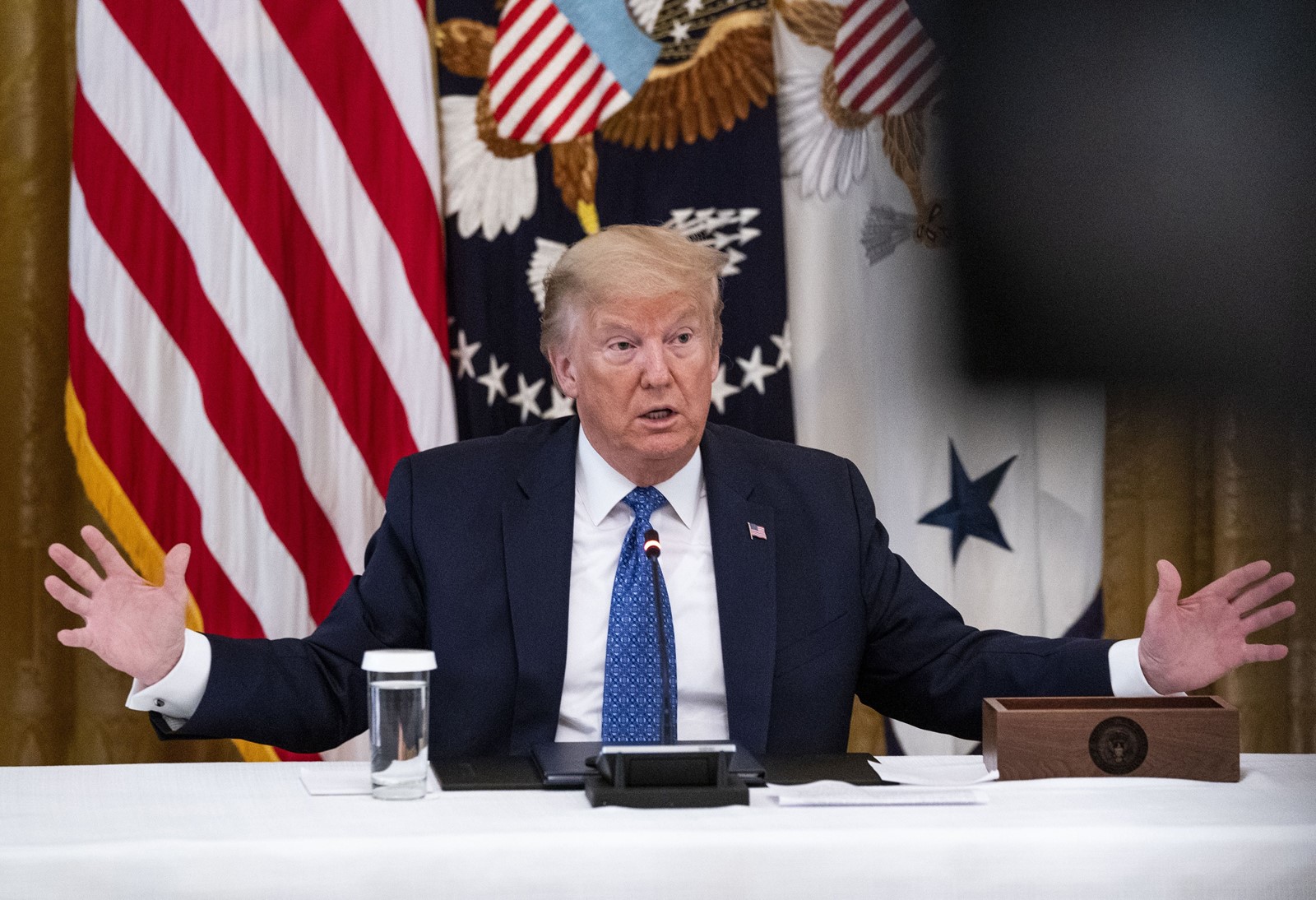


Trump’s revelation Monday that he was taking hydroxychloroquine caught many in his administration by surprise and set off an urgent effort by officials to justify his action. But their attempt to address the concerns of health professionals was undercut by the president himself.
He asserted without evidence that a study of veterans raising alarm about the drug was “false” and an “enemy statement,” even as his own government warned the drug should be administered for COVID-19 only in a hospital or research setting.
“If you look at the one survey, the only bad survey, they were giving it to people that were in very bad shape,” Trump said. That was an apparent reference to a study of hundreds of patients treated by the Department of Veterans Affairs in which more of those in a group who were administered hydroxychloroquine died than among those who weren’t.
“They were very old. Almost dead,” Trump said. “It was a Trump enemy statement.” During a Cabinet meeting, he elicited a defense of his practice from other officials, including VA Secretary David Wilkie who noted that the study in question was not conducted by his agency.
But the drug has not been shown to combat the virus in a multitude of other studies as well. Two large observational studies, each involving around 1,400 patients in New York, recently found no COVID benefit from hydroxychloroquine. Two new ones published last week in the medical journal BMJ reached the same conclusion.
Trump said he decided to take hydroxychloroquine after two White House staffers tested positive for the disease, but he already had spent months promoting the drug as a potential cure or preventive despite the cautionary advice of many of his administration’s top medical professionals.
“This is an individual decision to make,” Trump told reporters during a visit to Capitol Hill to meet with Senate Republicans. He later claimed, “It’s gotten a bad reputation only because I’m promoting it.”
Many studies are testing hydroxychloroquine for preventing or limiting coronavirus illness but “at this point in time there’s absolutely no evidence that this strategy works,” said Dr. Carlos del Rio, an infectious disease specialist at Emory University in Atlanta.
“My concern is, the president has a big bully pulpit, maybe people will think there’s some non-public evidence” that the drug works because Trump has chosen to use it, del Rio said. “It creates this conspiracy theory that something works and they’re not telling me about it yet.”
Addressing concerns that Trump’s example could lead people to misuse the drug, White House press secretary Kayleigh McEnany said “tens of millions of people around the world have used this drug for other purposes,” including malaria prophylaxis. She emphasized, “You have to have a prescription. That’s the way it must be done.”
The drug is also prescribed for some lupus and arthritis patients.
Trump said his doctor did not recommend hydroxychloroquine to him, but that he requested it from the White House physician.
That physician, Dr. Sean Conley, said in a statement that, after “numerous discussions” with Trump, “we concluded the potential benefit from treatment outweighed the relative risks.”
The Food and Drug Administration warned health professionals last month that the drug should not be used to treat COVID-19 outside of hospital or research settings due to sometimes fatal side effects. Regulators issued the alert, in part, based on increased reports of dangerous side effects called in to U.S. poison control centers.
Calls to centers involving hydroxychloroquine increased last month to 96, compared with 49 in April 2019, according to data from the American Association of Poison Control Centers provided to the AP. It was the second month of elevated reports involving the drug, following 79 calls in March. The problems reported included abnormal heart rhythms, seizures, nausea and vomiting.
Trump dismissed reports of side effects, claiming, “What has been determined is it doesn’t harm you. Very powerful drug, I guess, but it doesn’t harm you.”
FDA Commissioner Stephen Hahn said in an emailed statement Tuesday: “The decision to take any drug is ultimately a decision between a patient and their doctor.”
Trump also lashed out at House Speaker Nancy Pelosi, D-Calif., calling her a “sick woman” who has “a lot of mental problems” after she questioned Trump’s use of the drug because he is 73 and “morbidly obese.” Her comments were followed by Senate Democratic leader Chuck Schumer of New York, who told MSNBC that Trump’s move was “reckless, reckless, reckless.”
 PREVIOUS ARTICLE
