


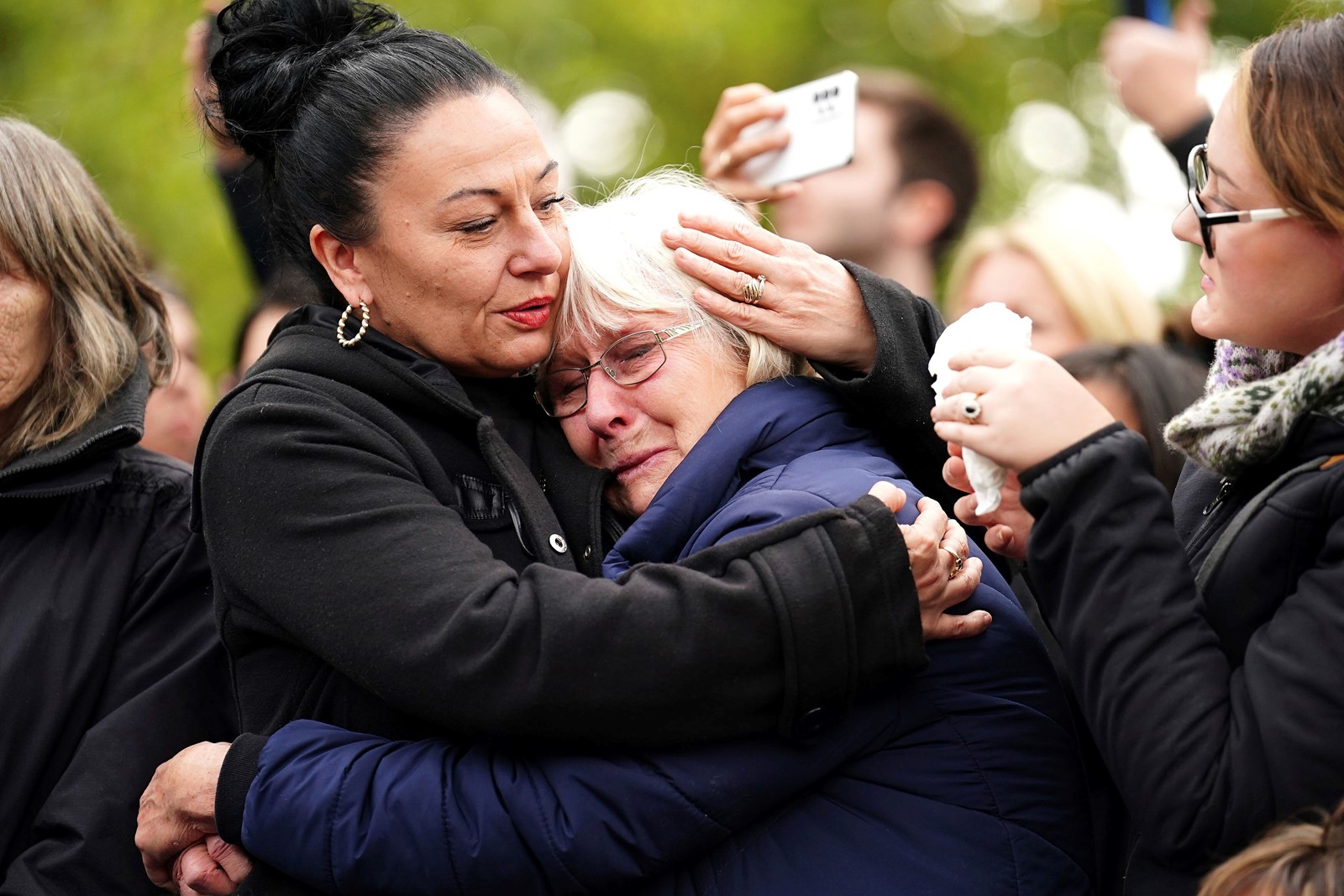


LONDON >> They came in droves to central London, arriving before dawn and flocking to blockaded streets. Some had camped overnight. Others made hourslong journeys in the darkness to score a prime location for the royal spectacle.
“I needed to say my final goodbye,” said Beny Hamedi, 55, who clutched a photo of the queen. “And I think it will be a moment no one will ever forget.”
The 11 days since Elizabeth died at the age of 96 have been a coordinated exercise in public grief as Britain comes to terms with the loss of its longest-serving monarch.
The vigils that have popped up on the streets and in parks, the serpentine queue to see her coffin lying in state, the cross-country travel for royal commemorations — they have all been a way to bid farewell to a woman many viewed as family, people said time and again.
But in some ways, the days of ceremonies have also been a moment for Britons to reinforce their national sense of identity. And they have provided a much-needed distraction from a frightening cost-of-living crisis and a period of political turmoil that have dominated the national agenda for months.
Perhaps nowhere were those sentiments felt more fully than in the crowds that gathered in and around central London on Monday to see the procession that followed the queen’s state funeral in nearby Westminster Abbey.
“We are never going to see a queen again in our lifetime,” said Melissa Hackett, 28, who had traveled with a friend from her home in Doncaster in northern England on Sunday, referring to the line of succession. The queen’s eldest son is now King Charles III. His son William is second in line, followed by his own eldest son, George.
Outside the long stretches of barricades that blocked off much of the area around the parade route from the still-arriving crowd, hawkers sold homemade programs and small Union Jack flags.
Public viewing areas were set up in parks in London and other cities, and people propped up camping chairs, laid out blankets and erected small step stools to see over the people in front of them. But the early festival-like atmosphere became somber when the funeral service began and video was beamed from Westminster Abbey.
Anna Stubbens, 29, a doctor in London, said she went to Hyde Park to watch the day’s events on big screens “because it would have been so sad to miss it.” She said she thought of bringing a bottle of Champagne, but her fiance convinced her to leave it. “He said it would be inappropriate,” she said.
Those fortunate enough to secure a spot along the procession route settled in for the wait. Some visitors, navigating the chaos of an unfamiliar city, found themselves shunted toward random sections of Hyde Park where tens of thousands watched the service together on the large screens. Many brought food or bought sausages or fish and chips from several food trucks installed for the occasion.
The crowd grew hushed as the first chords of a hymn from the funeral echoed out over speakers lining the Mall, the road that runs from Buckingham Palace to Trafalgar Square.
One group of women, leaning on metal barricades, clasped their hands as if in prayer. Another woman wept as she sang along with a choir to a hymn that had been part of Elizabeth’s wedding to Philip in 1947, as princess and prince.
At the end of the ceremony, as two minutes of silence were held, people in the crowd bowed their heads. Children held the hands of their parents. One mother draped her arm over her small son’s shoulder.
The funeral gave way to the splendor of a large military procession as the queen’s coffin was moved from Westminster Abbey up the Mall.
As the queen’s coffin — followed closely by the royal family, led by Charles — passed by, the only noise was the distant thump of drumbeats and the clomp of horses’ hoofs. Then, amid the silent march, from one side of the crowd on Horse Guards Road, a single male voice shouted out, “God bless the queen,” as her coffin rolled past.
At the end of the march down the Mall, which had played host to so many of the major ceremonial moments of Elizabeth’s life, her coffin was transferred from the gun carriage to a hearse for a 25-mile trip to Windsor Castle. It gave Londoners another opportunity to catch a final glimpse of the monarch before her reign was relegated to history.
 PREVIOUS ARTICLE
