


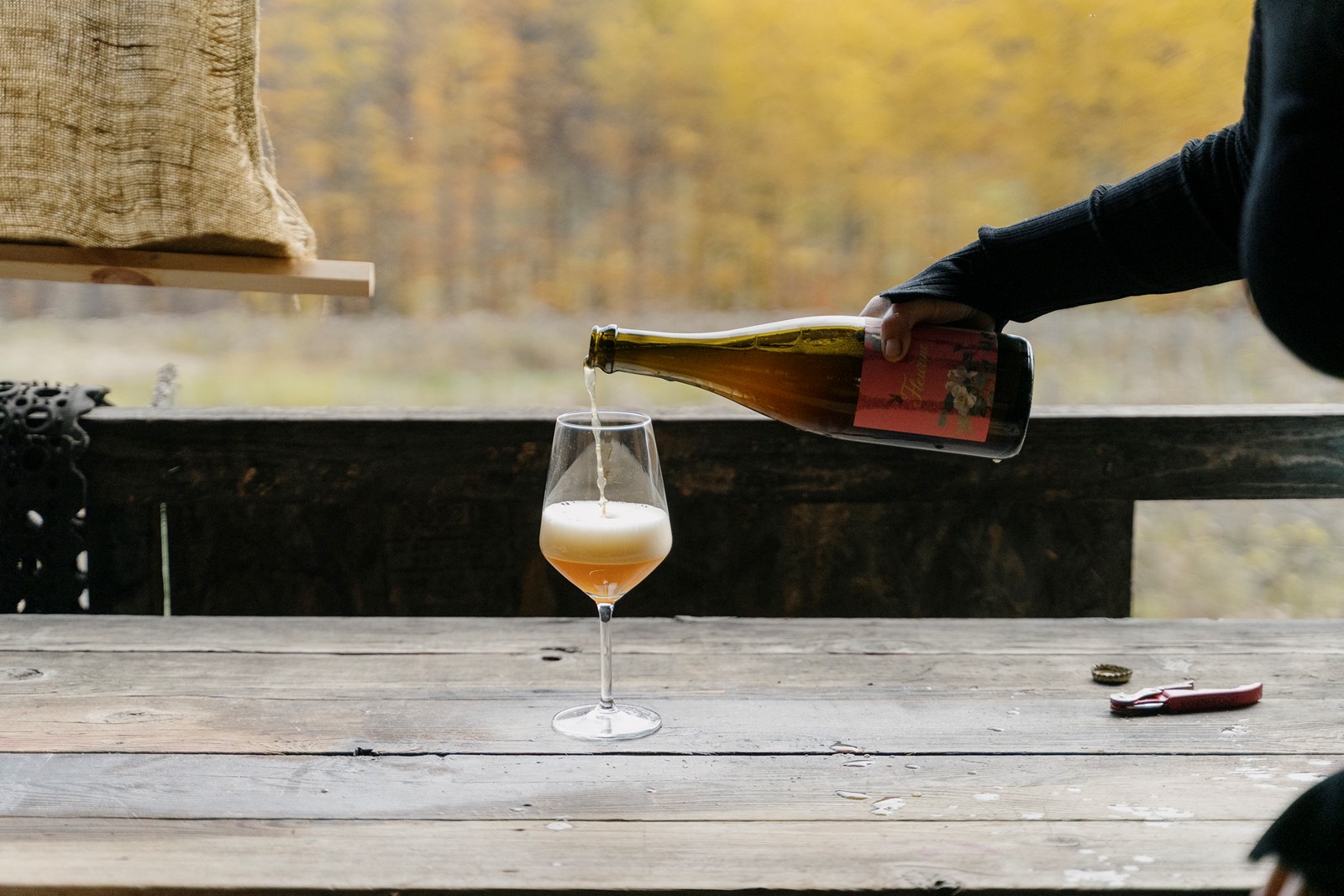


Wine is made by fermenting grapes or other fruit, although apple and pear wines are distinctive enough to have earned their own categories, cider and perry. But a growing number of producers are blurring the styles, blending grape wines and ciders or fermenting grapes and other fruit together, with remarkable delicious results.
Some of these producers started out making ciders or wines and branched out. Some bottles are collaborations between wine and cider specialists, but most who are making these blends are natural winemakers, who tend to be more experimental and adventurous and less bound by industry and market conventions.
Andy Brennan, of the superb Aaron Burr Cidery in Wurtsboro, New York, makes a wonderfully refreshing blend he calls Appinette by fermenting together farmed apples and traminette, a hybrid wine grape.
Scar of the Sea, an excellent wine producer in San Luis Obispo, California, blends a different grape with Newtown Pippin apples each year — gamay in 2021 and palomino in ‘22. Each was deliciously thirst-quenching, the sort of thing you want to keep drinking, the gamay blend tasting of tart red fruits and the palomino of apples and orange zest.
In Girona, in the Catalonia region of northeastern Spain, Serps, a natural cider producer, collaborates with Finca Parera, a natural winemaker in the Penedès. The result, Lo Temps es Breu, is a blend of xarello grapes with Crimson Crisp apples, a bright, beautifully balanced beverage.
“If we want to talk about terroir and speak about what grows in a place, why aren’t we talking about this?” said Deirdre Heekin, of La Garagista in Barnard, Vermont, who in addition to the extraordinary wines she makes with hybrid grapes has been making these blends since 2010. “Wine is wine, it’s not just grapes. It can be anything.”
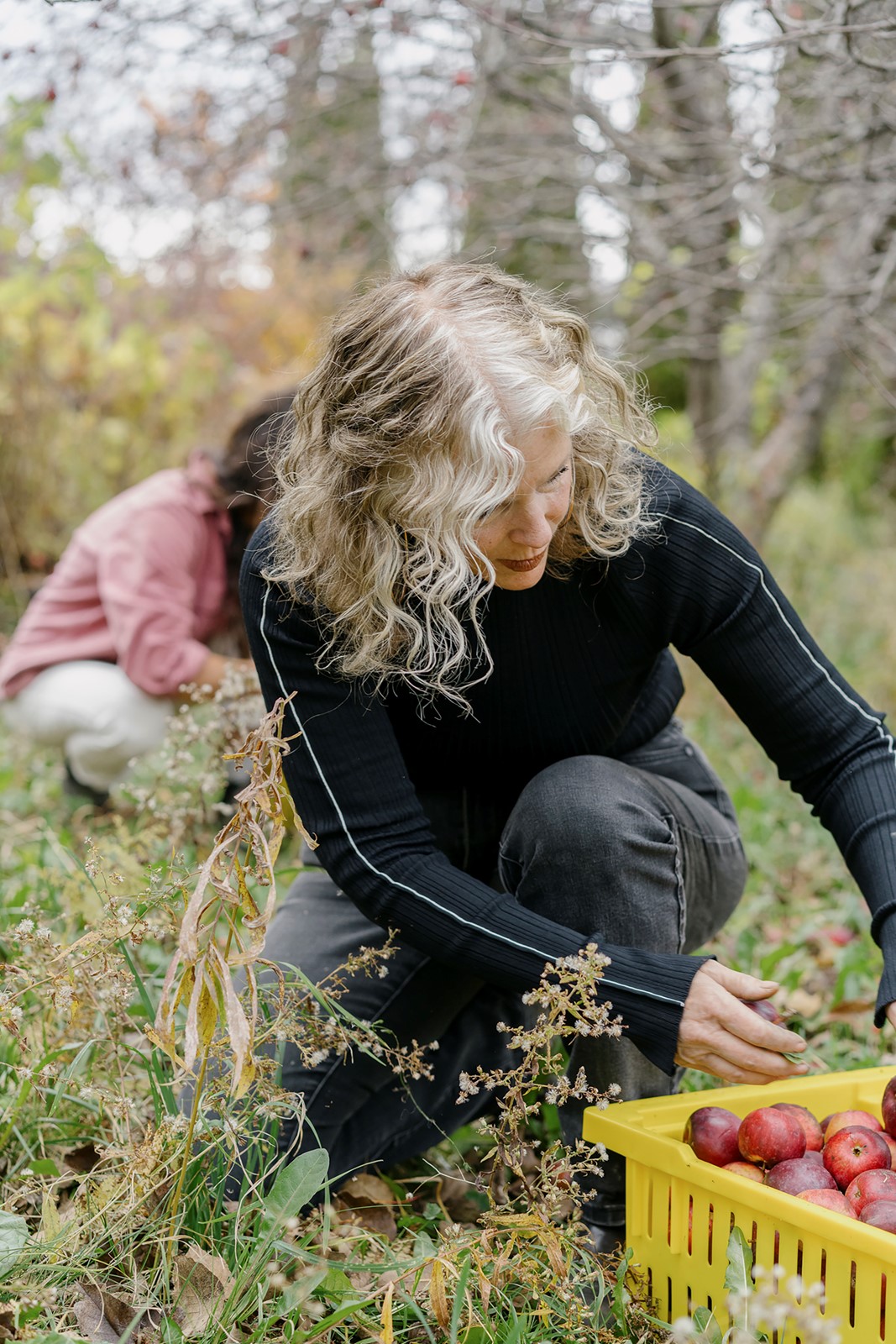
These blends, often referred to as co-fermentations, were a natural leap for Heekin, who, with her husband, Caleb Barber, grows wine grapes and apples as well as vegetables in the manner of old time, self-sustaining farms. Such a diversity of produce presents options, depending on what the year gives you.
“It’s an old-time farming hedge,” she said. “If you have frost, and it hits grapes, but you have apples, you adjust. From a climate change perspective, it’s going to be increasingly important and interesting to have that as an option.”
When Mikey Giugni began his Scar of the Sea label in 2012, he wanted to make a red and a white wine, but he had no white grapes. He had access to apples, though, and thought he would make a cider, which he had learned about a few years before while working with sparkling wine producers in Tasmania.
“One of the producers was making really great cider, and I learned that there wasn’t much difference between great cider and wine,” said Giugni, who runs the winery with his wife, Gina. “I was a little naïve — making a good vintage cider is hard. You don’t always have all the elements to make a balanced beverage, acidity, depth, tannins.”
It’s also a stylistic hedge. Winemakers have often blended different grapes, selecting one to emphasize acidity, others for color, tannins or brightness. Cider makers do the same thing with different sorts of apples. Making 100% varietal wines, as is traditional in Burgundy, for example, is far more difficult. Why not blend apples with grapes?
“The flavor components are already complementary,” Giugni said.
Many grape-apple blends are light and breezy, the kind of beverages that go down easily, what the natural wine people call “glou-glou,” the French term for what in English might be “glug-glug.” That’s Giugni’s goal.
“It’s a beer alternative,” he said. “It’s easier than wine during the day, and you can drink more of it.” Indeed, the usual alcohol level is generally 7% to 10%, which, along with the autumnal nature of cider fruit, makes these wines perfect choices for Thanksgiving.
But Heekin does not want to limit the perception of how good these grape-and-fruit co-fermentations can be. “It’s expanding our horizons, creatively and sustainably,” Heekin said.
One need only taste La Garagista’s 2021 Stolen Roses, a sparkling rosé in which the cider has been fermented on red wine pomace, in homage, she said, to vin ëd pom, an ancestral style of cider made in a similar way in Alpine Italy.
It’s got depth, tang and savor — refreshing, yes, but also complex with a saline edge. And it will age and evolve.
To make Stolen Roses, Heekin uses many different sorts of wild and cultivated apples from her land. The new crop of apples is mixed with older ciders, a method, she said, used by traditional Vermont cider makers who might drink down a barrel of cider over the course of a year and, after the next harvest, simply add the new cider to whatever was left. Over time, this creates ciders of great complexity, and is a little like the solera method used by sherry producers.
Heekin likened it to Cucina Povera, the tradition of Italian peasant cooking in which you did the best you could with whatever ingredients you could scrounge up. “It’s increasingly hard for small producers to stay afloat. People have to be smart and clever about what they do. I think it will continue to grow, given where we are with climate change.”
La Garagista is passing those skills along to younger farmers and producers. With Heekin and Barber’s mentorship, they train at La Garagista and pursue their own projects as well.
Willa Deeley, who has so valued the Heekin/Barber mentoring that she called her label Disciple, makes ciders occasionally blended with grapes, like her tart, fresh and bracing Stella d’Oro. But more often she simply uses other fruits like plums and peaches. Her Semiprecious is a delicious, refreshing blend of apples and plums.
Almost all of these blends are extremely small production, often as much experimental as they are commercial. You won’t find them in the supermarket. But they are turning up here and there with greater frequency.
Hudson Chatham Winery in Ghent, New York, makes a rosé of apples fermented with chelois grapes. So does Rose Hill Farm in Red Hook, New York. Meinklang in Austria blends apples with grüner veltliner. Koppitsch, also in Austria, blends blaufränkisch and syrah with cherries to make a pét-nat. Neu Cellars in Michigan and Hiyu Farm in the Columbia River Gorge region of Oregon both make co-fermentations, as do Ashanta and Vinca Minor in California.
Keep your eyes open, they are all worth trying.
 PREVIOUS ARTICLE
