


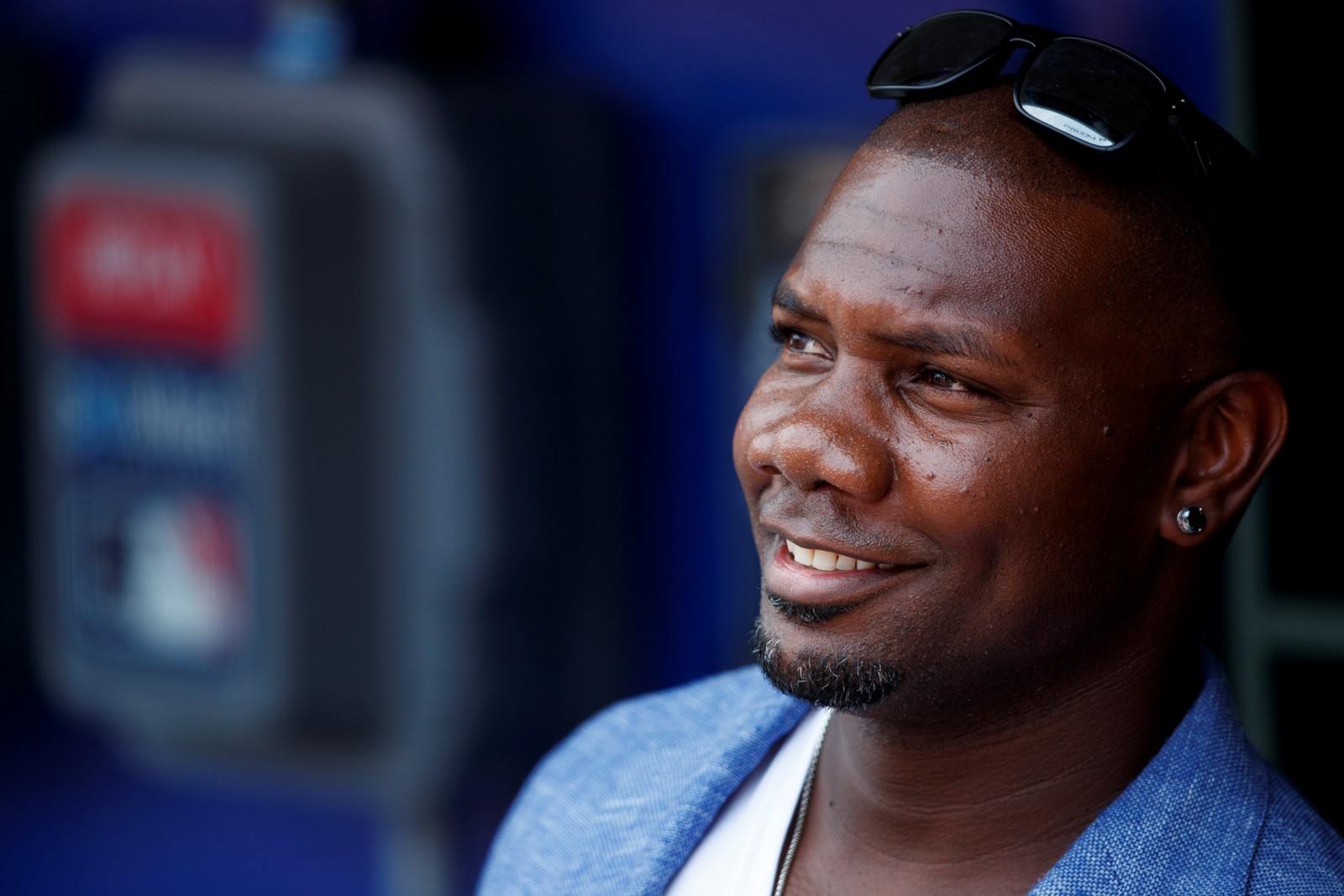


Ryan Howard was a rookie with the Philadelphia Phillies just putting baseball on notice with his moonshot home runs when he met Buck O’Neil, a champion of Black ballplayers during a monumental, eight-decade career on and off the field.
Howard was introduced to O’Neil as a modern-day Josh Gibson, one of the Negro Leagues greatest players who hit .466 for the 1943 Homestead Grays. Howard, who hit at least 45 homers four times in his career, was too embarrassed to accept the comparison.
“Mr. O’Neil was like, ‘Do you got that power?’ I said, ‘Yes sir, I do,’” Howard said. “He told me, ‘Don’t be ashamed of it. Let it out.’ It was great, just hearing the stories from and just being in his presence.”
O’Neil, who died in 2006, was long a champion of the Negro Leagues Baseball Museum in Kansas City, Missouri. Howard, who won an NL MVP and a World Series with the Phillies, is ready to take up O’Neil’s cause as the former slugger joined the push in helping the museum’s expansion project.
The Negro Leagues Baseball Museum is fundraising for a new 30,000-square-foot facility and campus, aimed at advancing the museum’s mission of preserving the rich history of Negro Leagues baseball and its impact on social progress in the United States.
Howard and San Diego Padres manager Mike Shildt announced their plans Thursday to join the Negro Leagues’ “Pitch for the Future” in bringing greater awareness to the legacy of the Negro Leagues with a museum expansion.
Shildt was a frequent visitor of the museum when he managed the St. Louis Cardinals and remained hopeful expansion would provide the resources needed to educate a new generation of fans.
Negro Leagues Baseball Museum president Bob Kendrick said he hoped to raise $30 million to complete the project.
Interest in the Negro Leagues has spiked of late in large part because of its inclusion in MLB The Show and when records for more than 2,300 players were incorporated into Major League Baseball statistics. The museum that was founded in a tiny, one-room office space in 1990 that attracts about 70,000 visitors each year — plus major leaguers who stop by during road trips — has outgrown its space at 18th and Vine. Kendrick said the current space “wasn’t designed to handle large crowds at any one time.”
LAND OF OPORTUNITY
Travelmates in Tokyo just over a month ago, the Dodgers handled the Chicago Cubs fairly easily over there, coming back from Japan with a 2-0 record on their way to the best start ever by a defending World Series champion (8-0).
But the Cubs have found America to be a land of opportunity. They have won four of the five meetings on U.S. soil, including a two-game sweep of the Dodgers at Wrigley Field this week that concluded with a 7-6 win on Wednesday night.
The Dodgers held the Cubs to four runs combined in the two games in Tokyo. Since then, the Cubs have scored 38 runs in five games against the Dodgers.
— Bill Plunkett
OFFENSIVE FUNK
The same questions have come at Ron Washington after most of the Angels’ games lately, and he continues to give the same answer.
The Angels are not hitting, including a two-hit performance in a 3-0 loss to the Pittsburgh Pirates on Wednesday night in Anaheim, and Washington says simply that they will eventually snap out of this.
“All we can do is keep working,” Washington said. “We’re in an offensive funk right now, and it’s up and down the whole lineup. It’s not just in certain parts of the lineup. It’s up and down. It’s our big boys. It’s our little guys. It’s everybody. So we’ve just got to keep working. One day we’ll walk out there in the near future, and we’ll find ourselves offensively.”
Mike Trout, who went 0 for 4 with three strikeouts to drop his season average to .169, said the “energy’s down” since the Angels got off to a hot start. The Angels improved to 8-4 with a 10-run, six-homer outburst on April 10 in Tampa.
Since then, the Angels (11-12) have lost eight of 11 games, dropping under .500 for the first time since they were 0-1. They’ve averaged 2.4 runs in those games, surpassing four runs just once and getting shut out twice.
They’ve hit .186 and struck out in 33% of their plate appearances. The major league average strikeout rate is 22.4%.
— Jeff Fletcher
 PREVIOUS ARTICLE
