




P.J. Locke sees the opposing punt return unit break its huddle and come toward the line of scrimmage.
He’s looking at the front, identifying his man, calling it out and hearing his fellow punt unit teammates doing the same.
He’s alert for any pre-snap motion that might be in the repertoire of Buffalo. Or Kansas City. Or Minnesota.
The ball gets snapped and … nothing happens.
Well, something does. The three-dimensional projection in front of him reloads and the group moves on to the next look.
This is part of the way the Broncos learned their playbook this summer and it’s part of the way they stay sharp, halfway between the practice field and the meeting room, out in The Shed.
It’s an area adjacent to Denver’s weight room, in a separate building from the actual Centura Health Training Center.
Sometimes just seeing the film of a potential pressure or a unique alignment during a special teams meeting isn’t enough. In The Shed, they can split the difference using a program called GoArmy Edge.
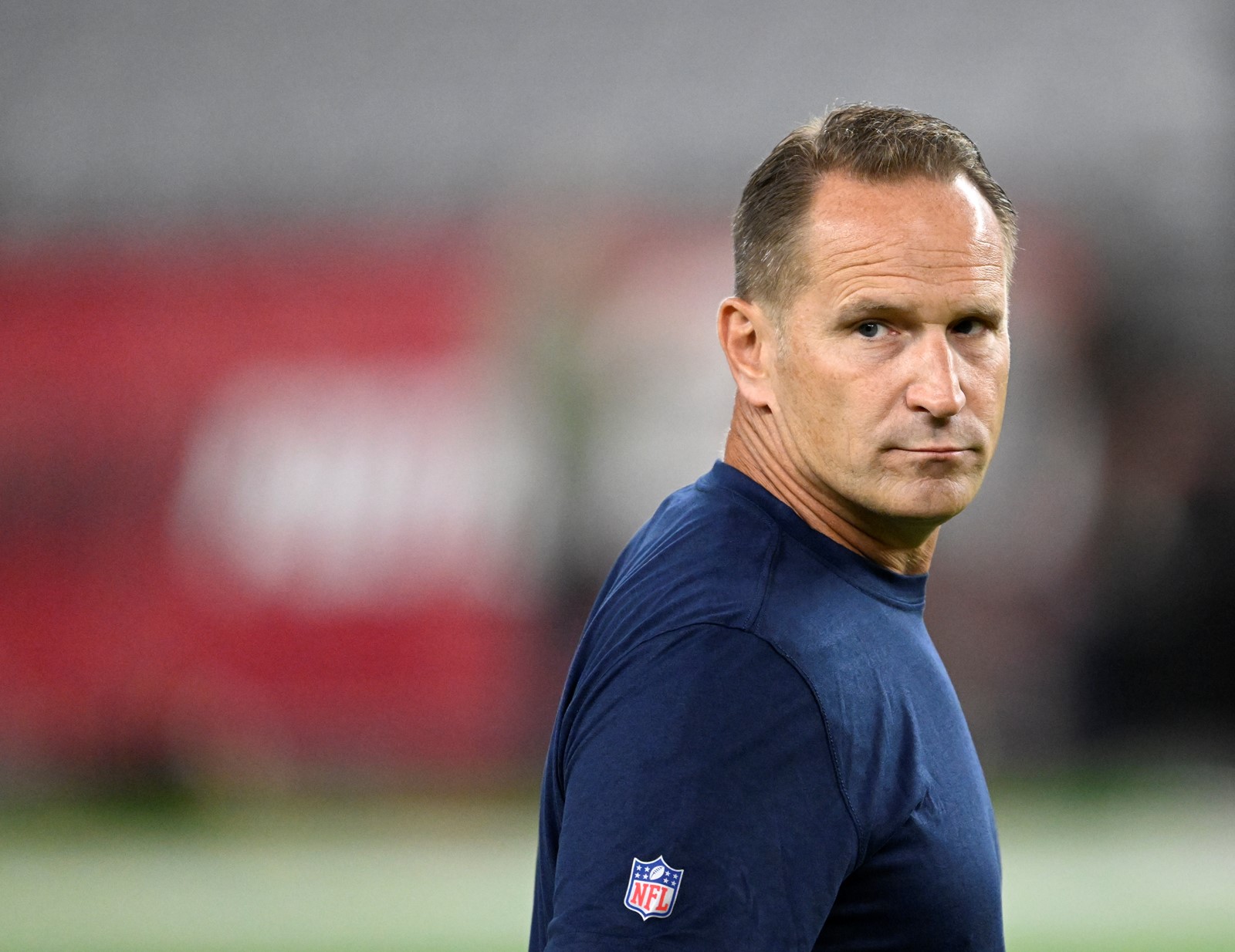
The man running the show: a former Army captain himself, Broncos special teams coordinator Ben Kotwica.
Kotwica, 48, served in the Army and flew Apache attack helicopters before he got into coaching, completing multiple foreign tours and seeing combat in Iraq.
Sports so often elicit war-related language, but of course they are not the same. Kotwica, in a chat with The Post on the eve of Veteran’s Day, said he carried lessons learned from his service into coaching.
“What resonates and has always resonated with me is the team-building element of either of those industries, whether in the military or in professional athletics,” he said. “What I mean by that is you’re taking a group of people from various backgrounds, various ethnicities, various parts of the country and you’re bringing them together into this melting pot to execute a mission or to achieve a common goal.
“When I was in Iraq and we were in support when we went into Taji, we had not only within our own unit people that were of various backgrounds, but now we were working with various services and various countries. So it’s neat when you bring those individuals together for a common goal and that’s what this is about.”
Another commonality, one even more ubiquitous in society: Efficiency is critical.
That’s where GoArmy Edge comes into the picture. Kotwica was introduced to the application — first built as a recruiting tool for the Army — years ago and has used it at several stops along his coaching career.
The Broncos have multiple projector screens stitched together on a wall that allows for an entire unit to line up in front of it. A three-dimensional opponent lines up on the screen and the Broncos then can talk through alignment, assignment and how to react to different pre-snap movements.
“It allows us a walk-through space where maybe it’s raining outside or we want to get indoors, we can do that,” Kotwica said. “Hey, we don’t need 16 guys to do punt protection off a card. We just push it up on the screen.”
If this all sounds weird or a bit gimmicky, take it from Denver players: It’s not.
“It’s actually pretty cool,” Locke, a fourth-year safety, said. “You can make it so you can see all the types of rushes and schemes that your opponents are doing. … It’ll bring some kind of rusher in from a vice on the gunner. They’ll bring one in, go right back out.”
It’s become part of a recipe for success on special teams.
“The first half of the season’s been very productive for us,” Kotwica said. “We’re No. 1 on punt return average and No. 1 on kick return average. That’s very good. And also in the coverage aspect, we’re No. 3 in punt coverage and No. 3 in kickoff coverage. The best part is we’ve made some plays that have helped us win games.”
The Broncos defense uses GoArmy Edge, too. It’s a way, Locke said, to work through how the Broncos want to handle an opponent’s formations, motions and shifts. Alignment and assignment on your feet. All as part of meeting time rather than practice time.
“Without going on the field, especially when it’s cold outside, we can just go out there,” Locke said. “I feel like that thing has been a game-changer for us just on the strength of getting out of the classroom and taking those reps out in The Shed.”
Kotwica said he also likes to use it to get young players reps when they often don’t get any real ones during regular-season practices.
“Player development is often a buzzword or a term that we hear, but OK, yeah, we’re developing our players. How? How are we developing players?” he said. “Physically, that’s the weight room and nutrition. Mentally, them knowing what to do. And so this goes into that.
“On the special teams specifically, the biggest phase you get concerned about with a younger player is the punt phase. Because the (severity) of a blocked punt, we know that. So when the head coach comes to me and says, ‘is Jordan ready to play?’ We can reaffirm that and say that we’ve got him extra reps on the simulation.”
Locke said he learned from veteran teammate Kareem Jackson the importance of feeling movements, even if they’re not at full speed. Getting into a rhythm. Giving your body a chance to do the things you’ll actually do on the field, even if it’s at walk-through speed.
Kotwica agrees, and that’s among the benefits of working out in The Shed.
“Educationally and teaching-wise, the data and the science will teach you that if you can move — not just seeing it, but moving and executing your responsibility — it resonates a lot more,” he said.
 PREVIOUS ARTICLE
