


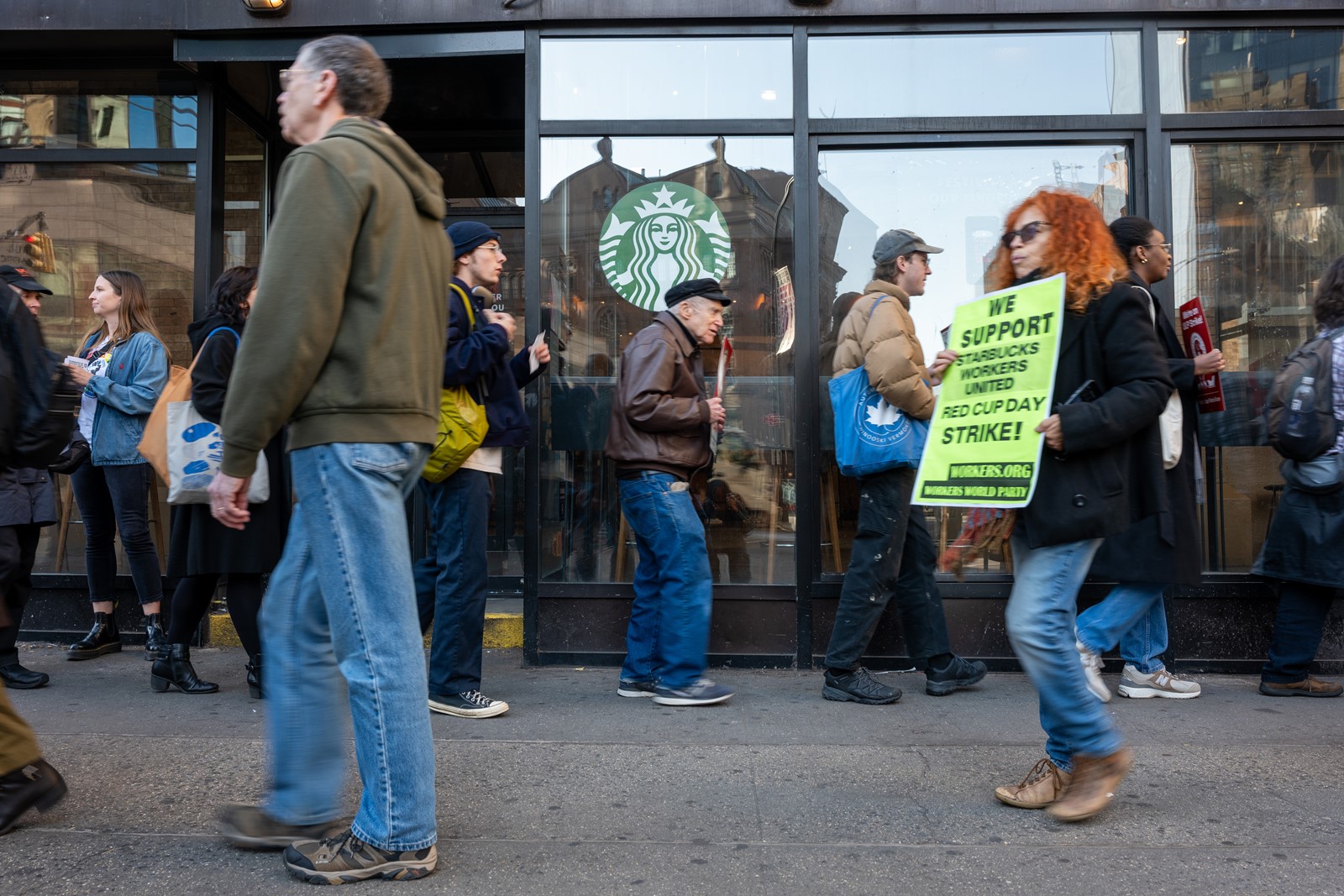


Unionized workers in the U.S. saw record raises, while nonunion workers’ pay barely beat inflation over the past 12 months, according to new data.
Wages of private sector union workers rose 6.3% in the year ended in March, the largest increase in data back to 2001, according to Bureau of Labor Statistics employment cost figures released Tuesday.
Meanwhile, nonunion workers in the private sector saw a 4.1% bump in their salaries over the past 12 months, not much higher than inflation.
Union leaders have led strikes against firms to push for more cost-of-living increases. Last week, a last-minute wage agreement was reached with Daimler Truck Holding AG in three southern U.S. states to avert a strike. The accord includes pay increases of more than 25% over the next four years.
Earlier this month, workers at Volkswagen AG in Tennessee voted to join the United Auto Workers, a landmark victory for union organizing in the long-hostile South, after labor groups scored wins at Ford Motor Co., General Motors Co. and Stellantis NV.
The wage gains come after union workers lost income in inflation-adjusted terms from the second quarter of 2021 to early 2023.
Fed signals rate increases unlikely
The Federal Reserve signaled fresh concerns about inflation while indicating it was likely to keep borrowing costs elevated for longer rather than raising them again.
Officials unanimously decided Wednesday to leave the target range for the benchmark federal funds rate at 5.25% to 5.5% where it’s been since July following a slew of data that pointed to lingering price pressures in the U.S. economy. They also reaffirmed the need for more evidence that price gains are cooling before cutting interest rates from a two-decade high.
“So far this year, the data have not given us that greater confidence in particular” that rate cuts are appropriate, Chair Jerome Powell said at a press conference following the two-day meeting in Washington.
Powell said it’s unlikely that the Fed’s next move would be to raise interest rates, saying officials would need to see persuasive evidence that policy is not tight enough to bring inflation back toward the central bank’s 2% target.
Unemployment claims unchanged
The number of Americans applying for unemployment benefits was unchanged last week and remains historically low as the labor market continues to show resiliency in the face of high interest rates and elevated inflation.
The Labor Department reported Thursday that unemployment claims for the week ending April 27 was 208,000, the same as the previous week. That’s the fewest since mid-February.
The four-week average of claims, which softens some of the weekly volatility, fell by 3,500 to 210,000.
Weekly unemployment claims are considered a proxy for the number of U.S. layoffs in a given week and a sign of where the job market is headed. They have remained at historically low levels since the pandemic purge of millions of jobs in the spring of 2020.
Peloton CEO steps down amid staff cuts
Peloton is cutting about 400 jobs worldwide as part of a restructuring effort and its CEO Barry McCarthy is stepping down after two years as the company continues to work on turning around its business.
Peloton has been working on a significant rebranding since last year, shifting its identity as a seller of luxury exercise bikes and equipment to health technology for all.
The New York company experienced incredible sales growth during the height of the coronavirus pandemic. Its share price multiplied by more than five times in 2020 amid lockdowns that made its pricey bikes and treadmills popular among customers who pay a monthly fee to participate in interactive workouts.
But sales began to slow in 2021 as vaccines allowed people to roam more freely from their homes, including visits to the gym.
The company lost $1.26 billion in the fiscal year ended in June and an additional $350 million in the six months ended in December.
Compiled from Bloomberg and Associated Press reports.
 PREVIOUS ARTICLE
